
A home energy survey should tell you what to do next and what to avoid.
Start with the building, bills and household priorities. The survey should define useful next steps, explain what can wait and separate funded, financed and customer-paid improvements.

A useful plan connects comfort, cost and the building.
An EPC may identify broad opportunities, but your decision also depends on heat loss, occupancy, roof and electrical constraints, the current heating system and how long you expect to stay in the home.
Understand the starting point
Review the EPC, bills, heating pattern and any known insulation or renewable installations.
Understand EPC evidenceReduce avoidable heat loss
Investigate loft, wall, floor and draught issues alongside moisture and ventilation, not as isolated products.
Plan insulationChoose the heating route
Compare the existing system with a designed heat pump, controls and the effect of any fabric improvements.
Assess a heat pumpGenerate and use electricity
Model solar generation, battery use and major electrical loads against the way the household actually consumes energy.
Plan a whole-home system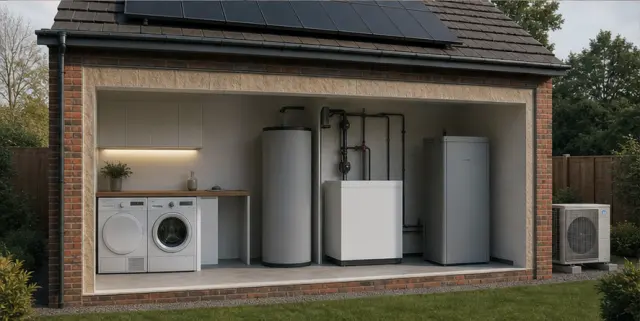
The route should be clear before the work begins.
The Warm Homes: Local Grant is targeted at eligible low-income households in privately owned EPC D to G homes in England. The Boiler Upgrade Scheme supports eligible low-carbon heating in England and Wales. Neither is a universal free-upgrade offer.
If support does not apply, we can scope customer-paid work and explain finance options where available. Finance is subject to status, affordability and lender approval.
- GrantEligibility is confirmed by the scheme owner or delivery route.
- PaidThe quotation states scope, exclusions, warranties and payment timing.
- FinanceTotal amount, term and lender conditions must be understood before commitment.
A survey should leave you with a usable decision record.
Agree the survey scope before booking. It should distinguish observed conditions, information supplied by you, calculations and any specialist investigations still required. A free initial conversation is not a substitute for every technical survey.
A useful output records the present building and systems, constraints, prioritised measures and what should be deferred. For example, fixing a roof leak before adding insulation or assessing emitter sizes before replacing heating can prevent the wrong order of work.
If solar is suitable, assess battery storage against your actual consumption rather than adding it automatically. Connect the resulting choices with bill-reduction priorities, funding and a clear delivery quotation.
What to establish before committing
- Findings and photographs where included in the agreed survey.
- Priorities, dependencies and items requiring specialist design.
- A written next step, with survey and installation responsibilities separated.
Evidence first, then a defined next step.
Each stage should reduce uncertainty about the property, the technical scope, the funding or payment route and the party responsible for delivery.
Review
EPC, bills, goals, tenure, location and existing systems.
Survey
Building fabric, heating demand, roof, electrics and practical constraints.
Compare
Savings assumptions, grant support, capital cost and disruption.
Deliver
Install, commission, hand over documents and explain controls.
Answers before you commit.
Direct information on suitability, cost, evidence and responsibility.
No. Savings depend on the property, energy prices, weather, occupancy and operation. We explain assumptions rather than publishing a guaranteed percentage.
No, but an existing certificate helps. We can locate the registered EPC or explain when a new assessment is useful.
Yes, where the building and electrical design support them. The systems should be modelled together because their value depends on timing and demand.
Yes. Paid assessments and installations remain available, and finance may be offered subject to status.
Start with the home, not the product.
Tell us what you want to improve and what is already installed. We will identify the right assessment and the funding or payment routes worth checking.