
Warm Homes Local Grant: check the household and property first.
The scheme is delivered through participating English local authorities. The tenant household and property must qualify; landlord consent and a contribution may be required, and the local route decides suitable measures after survey.
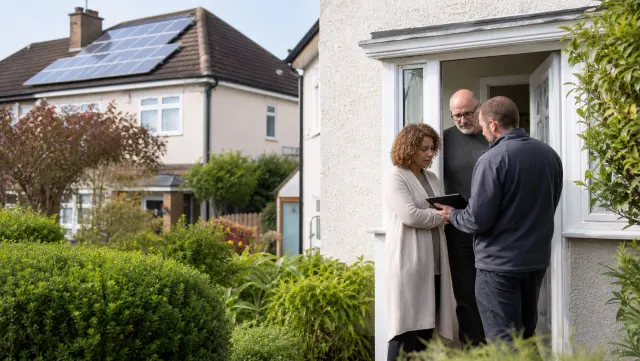
The Local Grant is targeted support, not a universal free-upgrade scheme.
Eligibility normally depends on household income, benefits or location, alongside the property conditions. The official service says household income must usually be £36,000 or less, although households above that level may still qualify through an eligible postcode or benefit.
Check the household
The occupant completes the official eligibility check. Some councils may also contact households they believe could qualify, but a letter is not the only route to checking.
Official eligibility checkerCheck the property
The home must be in England, privately owned by the occupier or a landlord, and currently rated EPC D, E, F or G.
Find the EPCComplete the survey
If the council has funding and the household appears eligible, a home survey determines which measures are technically suitable.
Prepare for an assessmentConfirm landlord contribution
Tenants can qualify, but the landlord may be asked to contribute towards improvements. The council confirms this before work proceeds.
Landlord energy planning
Funding starts with a survey, not a menu.
The published Local Grant service lists wall, loft and underfloor insulation, air source heat pumps, smart controls and solar panels among the improvements a council might suggest. The actual package depends on eligibility, local funding, the building and the survey.
- FabricWall, loft or underfloor insulation where appropriate.
- HeatAir source heat pumps and controls where the home is suitable.
- PowerSolar panels where the property and programme design support them.
- CostThe council pays for agreed work for an eligible homeowner. A landlord may need to contribute.
Check the household before promising a funded package.
Warm Homes Local Grant applies in England to eligible privately owned D-to-G homes. Household income is usually £36,000 or less, with alternative routes through specified benefits or eligible postcodes. The wider Warm Homes Plan is not a second automatic £30,000 grant to add on top.
If local funding and initial eligibility permit, the council arranges a survey and decides which improvements it can support. Private landlords must give consent and may need to contribute. A published programme cost cap is not an individual entitlement or a guaranteed package.
Prepare the EPC, tenure and an agreed contact route, but share sensitive household evidence only with the appropriate delivery body through its secure process. Tenant guidance explains consent, while fabric assessment explains why the survey matters.
What to establish before committing
- England, property tenure and EPC band.
- Household eligibility and council funding availability.
- Survey, approved measures, landlord consent and any contribution.
Eligibility guidance checked 11 September 2026. Cucumber Eco can explain the route; the local authority or its authorised delivery body confirms the award.
The wider plan is funded, but delivery detail still matters.
The government’s Warm Homes Plan describes long-term public investment, consumer loans and further low-income support. It also states that detailed deployment of low-income funding for later years will be set out separately. Until a specific route is open, Cucumber Eco will not describe future measures as currently available grants.
Local Grant
Use the GOV.UK service and your council’s process to check current eligibility.
BUS
Property owners can explore upfront grants for eligible low-carbon heating.
Low-income support
Further funding is planned, but routes, dates and conditions must be confirmed.
Paid work and finance
Customers who do not qualify can consider staged improvements and finance subject to status.
What households and landlords need to know.
Clear distinctions between an open scheme, a possible measure and a future funding commitment.
No. Some eligible households may be contacted, but the official GOV.UK eligibility service is available for households to check and apply directly.
Yes, a privately rented home can qualify where the household and property conditions are met. The landlord may need to consent and contribute towards agreed work.
No. The council survey determines the suitable package. Solar is listed as a possible measure. Battery availability depends on the programme, property and local delivery.
You can still request a property-led plan covering paid improvements, the Boiler Upgrade Scheme where eligible and finance options subject to status.
Check the open scheme first. Plan alternatives second.
Use the official service for Local Grant eligibility, then speak to us if you need help understanding the property or the other routes available.