
An EPC survey should check the evidence before recommending work.
We distinguish a standard assessment from an evidence-led EPC survey, then check assumed inputs, accepted documents and whether airtightness or U-value testing can answer a material question.
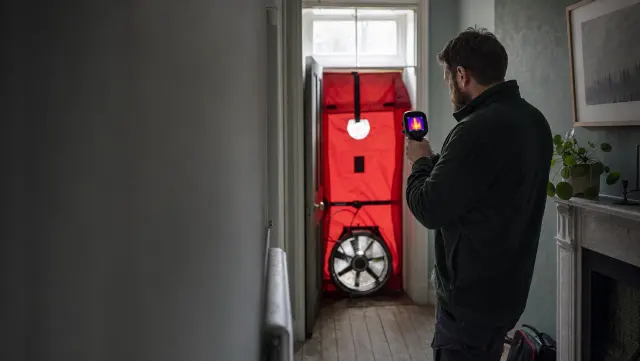
An EPC is only as strong as the evidence available to the assessor.
Standard EPC assessments use approved conventions. Where construction details or performance cannot be evidenced, the methodology may require a default or assumed value. That does not mean the assessor has made a mistake. It means the certificate is working with limited evidence.
Airtightness testing
A blower-door test measures air leakage through the building envelope. It can provide property-specific evidence where the assessment route accepts a measured result.
Check suitabilityU-value testing
In-situ testing can help establish how a wall, roof or floor performs where construction is uncertain and the current EPC relies on a conservative assumption.
Review an assumed valueDocumentary evidence
Building-control records, guarantees, invoices and installation certificates may support existing improvements. We explain what evidence is useful before a site visit.
Ask an assessorNew EPC lodging
The measured evidence must be used within an appropriate assessment and lodged correctly. Testing alone does not change the register.
Find an EPC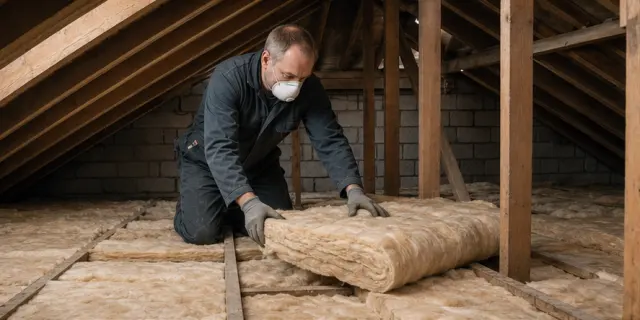
Use a test to answer a real assessment question.
Specialist testing is not a shortcut and it is not appropriate for every home. It is most useful when the current EPC shows a material assumed value, the building is likely to perform better than that default and a measured result can be accepted within the approved methodology.
- 01The property is close enough to the target for better evidence to matter.
- 02The relevant fabric element can be tested safely and representatively.
- 03Existing records are missing or insufficient to replace the default.
- 04The likely cost is lower than installing measures that may not be needed.
If the evidence is unlikely to change the outcome, we recommend a different route rather than selling an unnecessary test.
What the EPC evidence review should establish.
A standard EPC assessment records the dwelling and lodges a certificate. A specialist review asks whether a material assumption can be supported by accepted evidence and whether that changes the improvement plan. Testing does not change the register by itself: the assessor must accept the evidence and lodge the resulting EPC.
For example, an assumed wall entry may justify checking construction records, dated installation documents and photographs. An in-situ U-value test or airtightness test is useful only if it answers a material question and the proposed evidence is suitable for the assessment method. This is an illustration of the process, not a promised band gain.
We explain the missing evidence, proposed survey/test, scope and price before booking. If evidence alone is insufficient, compare fabric measures and proportionate controls rather than repeating tests. Our landlord advice library explains the decisions in more detail.
For an accepted No C No Fee U-value and/or airtightness testing route, if we cannot achieve a lodged EPC C or better, we refund your deposit in full and do not charge for that route. Read our specialist testing and refund terms before booking.
What to establish before committing
- The starting EPC score and material entries to investigate.
- Documents or measurements required, and who can supply/accept them.
- A property-specific next step, including when work is still needed.
Start your free EPC assessment with your contact details. The team will explain how to provide the certificate and property information afterwards; the initial form is not an EPC upload.
A clear process from current certificate to lodged result.
The free initial review checks whether specialist evidence is a credible route. If it is, the property is surveyed, suitable testing is completed and the EPC assessment is updated using the available evidence.
Certificate review
We inspect the current rating, recommendations and assumed or not-rated entries.
Testing plan
The assessor confirms what can be measured and what evidence is required.
Property visit
Approved testing and the EPC assessment are carried out at the property.
Lodged EPC
The service charge becomes due when the new certificate is lodged as agreed.
What landlords usually ask first.
These answers set realistic expectations before a property is booked for testing.
No. Testing only helps when a relevant assumed value is conservative and the measured performance is better. Some properties will still need physical improvements.
Domestic EPC conventions require assessors to use approved defaults where construction or performance cannot be evidenced. A standard visual survey cannot establish every hidden detail.
The property address or EPC report reference, plus any invoices, guarantees or records for insulation, windows, heating and renewable systems.
Possibly. If the building is suitable and grant support is available, a well-designed heat pump system may be more valuable than specialist testing alone. The initial review compares both routes.
Let the certificate tell us what to investigate.
Send the current EPC for a free initial review. We will tell you whether specialist testing, a heating route or a broader upgrade plan deserves the next step.