A practical guide to the Warm Homes Local Grant application and survey process in England. It explains the EPC, income, council contact, survey, measure selection, cost cap and document checks households should prepare before grant funded work is agreed.
Why the survey stage matters
Warm Homes Local Grant is one of the most important home energy schemes to understand in 2026, but the application is only the start. The practical decision happens after the council or its delivery partner checks the property, confirms eligibility and decides what package of improvements is suitable.
That survey stage matters because grant funding should not be treated as a shopping list. A home may feel cold for several reasons. It may have too little loft insulation, unfilled cavity walls, solid walls, poor floor insulation, uncontrolled draughts, old heating controls, moisture problems or a heating system that does not match the building. The right answer depends on the property rather than the headline measure.
This guide explains what happens after a Warm Homes Local Grant application, what documents to prepare, what the survey is likely to check and how homeowners, landlords and tenants can avoid delays.
The short answer
GOV.UK says Warm Homes Local Grant is for eligible homes in England. The home must be privately owned and have an Energy Performance Certificate rating of D, E, F or G. Household income must usually be £36,000 a year or less, although GOV.UK also says a household may qualify through a postcode route or because someone in the household receives certain benefits.
After an application, GOV.UK says the council will usually contact the applicant within 10 working days to get more information and arrange a home survey. If the home is eligible, the council may suggest improvements such as wall insulation, loft insulation, underfloor insulation, air source heat pumps, smart controls and solar panels. GOV.UK says the council will organise and pay for agreed home improvements.
The best way to prepare is simple. Find the Energy Performance Certificate, gather proof of household and property details, take clear photos of problem areas and write down the rooms that are cold, draughty or affected by condensation.
Check the property test first
The property test is central. GOV.UK says the home must be in England, privately owned and rated D, E, F or G on an Energy Performance Certificate.
Privately owned includes owner occupied homes and privately rented homes. It does not mean the applicant always has full control over the work. If the property is rented, the landlord will normally need to be involved because permission, access and property records may be needed.
The Energy Performance Certificate rating is important because the scheme is aimed at worse performing homes. A home rated C or above should not be assumed to qualify through this route, even if the household has high bills or some rooms are cold.
If there is no recent certificate, the council or delivery partner may need to confirm what assessment route applies. Do not guess the rating from the age of the property. Older homes often score badly, but some have already been upgraded. Newer homes can also have problems if insulation, controls or heating are poor.
Check the household route
GOV.UK says household income must usually be £36,000 a year or less. It also says a household may still qualify if the property is in an eligible postcode or if someone in the household receives certain benefits.
That means the evidence route can vary. Some households may need income evidence. Some may qualify through a postcode. Some may need benefit information. The council or delivery partner should tell applicants what is required.
It is sensible to prepare documents before the call. Keep them ready, but do not send sensitive documents to anyone until you are confident they are the official council route or an authorised delivery partner.
What the council contact may cover
GOV.UK says councils usually contact applicants within 10 working days to get more information and arrange a home survey.
That first contact may cover the address, ownership, occupancy, income route, current heating fuel, existing insulation, Energy Performance Certificate status and whether anyone needs extra support during the survey.
The call may also check access. Loft access, meter cupboards, airing cupboards, boiler areas, external walls, underfloor voids, gardens, driveways and roof spaces can all matter depending on the proposed measure.
If the home is rented, the call may need landlord details. If someone is vulnerable, has mobility limits or needs a family member present, say so early. Survey appointments work better when access and support needs are clear from the start.
What the home survey is trying to prove
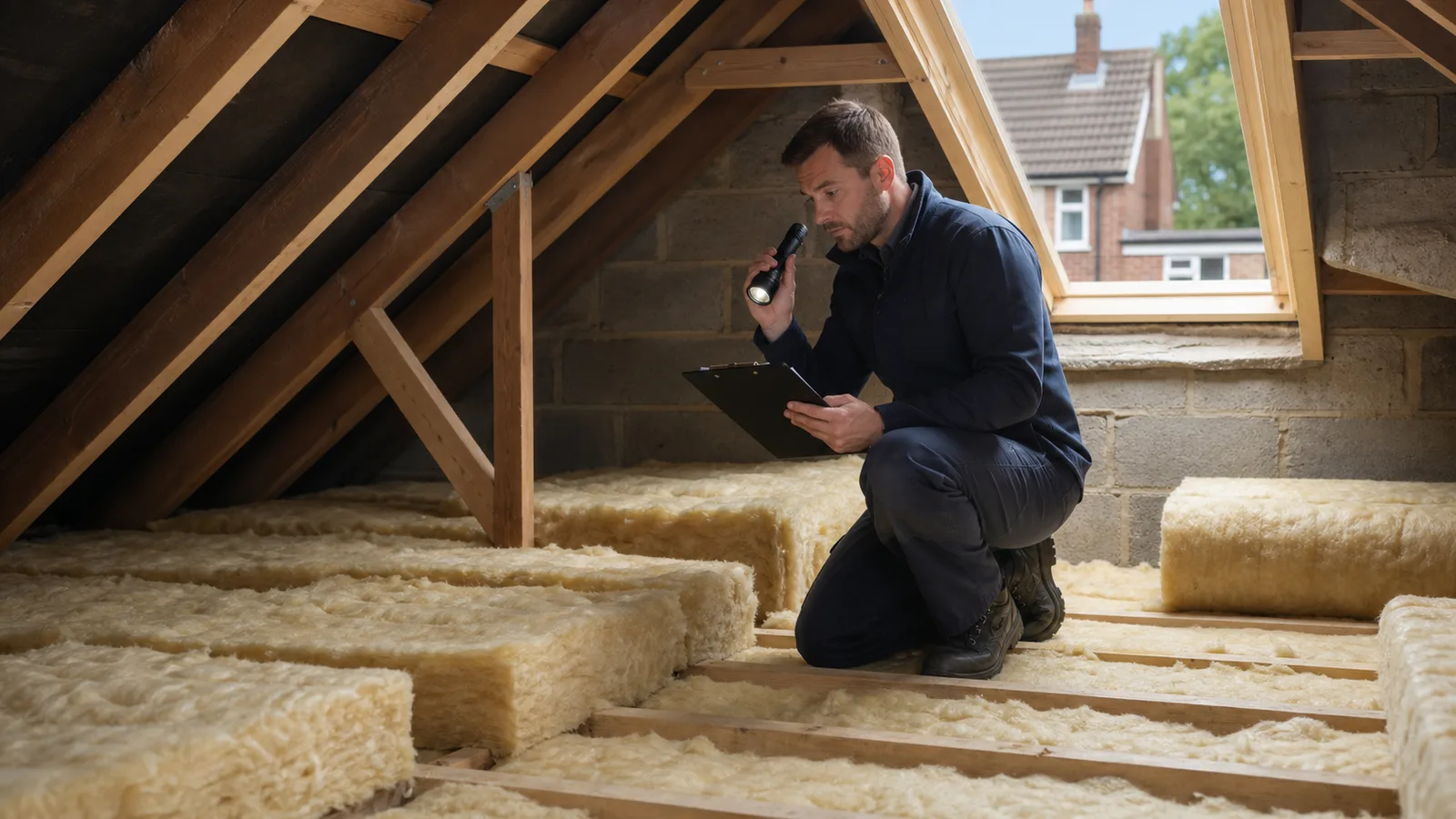
The survey is not just about whether a measure is desirable. It is about whether a measure is suitable, eligible, deliverable and safe.
For insulation, the survey should check the building fabric. That means walls, roof spaces, floors, windows, doors, ventilation routes and signs of moisture. For low carbon heating, the survey may also look at heat demand, radiator sizes, hot water needs, controls, outdoor space and electrical supply.
The survey should also identify sequencing. A home may need insulation before heating changes. It may need ventilation improvements alongside insulation. It may need repairs before any grant funded work is suitable.
Good surveys create fewer problems later. A rushed survey can miss damp, blocked ventilation, unsafe access or a measure that does not fit the building.
Measures the council may suggest
GOV.UK lists wall insulation, loft insulation, underfloor insulation, air source heat pumps, smart controls and solar panels as examples of improvements that may be suggested after the survey.
That does not mean every eligible home gets every measure. The package should respond to the survey. A top floor flat might not need the same work as a detached solid wall house. A home with a modern insulated loft may need wall or floor checks. A home with poor heating controls may need controls before more complex equipment is considered.
The right question is not which measure has the biggest headline saving. The right question is which measure solves the heat loss, comfort, carbon or running cost problem in this specific property.
Understand the cost caps
The Warm Homes Local Grant policy guidance says £500m was allocated for delivery from April 2025 to March 2028. It also sets cost caps of £15,000 for energy performance upgrades and £15,000 for low carbon heating.
Those figures are useful, but they can be misunderstood. They are scheme cost caps, not a guarantee that every home receives the maximum amount. The final package depends on eligibility, survey findings, local delivery rules, suitability and available funding.
Energy performance upgrades can include fabric measures such as insulation. Low carbon heating can include eligible heating changes where the property and package make sense. The survey should explain why the chosen package has been recommended.
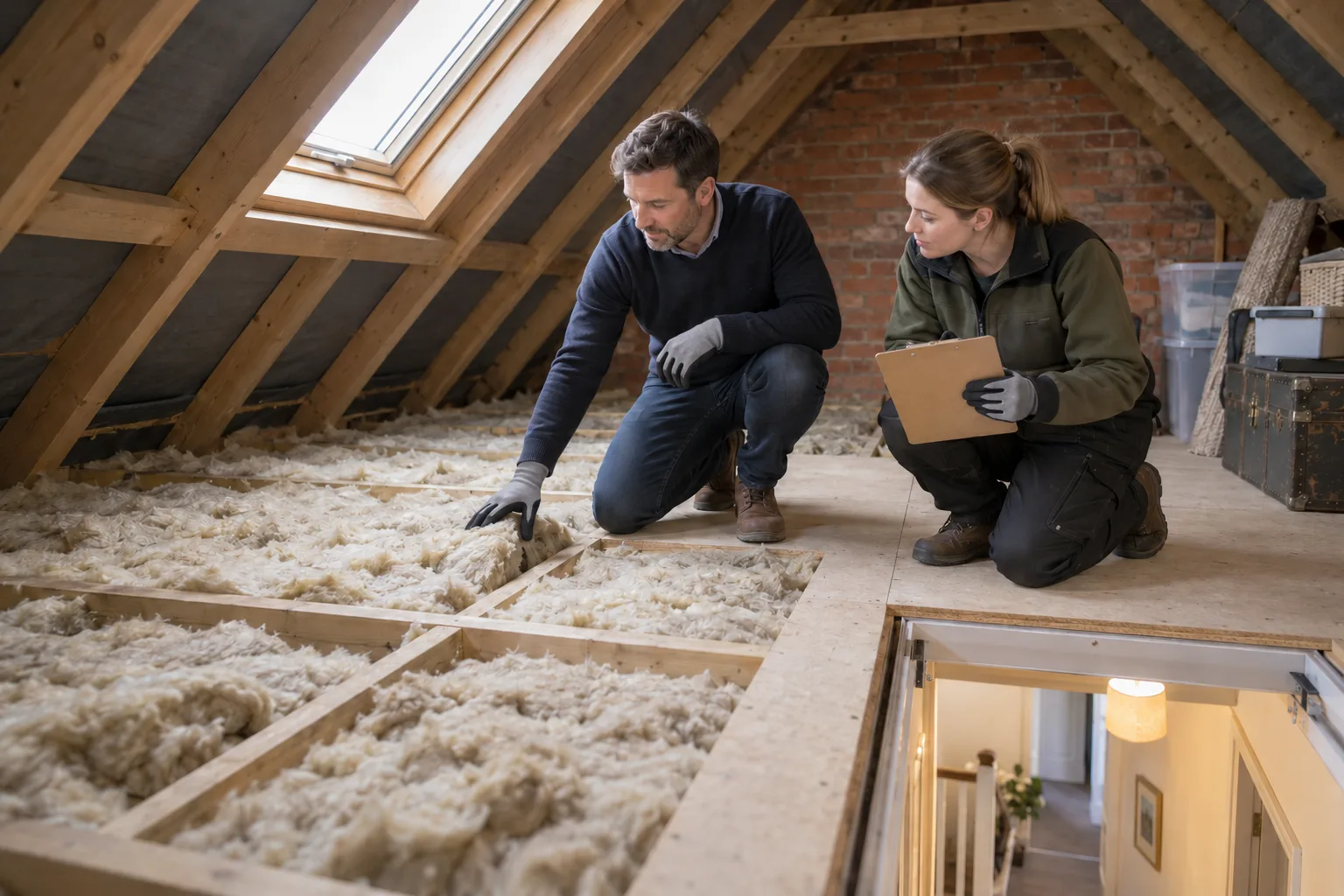
Loft insulation checks
Loft insulation is often one of the first fabric checks because it can reduce heat loss with less disruption than many wall measures. Energy Saving Trust says professionally installing 270mm of loft insulation in an uninsulated semi detached home costs around £900.
The survey should check existing insulation depth, loft access, roof ventilation, water tanks, pipe lagging, electrical cables, downlights, damp marks and whether storage boards are blocking proper insulation.
The installer should not simply roll new insulation over every problem. Leaks, poor ventilation and unsafe electrics need attention. If the loft is used for storage, the household should ask how safe access and insulation depth will be maintained.
Wall insulation checks
Wall insulation can make a major difference, but it needs careful suitability checks.
Energy Saving Trust says cavity wall insulation for a typical home in Great Britain can cost around £2,700 and can often pay back in five years or less through bill savings. It also says typical solid wall insulation installation costs range between £12,000 and £18,000, and around 33 percent of heat lost in uninsulated homes escapes through walls.
Cavity wall checks should look at wall condition, cavity width, exposure to driving rain, damp signs, vents, debris and whether insulation has already been installed. Solid wall checks should consider internal space, external appearance, planning risk, moisture movement, cold bridges, window reveals and ventilation.
The survey should explain whether wall insulation is suitable now or whether repairs are needed first.
Floor insulation checks
Underfloor insulation can help homes with cold suspended timber floors, draughts through floorboards or rooms over unheated spaces. The survey should identify the floor type and access method.
Important checks include underfloor ventilation, damp, rot, pipework, cables and whether floorboards need to be lifted. A home with a damp underfloor void needs careful assessment before insulation is added.
Floor insulation can be a good comfort measure, but it should not block ventilation that the floor structure needs.
Heating and controls checks
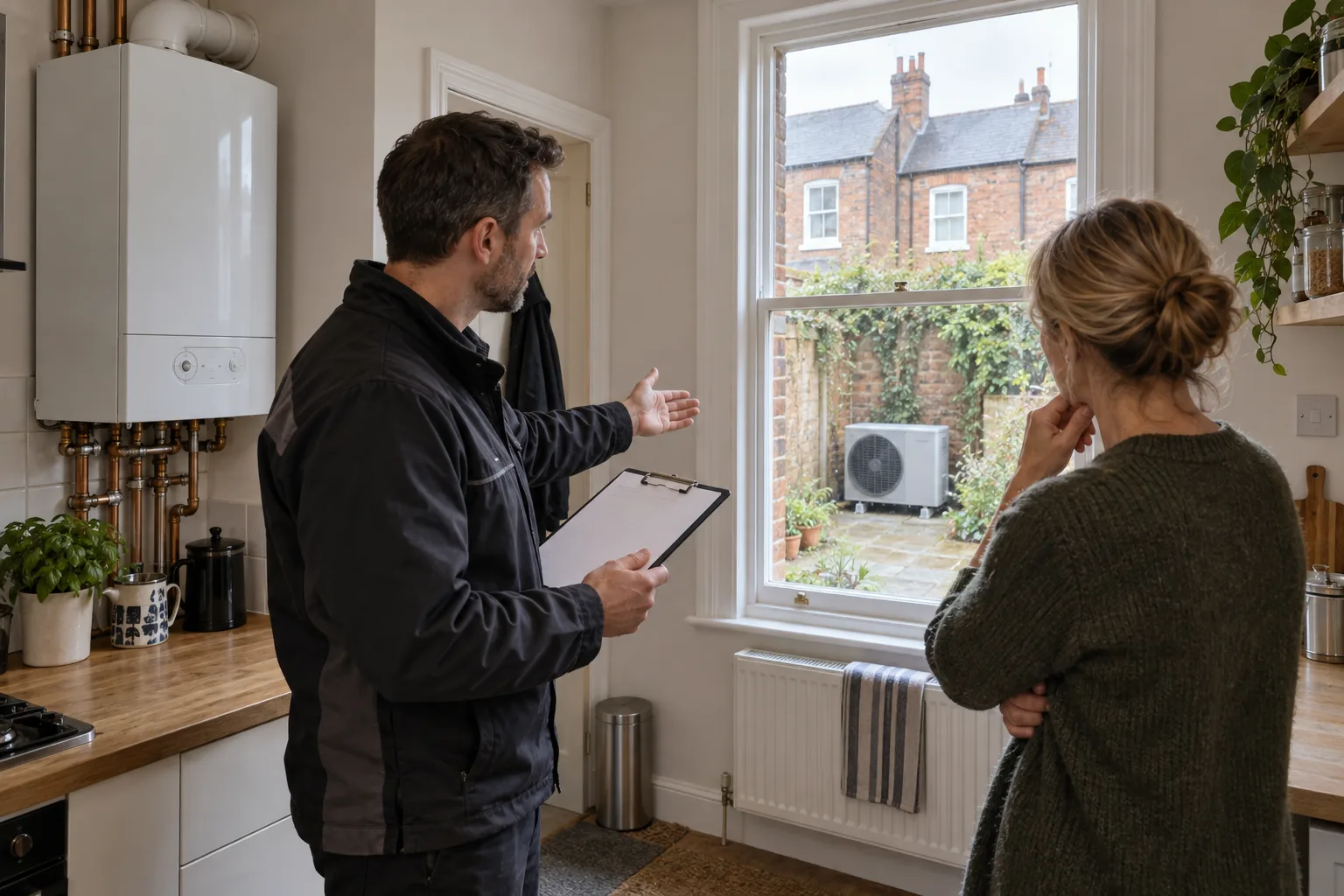
Warm Homes Local Grant can include low carbon heating measures where appropriate. GOV.UK lists air source heat pumps and smart controls among possible improvements.
The heating check should look beyond the boiler or heat pump. It should consider how much heat the home needs after fabric improvements, whether radiators are suitable, how hot water is produced, where equipment could go, whether controls are easy to use and whether the electrical supply is adequate.
Smart controls can be useful, but they do not fix a poorly insulated building on their own. They work best when the fabric, heating system and household routines are understood together.
Solar panel checks
GOV.UK lists solar panels as a possible improvement. A solar survey should consider roof orientation, shading, roof condition, available space, electrical setup, meter arrangements and whether the household can use a meaningful share of the generated electricity.
Solar panels may work well alongside insulation and heating improvements, but they are not a substitute for fixing heat loss. If the home is expensive to heat because the building fabric is poor, insulation may still be the priority.
VAT relief still matters
Grant funded work and VAT relief are different things. For households paying privately for additional or separate work, HMRC guidance says a zero rate applies to installation of specified energy saving materials from 1 May 2023 to 31 March 2027. It says the rate is due to revert to 5 percent from 1 April 2027.
If a quote includes extra work outside the grant package, ask the installer to show the VAT treatment clearly. The household should understand what is grant funded, what is privately funded and what VAT rate has been applied.
Energy price context
Ofgem says the price cap from 1 July to 30 September 2026 is £1,862 a year for a typical direct debit dual fuel customer in England, Scotland and Wales. Ofgem also lists average direct debit unit rates for that period of 26.11p per kWh for electricity and 7.33p per kWh for gas.
These figures are context, not a prediction for one home. A detached house, a terrace, a flat and a rural home can have very different heat loss patterns. The survey should focus on the actual property rather than using a national average as a promise.
Documents to prepare before the survey
Gathering documents early can reduce delays.
- Current Energy Performance Certificate if available.
- Proof of address.
- Ownership details or landlord details.
- Household income or benefit evidence where requested.
- Recent energy bills or meter details if available.
- Photos of loft access, walls, floors and damp areas.
- Details of existing insulation or heating upgrades.
- Planning, conservation or listed building information.
- Tenant permission or landlord permission where needed.
- Notes on cold rooms, draughts, mould and comfort problems.
Keep the list simple. The aim is to help the surveyor understand the home before a package is proposed.
Questions to ask during the survey
The survey is the right time to ask direct questions.
- Which eligibility route is being used.
- Which Energy Performance Certificate rating is being relied on.
- Which measures are being recommended and why.
- What problems were found during the fabric survey.
- How damp and ventilation will be handled.
- What work is grant funded and what is not.
- Whether any private contribution is expected.
- What guarantees and handover documents will be provided.
- Whether follow up inspections are needed.
- What the household needs to do before installation day.
Clear answers are a good sign. If the answer is vague, ask for it in writing.
Common reasons for delay
Delays usually come from missing evidence, unclear landlord permission, access problems, damp concerns, poor loft access, uncertainty over Energy Performance Certificate status or work that needs repair before installation.
Some delays are frustrating but sensible. If a survey finds moisture, blocked vents or structural issues, it is better to pause than to install the wrong measure quickly.
The household should keep notes of calls, appointment dates, names and next steps. This makes it easier to follow up with the council or delivery partner.
Landlord and tenant points
Privately rented homes can be eligible where the scheme rules are met. GOV.UK says eligible homes must be privately owned, either by the person living there or by a landlord.
Tenants should involve the landlord early because permission and access may be needed. Landlords should keep records of the survey, agreed work, guarantees and any updated Energy Performance Certificate.
Good communication matters. The tenant understands the comfort problems. The landlord controls property permission. The surveyor needs both sides to avoid missed access and incomplete information.
How to avoid poor decisions
Do not pick the measure before the survey. Do not ignore damp because a grant is available. Do not assume the biggest measure is the best one. Do not accept a quote that does not explain what is included, what is excluded and how ventilation will be protected.
The best grant outcome is a package that fits the building. That may be simple loft insulation and draught control. It may be wall insulation with ventilation improvements. It may be low carbon heating after heat loss has been reduced. It may be solar panels where the roof and electrical setup are suitable.
Internal links for deeper planning
For more detail, compare this guide with Warm Homes Local Grant, home insulation grants, EPC checks before grants, heat loss surveys, loft insulation, cavity wall insulation, floor insulation, solid wall insulation, air source heat pumps and solar panels.
Use those pages to compare the measure options, then bring the questions back to the survey.
The bottom line
Warm Homes Local Grant is not just an application form. It is a property assessment process. GOV.UK says eligible applicants are usually contacted within 10 working days so the council can get more information and arrange a home survey. That survey should decide which improvements are suitable, whether the home is eligible and how the work should be planned.
Prepare the Energy Performance Certificate, household evidence, access details and notes on cold or damp rooms before the appointment. The better the survey information, the better the chance of getting a grant funded package that improves comfort without creating avoidable problems.