Smart meters are now standard across Great Britain, with new customer protections from 2026 and a fresh wave of time of use tariffs. This guide covers what a smart meter costs, how SMETS2 unlocks cheaper tariffs for heat pumps and electric vehicles, and the checks to make before and after installation.
Smart meters have moved from a novelty to a standard part of how homes in Great Britain buy and use energy. By early 2026 the rollout passed a major milestone, new rules gave customers stronger protections, and a fresh generation of time of use tariffs made the meter itself the gateway to real savings. If you have been putting off a smart meter, or you have one that stopped talking to your supplier, 2026 is a sensible year to sort it out.
This guide explains what a smart meter is, what it costs, how it can cut your bills through smarter tariffs, and the checks worth making before and after installation. It is written for homeowners and landlords in England, Scotland and Wales.
What a smart meter actually does
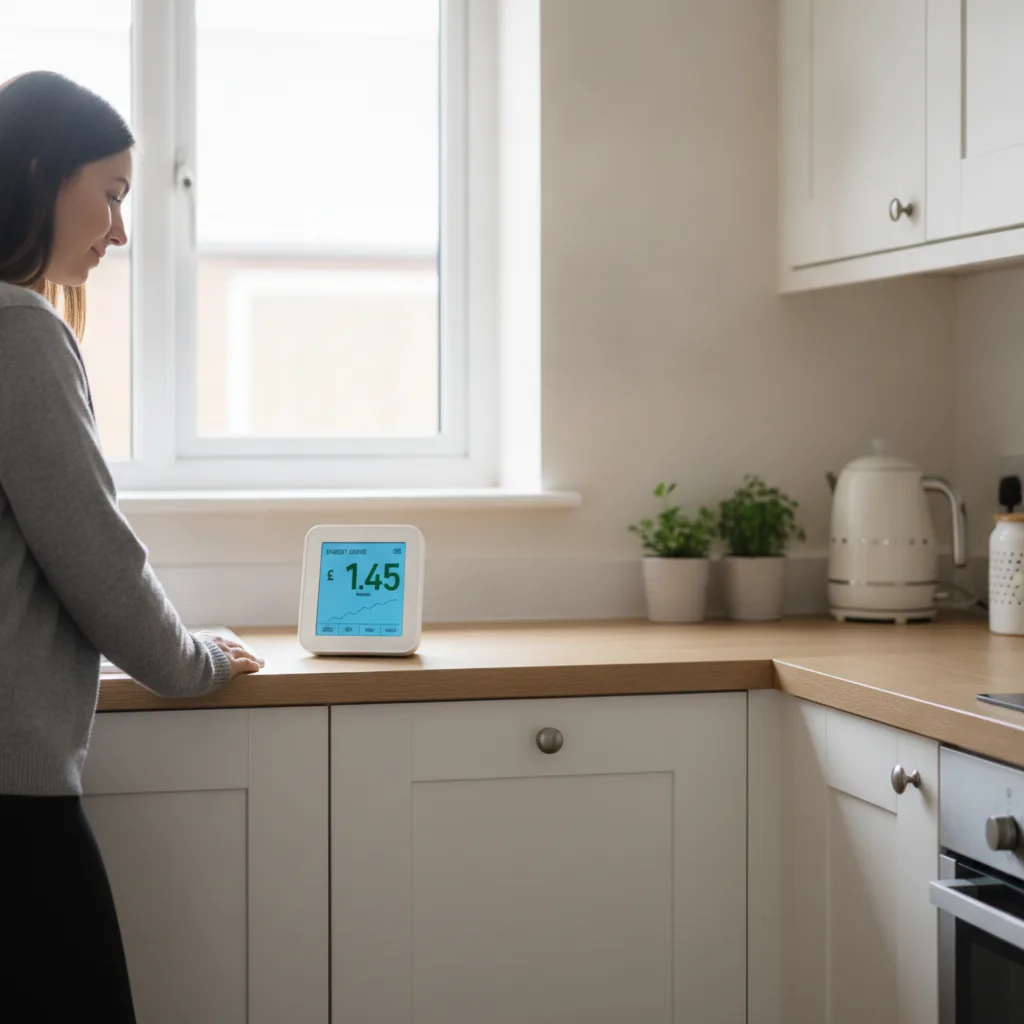
A smart meter is a digital gas or electricity meter that records how much energy you use and sends readings to your supplier automatically over a secure national network. It replaces the old routine of manual meter readings and estimated bills. Most homes also get an in home display, a small screen that shows your usage in near real time and in £ and pence, so you can see the cost of leaving the immersion heater on or running the tumble dryer.
The key technical point is that a modern smart meter stores your electricity use in half hourly blocks. That half hourly data is what unlocks the newer tariffs that can genuinely lower your bills, which we come back to below.
SMETS1 and SMETS2, and why the difference matters
There are two generations of smart meter. The first generation, known as SMETS1, was installed in large numbers in the early rollout. Some SMETS1 meters lost their smart features when customers switched supplier, dropping back to sending manual readings. The second generation, SMETS2, was designed to fix that. SMETS2 meters connect to a shared national communications network, so they keep working in smart mode when you change supplier.
For 2026 this matters for one big reason. The tariffs that save the most money, including heat pump and electric vehicle tariffs that reward off peak use, generally need a working SMETS2 meter so your supplier can settle your usage half hour by half hour. If you have an older meter that has gone dumb, asking your supplier for an upgrade is often the first step to accessing a better tariff.
Where the rollout has reached in 2026
The national rollout is well advanced. According to the Department for Energy Security and Net Zero, at the end of the first quarter of 2026 there were around 41 million smart and advanced meters operating in homes and smaller businesses across Great Britain. Of those, roughly 38 million were operating in smart mode, and about 72 per cent of all meters in Great Britain were smart or advanced.
Installation is still moving at pace. In March 2026 alone energy suppliers fitted around 199,000 smart meters. In May 2026 a new policy framework came into force that requires suppliers to finish the job, with the aim of offering a smart meter to every remaining home by the end of 2030.
What a smart meter costs you
This is the question most people ask first. There is no separate upfront charge to have a smart meter installed. You do not pay a bill on the day for the meter or the engineer.
The honest fuller picture is that the cost of the national programme is spread across everyone through the standing charges built into energy bills, in the same way the wider cost of maintaining the meter network is. So the meter is not free in the sense that nobody pays for it, but there is no direct fee for you to have one fitted, and you do not pay more on your bill for choosing to have a smart meter rather than a traditional one.
New protections from 2026
From February 2026, Ofgem introduced stronger standards designed to make getting and keeping a working smart meter easier. The headline change is automatic compensation. Under the new rules, customers are entitled to an automatic £40 payment in defined situations, including when they have to wait more than six weeks for a smart meter appointment. There are further compensation triggers around missed appointments and meters that are not put right within a set time.
The practical takeaway is that suppliers now have a financial reason to book you in promptly and to fix a meter that has stopped working, rather than leaving it for months. If your smart meter has gone dark, it is worth chasing your supplier and asking about the current standards.
How a smart meter can lower your bills
A smart meter does not cut your energy use on its own. What it does is give you and your supplier accurate, timely data, and that opens up two routes to savings.
The first is behaviour. Seeing your usage in £ and pence on the in home display, updated through the day, makes it far easier to spot what is costing you money. Households often find one or two heavy users they had underestimated, from an old fridge freezer to electric heating left on a timer.
The second, and usually the bigger prize, is access to smarter tariffs. Because a smart meter records your electricity use every half hour, suppliers can offer time of use tariffs that charge different prices at different times of day. If you can shift some usage to cheaper periods, such as running the dishwasher or charging a car or home battery overnight, you pay less for the same energy.
Time of use tariffs explained
A time of use tariff sets different unit rates across the day rather than one flat rate. The classic example is the long standing Economy 7 tariff, which offers seven cheaper night hours. Newer tariffs go further, with rates that vary across the whole day or that offer very low overnight windows aimed at electric vehicle owners and heat pump households.
These tariffs only work with a smart meter operating in smart mode, because the supplier needs your half hourly data to bill each period correctly. For a household that can genuinely move demand into the cheaper windows, the savings can be significant. For a household with little flexibility, a simpler fixed tariff may still be the better fit. The right answer depends on your routine, your heating system and whether you have an electric vehicle or battery storage.
Smart meters, heat pumps and electric vehicles
The value of a smart meter rises sharply once you add low carbon technology. A heat pump and an electric vehicle both shift a home towards electricity, and both benefit from tariffs that reward off peak charging and running. Specialist heat pump and electric vehicle tariffs typically depend on a working SMETS2 meter for half hourly settlement.
If you are planning to install a heat pump under the Boiler Upgrade Scheme, or adding solar panels and a battery, it is worth making sure your smart meter is working in smart mode first. Getting the meter sorted early means you can move onto a suitable tariff as soon as the new system is running, rather than losing months of potential savings.
What to check before installation
A little preparation makes for a smoother appointment.
- Confirm you are getting a second generation SMETS2 meter, which is standard for new installs and keeps its smart features if you switch supplier.
- Ask whether both your gas and electricity meters can be upgraded on the same visit, if you have both.
- Clear access to your existing meters, as the engineer needs room to work safely.
- Ask about the in home display and how to read it, so you actually use the data.
- If you have solar panels, a battery or an electric vehicle charger, tell the supplier in advance so they fit the right setup.
What to check after installation
The job is not finished the moment the meter is fitted.
- Check the in home display is pairing and showing live usage within the first day or two.
- Confirm your first smart bill uses actual readings rather than estimates.
- If the meter is not connecting to the network, report it to your supplier promptly and ask about the current service standards and any compensation you are due.
- Once you have a working smart meter, compare time of use tariffs against your current deal to see whether switching would save money.
Common concerns, answered plainly
Some households hesitate over privacy, health or the fear of a higher bill. On data, your half hourly readings are collected and shared under strict rules, and you can ask your supplier to reduce how often detailed data is taken. On health, smart meters send small amounts of data over low power radio, similar to many everyday devices. On bills, a smart meter does not increase your unit rates. It bills you for what you actually use rather than an estimate, which for some households means correcting a long standing under or over estimate.
Smart pay as you go and prepayment
Smart meters are not only for households that pay monthly. If you pay for energy in advance, a smart meter running in prepayment mode lets you top up online, through an app or by phone, rather than trekking to a shop with a key or card. You can see your remaining credit on the in home display, set low balance alerts, and view your usage so a top up is less likely to catch you out. For anyone who has relied on an older prepayment meter, moving to a smart version usually makes managing energy far less stressful, and switching between credit and prepayment mode can often be done remotely rather than needing a new meter.
Advanced meters and smart meters are not the same
You may see the phrase advanced meter alongside smart meter in official statistics. Advanced meters are mostly found in smaller business premises and record usage in half hourly detail, but they are read differently from the domestic smart meters most homes receive. For a typical household the meter you will be offered is a domestic smart meter, second generation, connected to the national smart network. The distinction matters mainly when reading the national rollout figures, which count both types together.
What happens to your old readings and data
When your meter is swapped, your old account balance and history stay with your supplier. Your new smart meter starts recording from the day it is fitted, and your first accurate bill should follow shortly after. It is good practice to note the opening reading shown on the new meter and to keep your final traditional reading, so you can check the changeover was billed correctly. If anything looks off on that first bill, raise it early while the numbers are easy to trace.
Do smart meters make sense for landlords
For landlords, a smart meter in a rented property helps tenants manage their own energy and can reduce disputes over estimated bills at the end of a tenancy. Where you pay for energy in a void period or a house in multiple occupation, accurate readings are useful for your own accounting. As with any tenanted property, agree the installation with your tenant, since they usually hold the energy contract and will book the appointment.
The bottom line
A smart meter will not slash your bills by itself, but in 2026 it is the practical gateway to the tools that can. It gives you clear usage data, ends estimated billing, and unlocks the time of use tariffs that reward flexible households, heat pump owners and electric vehicle drivers. With the rollout heading towards completion by 2030 and stronger customer protections now in force, there is little reason to keep putting it off. If you already have a smart meter that has stopped working, treat that as the priority, because a meter stuck in dumb mode is a meter that cannot save you anything.
If you are weighing up a heat pump, solar panels or wider energy efficiency upgrades alongside a smart meter, our team can help you plan the order of work so each step supports the next.