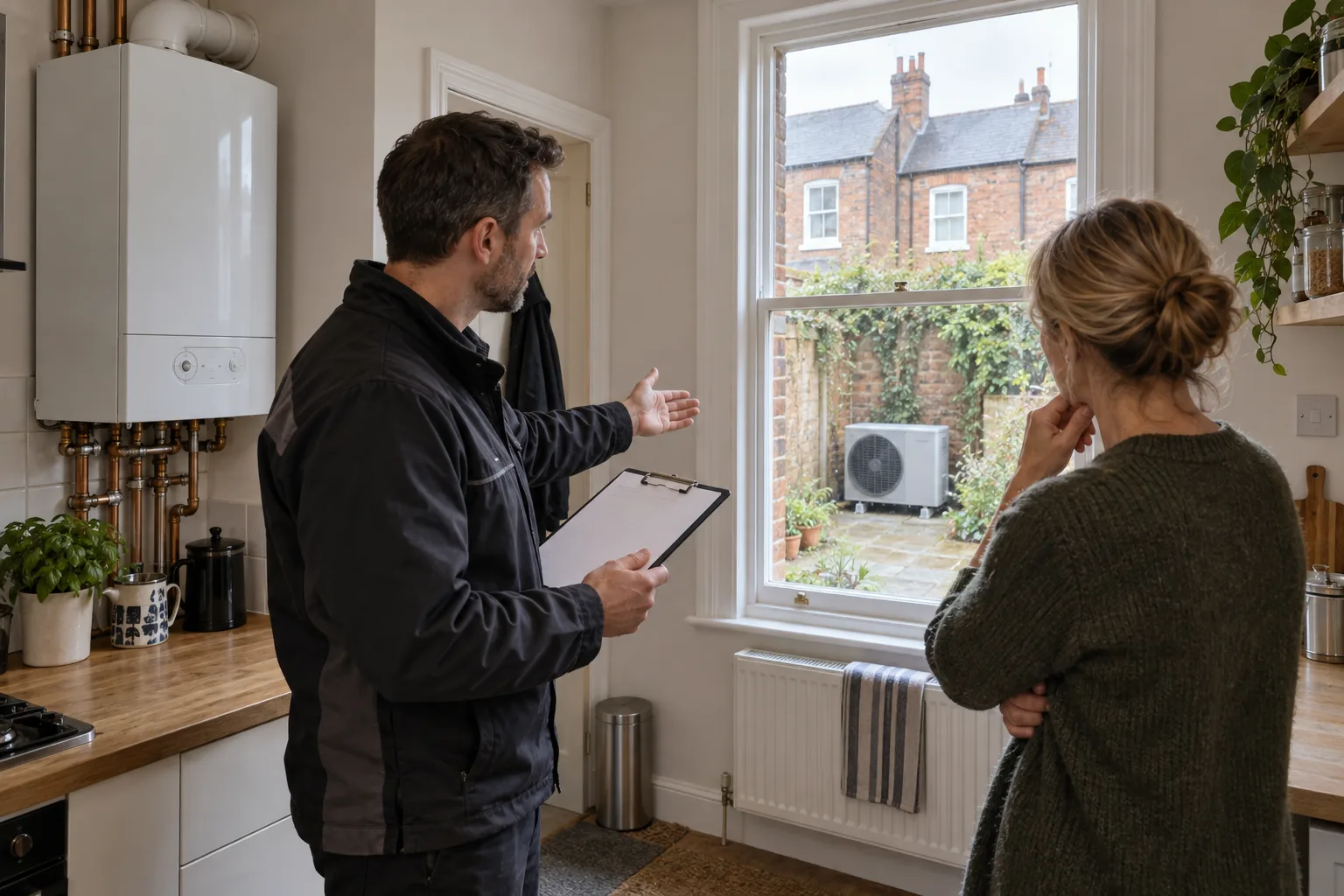
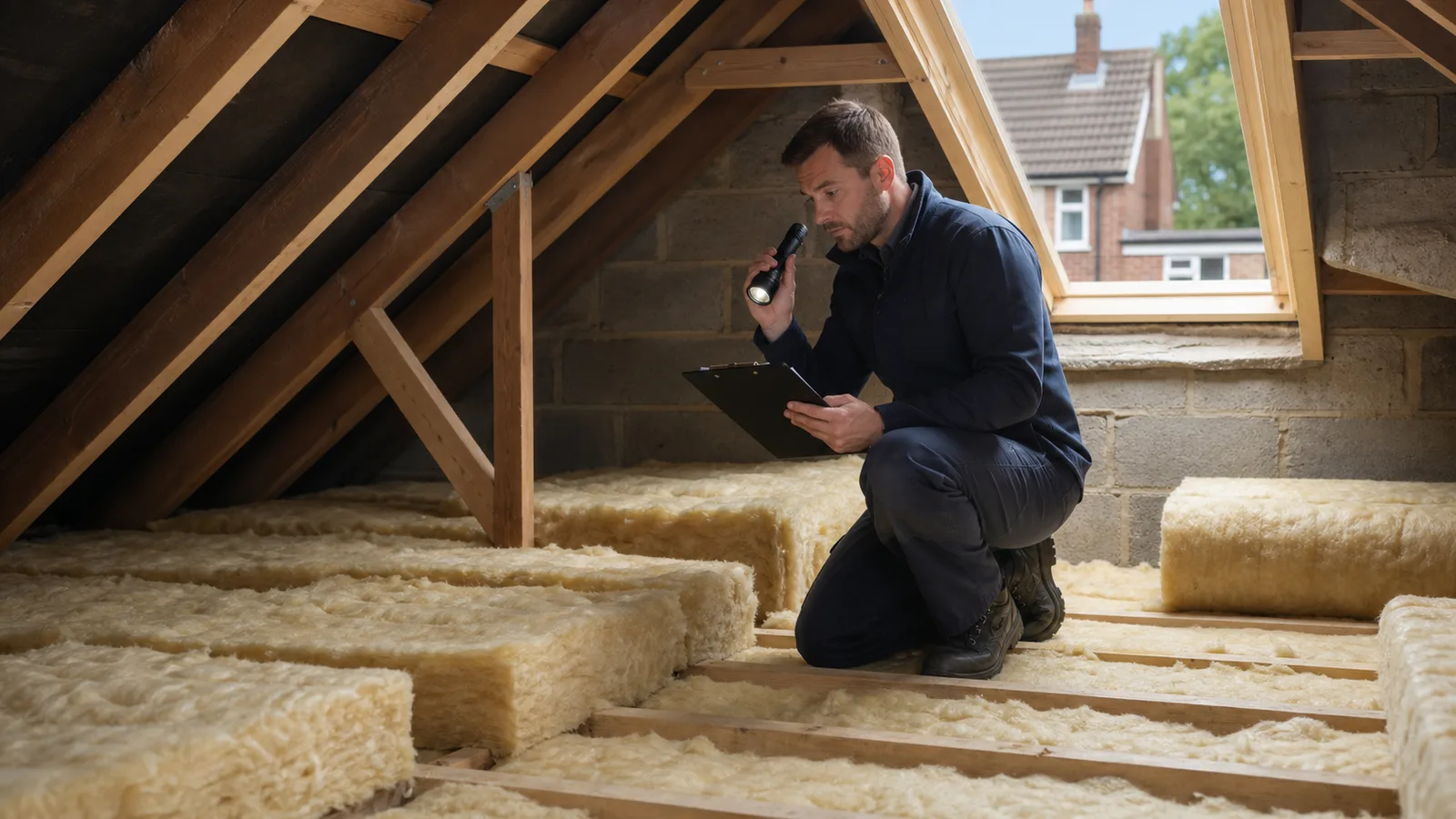
The Warm Homes: Local Grant helps eligible lower-income households in privately owned EPC D-to-G homes in England. Local authorities confirm eligibility, arrange the survey and approve the package; a qualifying household or property does not guarantee that every measure will be installed.
Warm Homes Local Grant: quick answer
The scheme is available in England. The home must be privately owned, including a qualifying private rental, and normally have an EPC rating of D, E, F or G. Household income must usually be £36,000 a year or less, although an eligible postcode or qualifying benefits can provide another route.
If the initial checks pass and the local authority has funding, it arranges a home survey and decides which measures are suitable. The household does not choose a grant amount or receive cash. The council or its authorised delivery partner organises the approved work.
Eligibility at a glance
| Check | Current scheme position |
|---|---|
| Nation | England only. Scotland, Wales and Northern Ireland have different support routes. |
| Property | A privately owned home, occupied by its owner or a private tenant. |
| EPC | Normally D, E, F or G. Extra existing-law checks apply to privately rented F- and G-rated homes. |
| Household | Usually gross annual household income of £36,000 or less, or eligibility through specified benefits or an eligible postcode. |
| Decision-maker | The participating local authority or its authorised delivery route verifies the household, property, survey and available budget. |
| Payment | Approved work is organised and paid through the scheme. Landlord contribution rules can apply to rental properties. |
Local projects can prioritise applications and pause intake when allocations are committed. Passing the national screening criteria does not reserve funding or approve a particular measure.
Rules for privately rented homes
The occupying tenant household must meet the relevant household route, the property must meet the scheme rules and the landlord must consent to the work. Government policy guidance says one eligible rental home can be fully funded per landlord across the scheme. A minimum 50% landlord contribution is required for additional homes upgraded after the first. Tenants are not expected to contribute.
For privately rented properties rated F or G, the landlord must normally provide evidence of a valid exemption under the current Minimum Energy Efficiency Standards before Warm Homes funding can improve the property beyond the existing legal minimum. The local authority will confirm the evidence it needs.
A landlord should also check the proposed package, access, warranties, future maintenance, tenant communication and any scheme conditions concerning rent increases before consenting.
What improvements may be included
The survey can consider measures such as wall, loft and underfloor insulation, air source heat pumps, smart controls and solar panels. Government policy guidance also allows a wider range of RdSAP-eligible non-fossil measures when they meet the required standards, including ventilation, glazing, doors and domestic batteries in suitable packages.
That list is not a menu or promise. The retrofit assessment, technical design, property condition, scheme standards, cost limits and local procurement determine what can proceed. Moisture, ventilation and heat-loss risks must be dealt with as part of the design.
How the application works
- Apply through GOV.UK or the local route. The national service sends the application to the participating authority.
- Household and property checks. The authority verifies income, benefits or postcode eligibility, tenure and EPC information.
- Home survey. A surveyor assesses the property and identifies a suitable improvement package.
- Written offer and consent. The household and, for a rental, the landlord should receive the proposed work, contribution position and conditions before agreeing.
- Installation and evidence. The authorised delivery chain completes approved work and provides the relevant handover, guarantees and compliance documents.
GOV.UK says the local council will usually make initial contact within ten working days, but survey and installation timing depends on local capacity and funding.
What evidence to prepare
- the property address and current EPC, if one exists;
- proof of household income or qualifying benefits where requested;
- tenancy and landlord contact details for a private rental;
- proof of ownership and landlord consent documents where required;
- a registered exemption record for an F- or G-rated private rental where applicable;
- details of existing heating, insulation, solar or previously funded work.
Keep copies of the assessment, design, contribution terms, warranties and completion documents. They can matter for future EPCs, maintenance, sale or letting.
Warm Homes Local Grant or Boiler Upgrade Scheme?
Warm Homes: Local Grant is household- and property-led, delivered through local authorities and available only in England. The Boiler Upgrade Scheme is technology-led, available in England and Wales and applied for by an MCS-certified installer on the property owner's behalf. BUS contributes toward an eligible low-carbon heating installation; it does not normally fund the wider whole-home package available through a local grant.
Landlords and homeowners should compare the confirmed contribution, measure package and property outcome rather than assuming the route with the largest headline figure is automatically best. See the heat-pump and Boiler Upgrade Scheme guide or start a free property assessment.
Official sources and review date
This article was checked on 24 August 2026 against the GOV.UK application and eligibility service and the government Warm Homes: Local Grant guidance. The delivery window is currently scheduled to run until 31 March 2028, subject to local funding and programme changes.
Frequently asked questions
Can private landlords use the Warm Homes Local Grant?
Yes, when the tenant household, property and local route qualify and the landlord consents. One eligible rental property can currently be fully funded per landlord across the scheme; a minimum 50% landlord contribution applies to additional upgraded homes.
Does an EPC D rating guarantee funding?
No. The household route, tenure, local availability, survey, suitable measures and scheme approval must also be confirmed.
Does the tenant have to pay?
No. Government policy guidance says tenants are not required or expected to contribute to the cost of upgrades. A landlord contribution can apply.