Around a third of the heat in an uninsulated solid wall home escapes through the walls. External wall insulation is one of the most effective ways to fix that. This guide covers what it costs in 2026, which grants are available including the Warm Homes Local Grant, planning permission rules, and what to check before you commit.
Around a third of the heat in an uninsulated solid wall home escapes through the walls. Cavity wall insulation solves the problem for homes built after the 1920s, but older properties with solid walls need a different approach. External wall insulation wraps a layer of rigid insulation board around the outside of a property and covers it with a weather-resistant render or cladding. The result is a warmer home, lower heating bills, and a significantly improved EPC rating.
In 2026, external wall insulation remains one of the more significant investments a homeowner can make in their property, but a combination of grant funding through the Warm Homes Local Grant and zero-rated VAT until March 2027 has made it far more financially accessible for eligible households. This guide covers what it costs, what you can save, how grant funding works, and what to check before you commit to the work.
What Is External Wall Insulation?
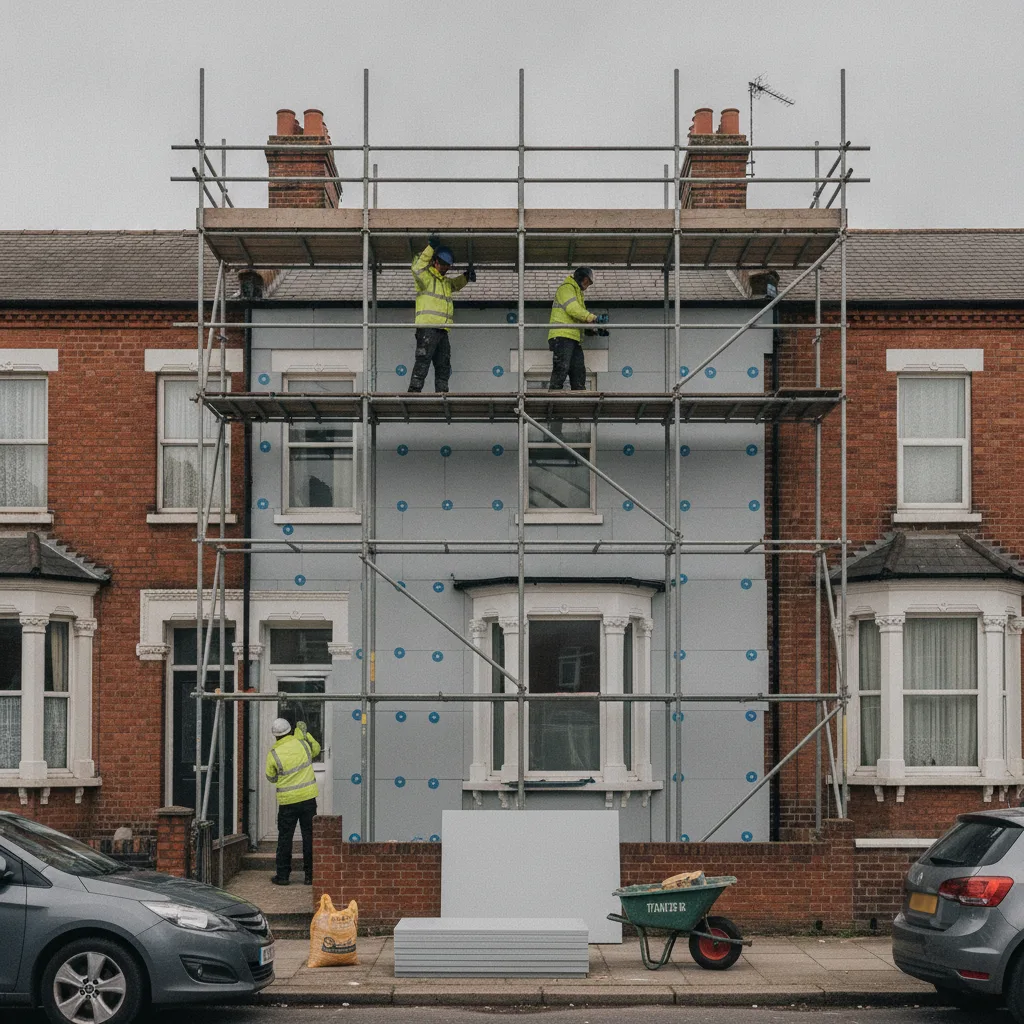
External wall insulation, commonly referred to as EWI, involves fixing rigid insulation boards directly to the outer face of a building using mechanical fixings and adhesive. Once the boards are in place, a base coat is applied, a reinforcing fibreglass mesh is embedded into it, and then a final render or cladding finish is applied over the top.
The entire system sits on the outside of the building, which means no internal floor area is lost. The total thickness added to the outside wall is typically between 80mm and 120mm depending on the insulation product chosen and the performance target.
EWI is most commonly used on homes with solid walls, which includes the majority of properties built before the 1920s. It can also be applied to newer buildings where cavity wall insulation is not viable, for example where the cavity is too narrow, contaminated, or has previously been filled with spray foam.
Which Homes Need External Wall Insulation?
Solid wall homes are the primary candidates. In England alone, around 7.5 million properties have solid walls rather than cavity walls. These include Victorian and Edwardian terraces, inter-war semis with poured concrete construction, and certain post-war system-built properties.
You can usually identify a solid wall by checking the wall thickness at a window reveal. A wall thinner than 260mm is likely solid. The external brickwork pattern also gives a clue. Solid walls often show stretchers and headers (bricks laid lengthways and short-end facing out) in a regular alternating pattern, whereas cavity walls show only stretchers.
If you are unsure, an accredited retrofit assessor can confirm the wall construction type as part of a survey. This step matters because installing EWI on a cavity wall when the cavity could be filled instead would be a more expensive route than necessary.
How External Wall Insulation Is Installed
Installation follows a clear sequence and typically takes three to seven working days for a standard three-bedroom semi-detached property.
Before any insulation goes on, the installer checks the condition of the existing wall surface. Any cracked render, loose masonry, or active damp must be repaired first. EWI locks moisture into any problem it covers, so wall condition is assessed carefully before work begins.
Insulation boards are then fixed to the prepared surface using both adhesive and mechanical fixings. The boards are cut around windows, doors, eaves, and any pipes or services. A base coat of specialist adhesive is applied over the boards and a fibreglass reinforcing mesh is pressed into it while wet.
Once the base coat has cured, the finish is applied. Options include:
- Silicone render. Low maintenance, breathable, flexible, and resistant to algae. The most popular choice.
- Mineral render. A cement-based finish suitable for a traditional look. Requires occasional painting.
- Brick slip cladding. Individual thin brick tiles applied to the surface. Matches the original brickwork appearance. Higher cost.
- Timber or composite cladding. An alternative finish where render is not preferred. Less common for full house wrap.
Scaffolding is required for any property taller than a single storey and is usually priced separately from the insulation work itself.
External Wall Insulation Costs in 2026
EWI is a significant investment but the long-term energy and comfort benefits are substantial. Based on 2026 price data from Checkatrade and multiple installer quotes:
- Mid-terrace house: from £6,000 to £12,000
- Semi-detached house: from £9,000 to £18,000
- Detached house: from £15,000 to £30,000 or more
The installed cost per square metre of wall typically falls between £150 and £200, covering insulation boards, mechanical fixings, adhesive, reinforcing mesh, and the final render or cladding finish.
The main factors that drive cost are:
- Total wall area. Larger properties cost more.
- Finish type. Brick slips cost more than silicone render. Cladding varies widely.
- Detailing complexity. More windows, corners, and protruding features mean more cutting and finishing.
- Wall condition. Significant remediation work before installation adds cost.
- Scaffolding. A large or tall property requires more scaffolding for longer.
- Regional labour rates. London and the South East are noticeably more expensive than other regions.
Always get at least three written quotes before committing. The cost difference between the cheapest and most expensive quote for identical work can be several thousand pounds.
How Much Can You Save on Energy Bills?
The Energy Saving Trust estimates that a typical semi-detached solid wall home could save between £300 and £500 per year on heating costs after external wall insulation is installed. A larger detached property could see annual savings above £600.
These figures are based on current gas unit rates and the assumption that the home is heated to normal occupancy levels. Savings will vary depending on how the rest of the property is insulated, the type of heating system in use, and occupant behaviour.
The payback period without grant support is typically between 20 and 30 years for a mid-sized property, which is the main reason grant funding is central to the case for EWI for most households. With a Warm Homes Local Grant contribution reducing or eliminating the upfront cost, the financial equation changes significantly.
How External Wall Insulation Affects Your EPC Rating
External wall insulation has one of the most significant effects on EPC ratings of any single retrofit measure. An uninsulated solid wall typically carries a U-value of around 2.1 W/m2K, meaning it allows heat to pass through relatively freely. After EWI is installed using a standard 90mm insulation board, the U-value can drop to 0.28 W/m2K or lower, exceeding the minimum standard set by Part L of the Building Regulations for work on existing dwellings.
In EPC band terms, a solid wall home currently rated F or G can often reach band D or even band C after EWI is installed alongside basic heating controls and a new thermostat. For landlords in England, EPC band E is the current Minimum Energy Efficiency Standard. That requirement is expected to tighten in the coming years, making solid wall insulation a priority measure for affected rental properties.
For homeowners considering selling or remortgaging, an improved EPC can directly affect the value and mortgageability of a property. Green mortgage products from several lenders now offer reduced rates for properties rated EPC C or above.
Does External Wall Insulation Need Planning Permission?
This is one of the most common questions homeowners ask. The short answer is that it depends on the property type and location.
For most detached and semi-detached houses in England, external wall insulation falls under permitted development. Planning permission is not required, provided the external materials used in the finish coat are of a similar appearance to the existing walls. This condition is met in most cases by using a render colour and texture that matches or complements the surrounding street scene.
Planning permission is required in the following situations:
- The property is in a designated conservation area.
- The property is a listed building. Listed building consent is required as well as planning permission.
- The property is a flat or maisonette.
- Permitted development rights have been removed by a planning condition on the property.
If you live in a conservation area, do not assume the answer is no. Many local authorities have pre-agreed design guidance for EWI in conservation areas that allows the work to proceed with permission where the finish maintains the character of the area. Check with your local planning authority before starting.
For work funded through the Warm Homes Local Grant, the local authority will manage compliance checks as part of the delivery process.
Grants for External Wall Insulation in 2026
Warm Homes Local Grant
The Warm Homes Local Grant is the primary funded route for external wall insulation for eligible households in England. The scheme is delivered by local authorities and funded by the Department for Energy Security and Net Zero, with £500 million allocated from April 2025 to March 2028.
External wall insulation is an explicitly listed eligible measure under the Warm Homes Local Grant. To qualify, a household must meet the following criteria:
- The property must have an EPC rating of D, E, F, or G.
- Annual household income must be no more than £36,000, or the household must be receiving a qualifying benefit such as Universal Credit, Pension Credit, or a disability payment.
- The property must be owner occupied or privately rented in England.
- New builds or self-build homes that have not yet been occupied are not eligible.
Warm Homes Local Grant is delivered by councils in England for qualifying households in privately owned D-to-G homes. A survey determines suitable measures and the council decides the funded package; a headline scheme budget is not a personal grant entitlement. Landlords may need to contribute. Check the official eligibility route and current alternatives.
Applications are made through the local authority rather than directly to central government. Each council operates its own referral and assessment process. The local authority arranges surveys, manages the installer, and pays the contractor directly. Homeowners do not typically handle payments themselves.
To find your local scheme, use the Warm Homes Local Grant application page at gov.uk/apply-warm-homes-local-grant or contact your local council directly.
VAT Relief Until March 2027
The installation of external wall insulation on a dwelling currently qualifies for zero-rated VAT under the energy saving materials relief. This 0% rate applies until 31 March 2027, after which it reverts to the reduced rate of 5%.
For a £15,000 external wall insulation installation, the zero VAT rate represents a saving of £750 compared to the 5% rate that will apply from April 2027. This is not a direct grant but it does meaningfully reduce the cost of private commissioning.
The relief applies in England, Scotland, and Wales and covers the supply and installation of insulation materials. The HMRC guidance in VAT Notice 708/6 confirms that external wall insulation on a domestic property is within scope.
Finding a Qualified Installer
External wall insulation should only be carried out by an installer holding PAS 2030 certification, which is the accredited standard for the installation of energy efficiency measures. PAS 2035 is the broader retrofit coordination framework that must be followed where work is funded through a government scheme.
Membership of the National Insulation Association (NIA) or the External Wall Insulation Association (EWIA) gives additional assurance that a contractor maintains appropriate quality standards and insurance. Ask to see the installer's PAS 2030 certificate and request references from recent similar projects.
Where work is funded through the Warm Homes Local Grant, the local authority manages contractor procurement and quality oversight. You do not need to source an installer independently in that case.
For privately funded work, always obtain a minimum of three written quotes and ask each contractor to walk you through the proposed specification, including the insulation thickness, board type, and finish product. A reputable installer will carry out a wall survey before quoting and will flag any remediation needed.
What to Check Before You Commit
Before signing a contract, there are a few important things to establish:
- Wall suitability. Confirm the wall type with a professional survey. EWI is appropriate for solid walls but is not needed on a well-insulated cavity wall property.
- Damp and structural condition. Any existing damp penetration or structural cracks must be repaired before insulation is applied.
- Planning rules for your property. Check permitted development status, particularly if you are in a conservation area or live in a flat.
- Neighbours. In a terrace, EWI changes the external appearance of your home and may require agreement with neighbours where party walls or shared soffits are involved.
- Metre boxes and services. All external meters, pipes, and cables need to be repositioned or accommodated in the build-up. A competent installer will include this in their specification.
- Window reveals. EWI adds thickness to the outside of the wall, which reduces the external reveal depth around windows. Window sill extenders or reveals trims are usually required and should be included in the quote.
Is External Wall Insulation Worth It in 2026?
For a solid wall home that is not eligible for cavity wall insulation, external wall insulation is one of the most effective ways to reduce fabric heat loss and improve thermal comfort. The energy savings are real, the EPC improvement is substantial, and the improvement to the external appearance of the property can also add value.
The main barrier is cost. The upfront investment is significant, and without grant support the payback period stretches to two or more decades. The Warm Homes Local Grant changes this equation for eligible households. If your property is EPC D to G, your household income is below £36,000, and you own or rent privately in England, contacting your local authority about the grant scheme before commissioning any privately funded work is the right first step.
For homeowners who do not qualify for grant support, the calculation depends on how long you plan to stay in the property, whether improving the EPC matters for a planned sale or remortgage, and whether the fresh external finish also has aesthetic value. For a home that will be owned and occupied for ten or more years, the comfort and fuel bill benefits are meaningful even if the strict financial payback is long.
Next Steps
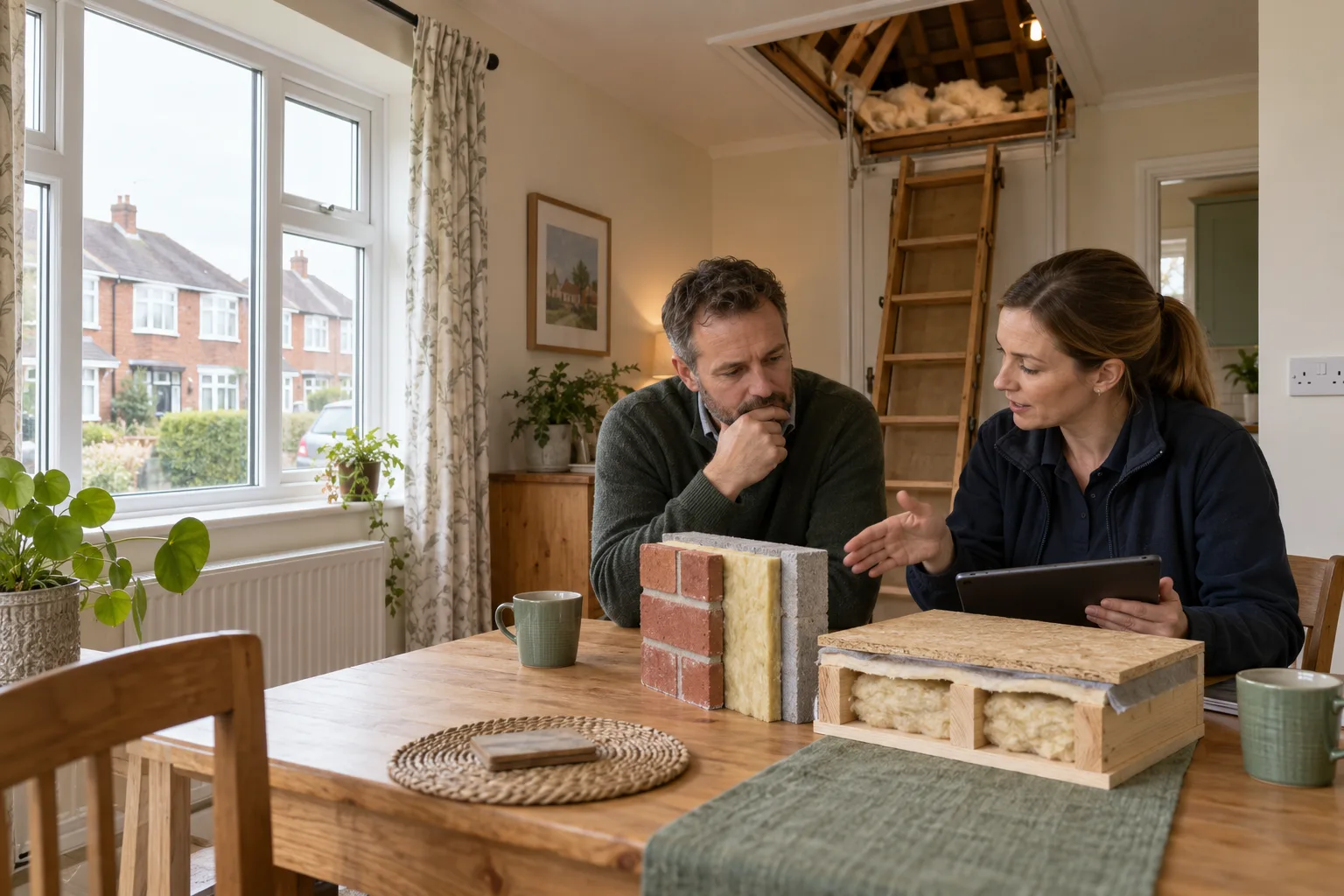
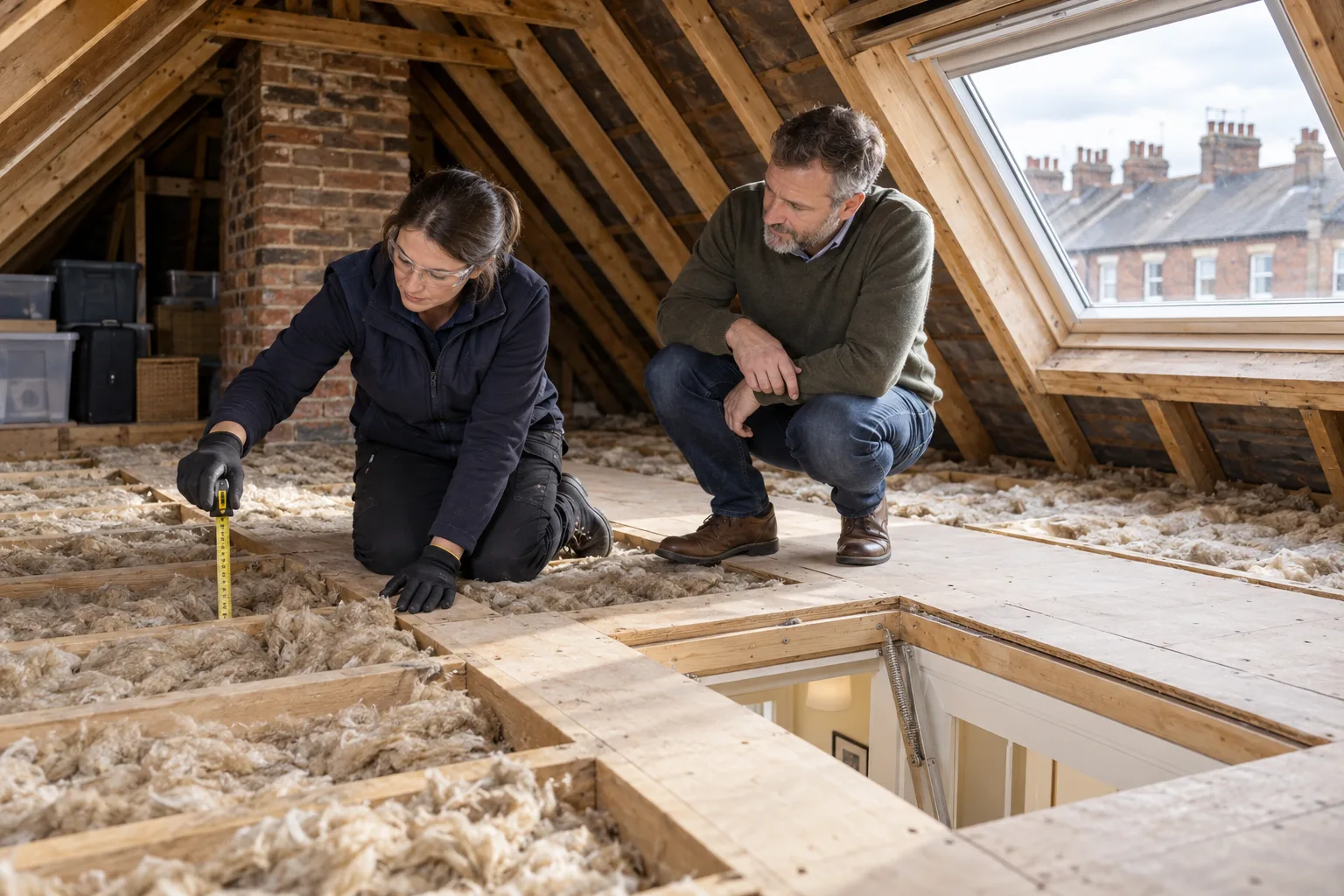
If you have a solid wall home and want to reduce your heating bills, the process starts with an assessment. An accredited retrofit assessor can confirm your wall type, identify what measures are most appropriate, and produce a whole house plan under PAS 2035.
For grant funding, contact your local authority or search for your local Warm Homes Local Grant scheme at gov.uk. The scheme is running until March 2028 and funding is allocated locally, so availability may vary by area and it is worth making contact sooner rather than later.
For independent advice on the full range of energy efficiency and low carbon heating options available for your home, including air source heat pumps, heat pump hot water cylinders, and insulation upgrades, speak to a qualified energy adviser before committing to any single measure.
Factual corrections checked 11 September 2026. Original publication date retained.