Ground source heat pumps offer steady high efficiency heating and qualify for the £7,500 Boiler Upgrade Scheme grant, with £9,000 available for eligible off gas grid homes until 31 March 2027. This guide covers how they work, 2026 costs, eligibility, and the checks to make before you commit.
Ground source heat pumps are one of the most efficient ways to heat a UK home, and in 2026 they sit at the centre of the government low carbon heating plans. They cost more to install than an air source system, but they can deliver very steady efficiency through the coldest months and they qualify for the same headline grant. This guide explains how they work, what they cost in 2026, the grants you can claim, and the practical checks worth making before you commit.
What a ground source heat pump actually does
A ground source heat pump moves heat from the ground into your home rather than burning a fuel to create it. Below the surface the ground stays at a fairly stable temperature all year, roughly 10 to 12 degrees in most of the UK, even when the air above is close to freezing. The heat pump uses a buried loop of pipe filled with a water and antifreeze mixture to absorb that low grade warmth, then a compressor raises the temperature to a useful level for your radiators, underfloor heating and hot water cylinder.
Because the ground temperature barely changes across the seasons, a ground source system does not have to work as hard on the coldest days as an air source unit, which draws heat from outdoor air. That stability is the main reason ground source systems tend to run at a higher seasonal efficiency, particularly in a well insulated home with a low flow temperature heating design.
Ground loops and boreholes explained
There are two common ways to install the buried pipework, and the choice has a big effect on cost and disruption.
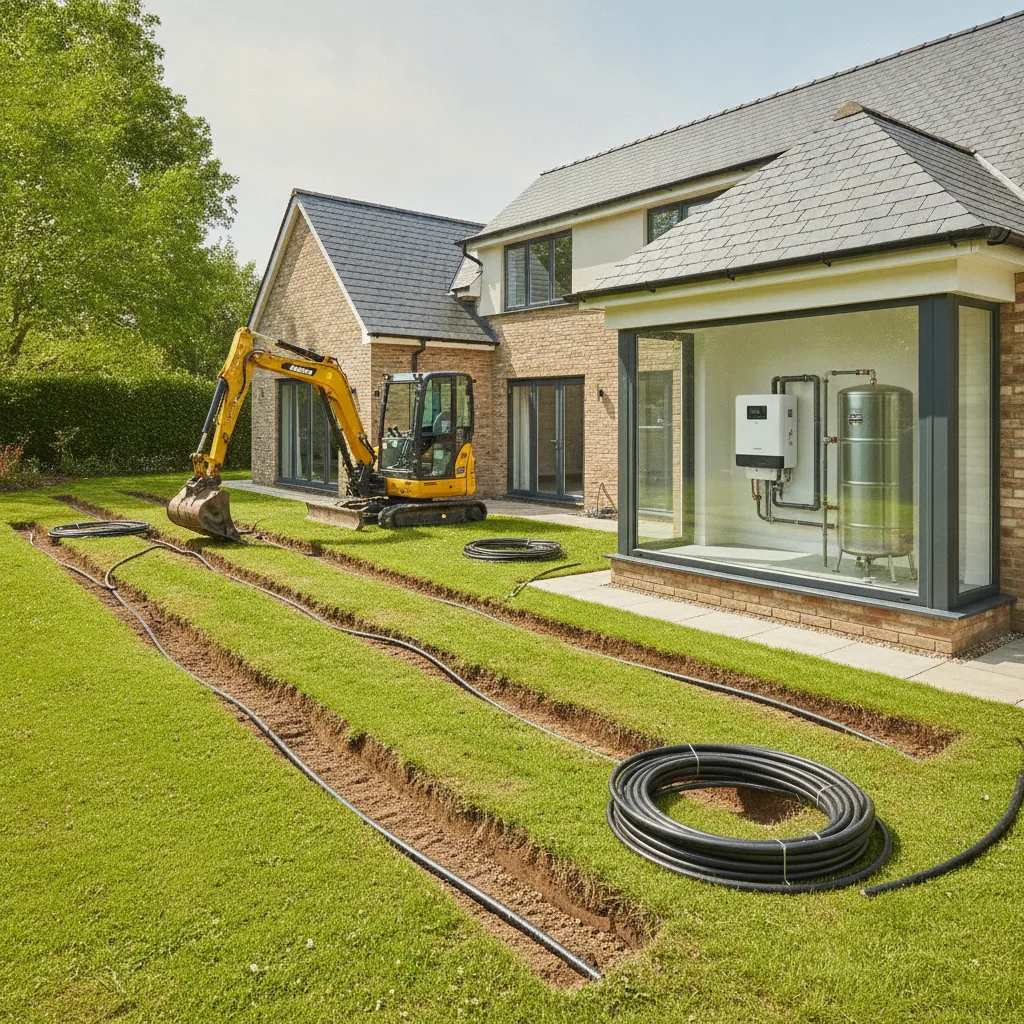
- Horizontal ground loops. Pipe is laid in trenches around one to two metres deep across a garden or field. This is the cheaper option, but it needs a reasonable amount of open land, so it suits rural properties and larger plots.
- Vertical boreholes. Pipe is sunk into one or more deep boreholes, often 100 metres or more. This needs far less surface area, so it works where space is tight, but the drilling adds cost.
The heat pump itself sits indoors, usually in a utility room or plant space, alongside a hot water cylinder. Unlike an air source unit there is no large box on an outside wall, which some homeowners prefer for appearance and noise reasons.
How efficient are ground source heat pumps
Efficiency is measured by the seasonal coefficient of performance, sometimes called the seasonal performance factor. This figure shows how much heat the system delivers for each unit of electricity it uses, averaged across a whole year. According to the Energy Saving Trust, the two factors that matter most are the temperature of the heat source and the temperature your heating system needs to run at. The closer those two temperatures are, the more efficient the heat pump.
Ground source systems benefit here because their heat source, the ground, stays warm and stable while outdoor air swings up and down. In practice this means a well designed ground source system in a well insulated home can achieve strong year round efficiency, often better than an equivalent air source unit. Your installer calculates the expected seasonal performance factor based on your specific home and heating design, so ask to see that figure before you sign anything. Ofgem publishes guidance on how the seasonal performance factor is worked out, so the number in your quote should be traceable to a proper calculation rather than a rough estimate.
What ground source heat pumps cost in 2026
Ground source systems cost more than air source ones, mainly because of the groundworks. The Energy Saving Trust puts typical costs in the region of £14,000 upward, while data from MCS certified installations shows the average installed cost of a ground source system in recent years sitting closer to £21,000, and borehole installations can run higher again depending on drilling depth and the number of boreholes needed.
The main things that push the price up or down are:
- Whether you use trenches or boreholes, with drilling being the more expensive route.
- The size of the heat pump, which depends on the heat demand of your home.
- Whether your existing radiators need upgrading to run at a lower flow temperature.
- Whether you need a new hot water cylinder and any changes to pipework.
- Ground conditions on your plot, such as rock or a high water table.
Because of the groundworks, a proper site survey matters more for ground source than for almost any other measure. Two homes on the same street can end up with very different quotes once ground conditions are assessed.
The grant you can claim in 2026
The main support for ground source heat pumps in England and Wales is the Boiler Upgrade Scheme, usually shortened to BUS. Under the current grant values, you can claim £7,500 towards a ground source heat pump, and this figure also covers water source heat pumps and systems on shared ground loops. The same £7,500 grant is available for air source heat pumps, while biomass boilers attract £5,000.
The grant is not paid to you directly. It is claimed by your installer and applied as a discount, so you see it come off your quote and invoice. That means the amount you actually pay is the total installed cost minus the grant.
There is also an enhanced grant for homes that are off the gas grid. From 21 July 2026 until 31 March 2027, eligible off gas grid properties can claim £9,000 towards an air source or ground source heat pump. This higher figure is designed to help homes currently running on oil or LPG, where the switch to a heat pump often delivers the largest running cost and carbon savings.
The Boiler Upgrade Scheme covers England and Wales. It sits within the wider Warm Homes Plan, the government programme for improving home energy efficiency and cutting heating emissions. If you want to understand the full range of support available, our page on the Warm Homes Plan and our overview of energy grants set out how the different schemes fit together.
Who is eligible for the Boiler Upgrade Scheme
The scheme is aimed at homeowners and landlords in England and Wales, covering both domestic and small non domestic properties. There are a few conditions worth knowing before you plan a project.
- The system must be installed and commissioned by an installer certified by the Microgeneration Certification Scheme, known as MCS. This is not optional. Without an MCS certified installer, the grant cannot be claimed.
- The heat pump replaces a fossil fuel heating system such as gas, oil or LPG, or an electric system, rather than an existing renewable one.
- The property must have a valid Energy Performance Certificate, and your installer will confirm whether any outstanding insulation recommendations need addressing first.
- The grant is claimed per property and covers one eligible system.
Your MCS certified installer handles the grant application on your behalf, which keeps the paperwork simple for the homeowner. It also means the quality of your installer matters a great deal, because they are responsible for both the system design and the grant claim.
Why MCS certification matters
MCS certification is the quality benchmark for small scale renewable heating in the UK. An MCS certified installer must follow the installation standards for heat pumps, size the system correctly for your home, and issue an MCS certificate on completion. That certificate is what unlocks the Boiler Upgrade Scheme grant, and it is also what many warranties and future support schemes rely on.
For a ground source system, correct sizing is especially important. An oversized heat pump cycles on and off and wastes energy, while an undersized one struggles on the coldest days. Because the ground loop is buried and effectively permanent, getting the design right the first time is far more important than with a system you can easily swap out later.
Running costs and savings
A heat pump runs on electricity, which costs more per unit than gas, but a good system delivers several units of heat for each unit of electricity, which is how the sums can still work in your favour. The Energy Saving Trust reports that a typical gas heated household can save around £234 a year by moving to a heat pump when they choose a smart electricity tariff and remove the gas meter. Savings are usually larger for homes coming off oil or LPG, which is one reason the enhanced off gas grid grant exists.
The single biggest factor in your running costs is how well your home holds heat. A heat pump works best at a lower, steadier flow temperature than a gas boiler, so insulation and correctly sized radiators or underfloor heating do a lot of the work. Improving loft and wall insulation before or alongside a heat pump install helps the system run at its most efficient and keeps bills down.
Is your home suitable
Ground source heat pumps are not right for every property, and the honest answer for many homes is that an air source heat pump is simpler and cheaper to install. Ground source tends to make the most sense when:
- You have enough land for trenches, or a plot where a borehole can be drilled.
- You are planning groundworks anyway, such as a new driveway or landscaping, so the digging cost can be shared.
- You want the highest seasonal efficiency and are prepared to invest more upfront to get it.
- You prefer no external unit on the property.
If space is limited or budget is the main concern, it is worth comparing a ground source quote against an air source heat pump quote, since both attract the same £7,500 grant. Homeowners and landlords alike should weigh the upfront difference against the long term efficiency gain.
Steps to take before you commit
- Get a proper heat loss survey. This calculates how much heat your home actually needs and drives the sizing of the whole system.
- Ask for the estimated seasonal performance factor in writing, and check how it was calculated.
- Confirm your installer is MCS certified and will handle the Boiler Upgrade Scheme claim.
- Check whether your radiators need upgrading and whether that cost is included in the quote.
- Compare a ground source quote with an air source quote so you can see the real difference in cost and expected performance.
- Ask about ground conditions and access, since drilling rigs and diggers need room to work.
How the grants fit together in 2026
The Boiler Upgrade Scheme is the headline route for heat pumps, but it is one part of a broader set of measures under the Warm Homes Plan. Insulation support, the enhanced off gas grid grant, and local delivery through the Warm Homes Local Grant all sit alongside it. The right combination depends on your property, your income, and where you live, so it is worth getting a clear picture of everything you may qualify for before deciding on a single measure. Our grants overview is a good starting point for mapping out what applies to your home.
Lifespan and maintenance
One of the quiet advantages of ground source is durability. The buried ground loop is expected to last for decades, often quoted at 50 years or more, because it sits undisturbed underground with nothing to wear out. The heat pump unit indoors typically lasts around 20 years, longer than a gas boiler, and needs only light annual servicing. That long life is part of what makes the higher upfront cost easier to justify over time, since the most expensive element of the system, the groundworks, only has to be paid for once.
The bottom line
Ground source heat pumps are a strong long term choice for homes with the space and budget for the groundworks. They deliver steady, high efficiency heating, they qualify for the £7,500 Boiler Upgrade Scheme grant, and off gas grid homes may be able to claim £9,000 until the end of March 2027. The upfront cost is higher than air source, so the decision comes down to your plot, your plans, and how much you value long term efficiency. Get a proper survey, use an MCS certified installer, and compare your options before you commit, and you will have a system that keeps your home warm for decades.