
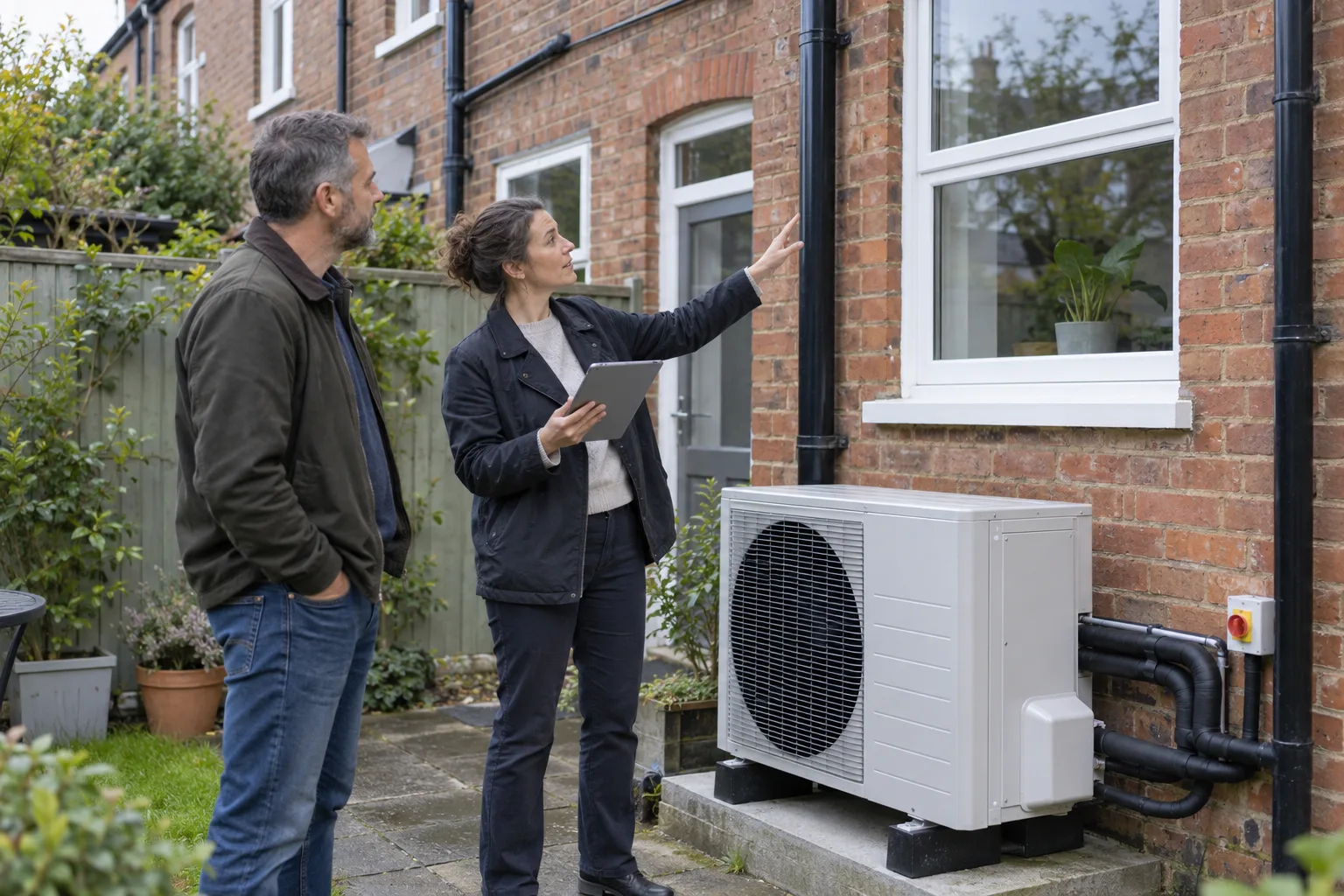
A heat pump can raise, lower or leave the current EPC energy rating broadly unchanged. Learn what decides the result before committing a rental property.
A heat pump can improve a rental property’s EPC, but it does not guarantee a higher headline band. Under the current assessment method, the energy efficiency rating is strongly influenced by modelled running cost. A well-designed heat pump uses less delivered energy than direct electric heating, yet replacing an efficient gas boiler can produce a smaller uplift, no meaningful change or even a lower current score because electricity costs more than gas in the calculation.
That makes this a modelling decision, not a product promise. A landlord should compare the existing heating system, heat loss, emitters, controls, hot water and the exact heat-pump specification before signing an installation contract. The commercial aim is not simply to fit low-carbon equipment; it is to choose a suitable route that works for the home, the tenant and the intended EPC outcome.
Quick answer: the starting heating system changes the result
The government’s consultation on reforming EPCs explains the present tension directly: installing a heat pump can reduce the current Energy Efficiency Rating because electricity has a higher relative cost than gas, even though a heat pump is an efficient low-carbon system. That does not mean heat pumps are inefficient. It means the existing headline EPC metric and the environmental rating answer different questions.
A switch from direct electric panel heaters, an electric boiler, oil, LPG or an older inefficient system can model differently from a switch out of a modern mains-gas boiler. The fabric also matters. A heat pump serving a draughty, poorly insulated house has to deliver more heat than the same system in a home with lower heat loss. Its design efficiency, flow temperature and emitter arrangement must be considered with the dwelling, not in isolation.
There is therefore no responsible national answer such as “a heat pump adds five EPC points”. The same product can produce different results in two properties, and a different recorded product or system configuration can alter the calculation again.
Why a low-carbon system can receive a mixed current EPC result
Government guidance confirms that RdSAP 10.0.1 is the current existing-home methodology. The BRE RdSAP 10 specification uses standard assumptions to estimate the dwelling’s energy performance. The assessor records the property and installed systems; they do not calculate the certificate from the tenant’s actual bills or a sales quotation.
The headline energy efficiency band shown on a current domestic EPC is cost-based. The certificate also contains an environmental impact rating, which reflects modelled carbon emissions. A heat pump can improve the environmental result while producing a less dramatic change in the cost-based headline band. Confusing those two ratings is one reason apparently contradictory heat-pump claims circulate.
The calculation considers annual space-heating and hot-water demand, system efficiency, fuel-price assumptions, controls, auxiliary electricity and other regulated energy uses. It also considers the building fabric that creates the demand. A heat pump cannot erase heat loss through an exposed roof, uninsulated wall or poorly recorded floor. Likewise, fabric work does not prove that a proposed heat pump is correctly sized or suitable for the existing emitters.
What the assessor needs to record correctly
The exact system matters. Air-to-water, ground-source and air-to-air heat pumps are not interchangeable entries. Product identification, heat distribution, hot-water provision, controls and any secondary heating must reflect what is installed and what the methodology permits the assessor to record. If the evidence does not support a specific product or efficiency input, the assessment may have to use a defined fallback.
- Keep the MCS certificate, commissioning pack, product data and installation invoice together for the property.
- Record the outdoor and indoor unit model numbers, heat emitter changes, hot-water cylinder and controls.
- Keep evidence of insulation, glazing or other fabric work completed before or alongside the installation.
- Make sure the assessor can access the equipment and identify any retained secondary heating.
- Use an address-specific model before installation, then commission a qualified assessment if a new lodged EPC is required.
Our landlord EPC evidence guide explains how to assemble useful property records. Evidence helps an assessor record completed work accurately, but paperwork or testing alone does not change the register. The accepted evidence must be used in an assessment and the resulting certificate must be lodged.
Compare the route from the system you have now
For a D-rated rental, start with the current score and the heating system already recorded. A property two points below C with modern gas heating presents a different question from an off-gas-grid house with an old oil boiler or a flat heated by direct electric panels.
If the home has direct electric heating or storage heaters, use the all-electric rental EPC C guide to separate panel heaters, storage systems, tariffs, hot water and heat-pump options. If it currently has gas heating, the gas-boiler rental guide explains why a boiler does not automatically prevent C and why replacement should not be assumed before the property is modelled.
Ask for at least two scenarios: the current dwelling recorded accurately, and the proposed system with the credible supporting work. Where useful, compare a fabric-first scenario as well. This shows whether the heat pump is the measure that moves the band, whether another input is holding the property back, and whether a lower-cost evidence or improvement route should be completed first.
The broader D-to-C evidence-first plan gives the order: verify the certificate, test credible inputs, compare cost and disruption, then commission only the route the property supports. That avoids buying a heat pump for an EPC promise that was never modelled.
EPC modelling is not the same as heat-pump design
An EPC scenario can show how a proposed system may affect the rating. It does not replace a room-by-room heat-loss calculation, emitter design, electrical check, noise assessment, planning review or lease-consent process. Those checks determine whether the system can heat the property comfortably and lawfully.
For a rental, include tenant disruption, hot-water demand, outdoor-unit access, condensate, servicing, controls and responsibility for ongoing operation. Flats can introduce extra constraints through leases, freeholder consent and the absence of a suitable external location. A favourable EPC scenario is not permission to install, and a grant approval is not a guarantee of the lodged EPC result.
Use the air source heat-pump decision guide to review suitability, installation and funding questions separately from the EPC calculation. Cucumber Eco can help compare the property routes, while the contracted installer remains responsible for the heating design and installation.
How the Boiler Upgrade Scheme changes the decision
The current Ofgem property-owner guidance confirms that the Boiler Upgrade Scheme supports eligible low-carbon heating installations in England and Wales through an MCS-certified installer. Government guidance currently lists £7,500 for eligible air-to-water and ground-source systems, £2,500 for eligible air-to-air systems and a temporary additional £1,500 for qualifying off-gas-grid oil or LPG replacements until March 2027.
A grant reduces eligible installation cost; it does not guarantee zero customer contribution, lower bills or EPC C. Eligibility, installer approval, system suitability and the EPC result are separate decisions. Compare the net installation cost with the property-specific score change and with any lower-cost route that the current assessment supports.
The Boiler Upgrade Scheme application guide explains the installer-led process and evidence checks. Do not commit because a quotation presents the grant as automatic or treats the headline amount as proof that a heat pump is the best EPC measure for the property.
Future EPC reform and the Home Energy Model
Government is developing the Home Energy Model EPC methodology for reformed domestic EPCs. The proposed approach separates fabric performance, heating-system performance, smart readiness and energy cost instead of relying on one headline cost-based band. Exact implementation detail and band boundaries should not be treated as final before the government publishes the completed methodology.
For landlords in England and Wales, the government response on the future private-rented standard confirms a planned single compliance date of 1 October 2030, subject to legislation. The future standard is intended to require C on the fabric metric and C on either the heating-system or smart-readiness metric. A current-style EER C lodged before 1 October 2029 is intended to receive transitional recognition until that certificate expires or is replaced.
Until those changes take effect, the current domestic MEES landlord guidance continues to set the enforceable minimum at EPC E for relevant privately rented homes in England and Wales unless a valid exemption applies. Do not present the planned 2030 C standard as current law.
That future direction makes heating-system quality more visible, but it does not justify guessing today’s lodged score or installing unsuitable equipment early. A landlord considering a heat pump should understand both the current EER outcome and the proposed future metrics, then make a decision that remains sensible if implementation detail changes.
A landlord checklist before accepting a quote
- Confirm the current EPC score, certificate date and exact heating and hot-water entries.
- Model the proposed heat pump and any supporting fabric or emitter work for this address.
- Ask which product data and efficiency inputs the scenario uses, and what happens if the assessor cannot verify them.
- Separate the headline energy efficiency rating from the environmental impact rating.
- Confirm heat loss, radiator or underfloor requirements, electrical capacity, noise, planning and consent.
- Check the installer’s MCS status and the live Boiler Upgrade Scheme terms where funding is relevant.
- Record the expected EPC result as a modelled scenario, not a guarantee, until the completed system is assessed and lodged.
Frequently asked questions
These short answers separate the current EPC calculation from installation and funding decisions.
Can a heat pump make an EPC rating go down?
Yes. Under the current cost-based Energy Efficiency Rating, a switch from an efficient gas boiler can sometimes lower the score because of the relative fuel-cost assumptions. The outcome depends on the whole property and proposed system, so it should be modelled before installation.
Does a heat pump guarantee EPC C?
No. The score also depends on the starting heating system, fabric heat loss, hot water, controls, product data and other recorded inputs. A grant or installation certificate does not guarantee a particular EPC band.
Will a heat pump improve the environmental impact rating?
It will usually improve the modelled carbon position compared with fossil heating, but the certificate’s environmental rating is separate from the current headline cost-based band. Ask which rating a claim refers to.
Should a landlord wait for the new Home Energy Model EPC?
Not automatically. The right timing depends on the property, current legal position, score gap, heating need and investment plan. Compare the current route with the announced future framework rather than delaying essential work or rushing into an unsuitable system.
Model the outcome before changing the heating
A heat pump can be the right heating and EPC route, especially where the existing system, fabric and available funding support it. It can also be an expensive answer to the wrong question. Verify the current certificate, model the exact proposal and keep heating design, grant eligibility and EPC compliance as connected but separate checks.
Start your free EPC assessment to compare the credible routes before paying for major work.