Heat pumps are low maintenance but not no maintenance. This 2026 guide covers what a heat pump service includes, how often it is needed, typical costs of £150 to £350 a year, and the manufacturer and MCS warranty rules that a missed service can invalidate.
A heat pump is one of the lowest maintenance heating systems you can fit, but low maintenance does not mean no maintenance. A yearly check keeps the unit running at its designed efficiency, protects the manufacturer warranty that sits behind your grant funded install, and catches small faults before they turn into expensive ones. This guide explains what heat pump servicing actually involves in 2026, what it costs, how often it is needed, and the warranty rules that can catch homeowners out.
Why heat pump servicing matters
A heat pump moves heat rather than burning fuel, so it has far fewer moving parts than a gas boiler and no combustion to check. That is why servicing is lighter and, for many homes, less frequent than the annual gas boiler check people are used to. Even so, a heat pump is a sealed refrigeration system working hard through every cold month of the year, and its performance drifts over time if nobody keeps an eye on it.
There are three good reasons to keep up with servicing. The first is efficiency. Blocked filters, a fouled outdoor coil, low system pressure or an incorrect refrigerant charge all force the unit to work harder for the same heat. Industry and manufacturer guidance suggests a neglected heat pump can draw noticeably more electricity than a well maintained one, which quietly pushes up your running costs.
The second reason is your warranty. Most manufacturers require documented annual servicing as a condition of cover, and missing a service can invalidate the remaining warranty period. More on that below.
The third reason is reliability. A yearly inspection catches worn parts, weak fittings and early refrigerant issues while they are cheap to fix. The alternative is a mid winter breakdown and a much larger repair bill.
What a heat pump service includes
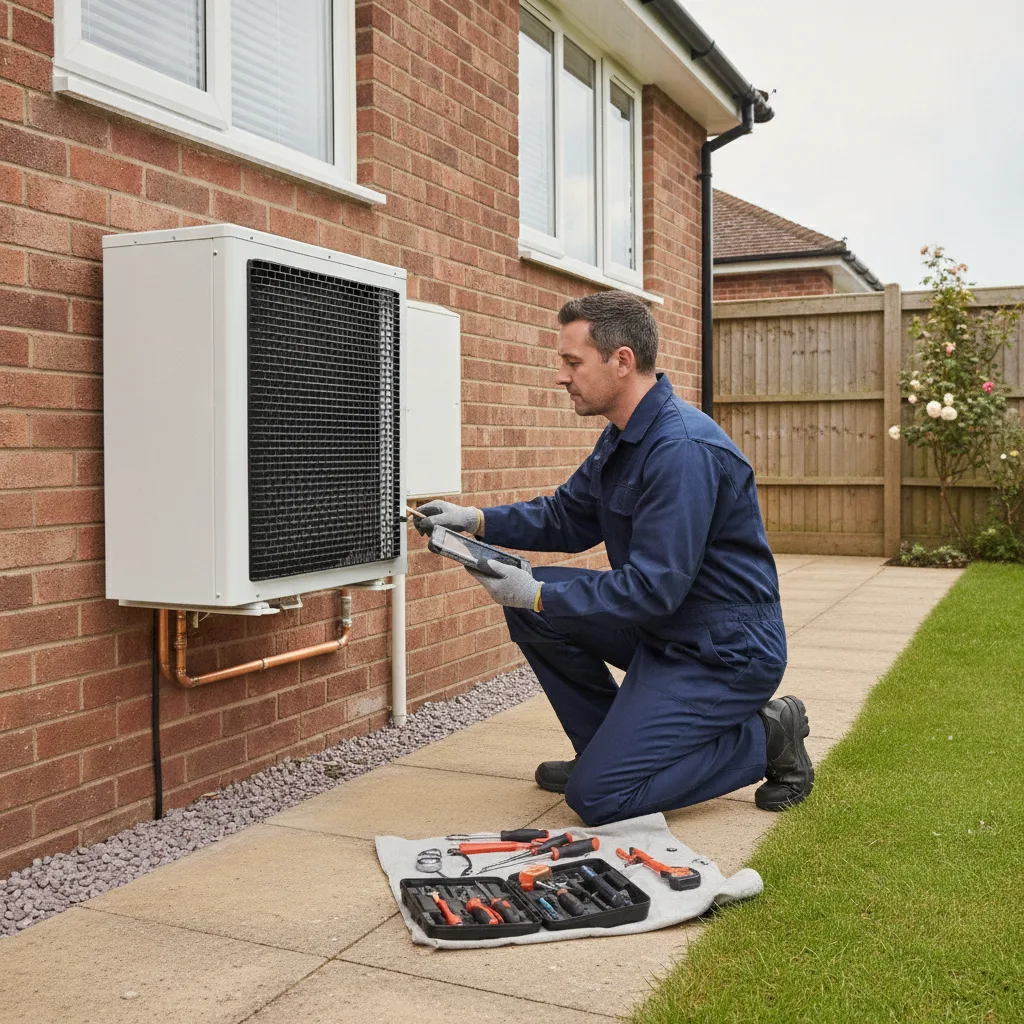
A professional heat pump service is a systematic health check of the whole system, indoors and out. A typical visit covers the following.
- Cleaning or replacing the air filters and clearing debris, leaves and dirt from the outdoor unit and its coil.
- Checking the refrigerant system for correct pressure and any sign of leaks.
- Inspecting electrical connections, controls, sensors and the safety cut outs.
- Testing the circulation pump, expansion vessel and system pressure on the water side.
- Checking the hot water cylinder, its coil and the immersion backup where fitted.
- Reviewing the flow temperature, weather compensation and control settings so the system is tuned for the season.
- Inspecting condensate drainage so it cannot freeze or block.
- Running a full performance test and recording the results against the design figures.
For ground source heat pumps there is an extra focus on the ground loop, the brine or glycol antifreeze mixture and the loop pressure, since the buried collector is doing the heavy lifting on the cold side of the system.
How often should a heat pump be serviced
For most homes the answer is once a year. That matches the requirement in nearly every manufacturer warranty and keeps the system tuned before the heating season. Many installers also schedule a first service around twelve months after commissioning to confirm the system has settled in correctly and the settings chosen at handover are still right for the home.
Some manufacturers allow a slightly longer interval on certain models, but you should always follow the specific instructions in your own documentation rather than a general rule of thumb. If your warranty says annual, treat annual as the minimum.
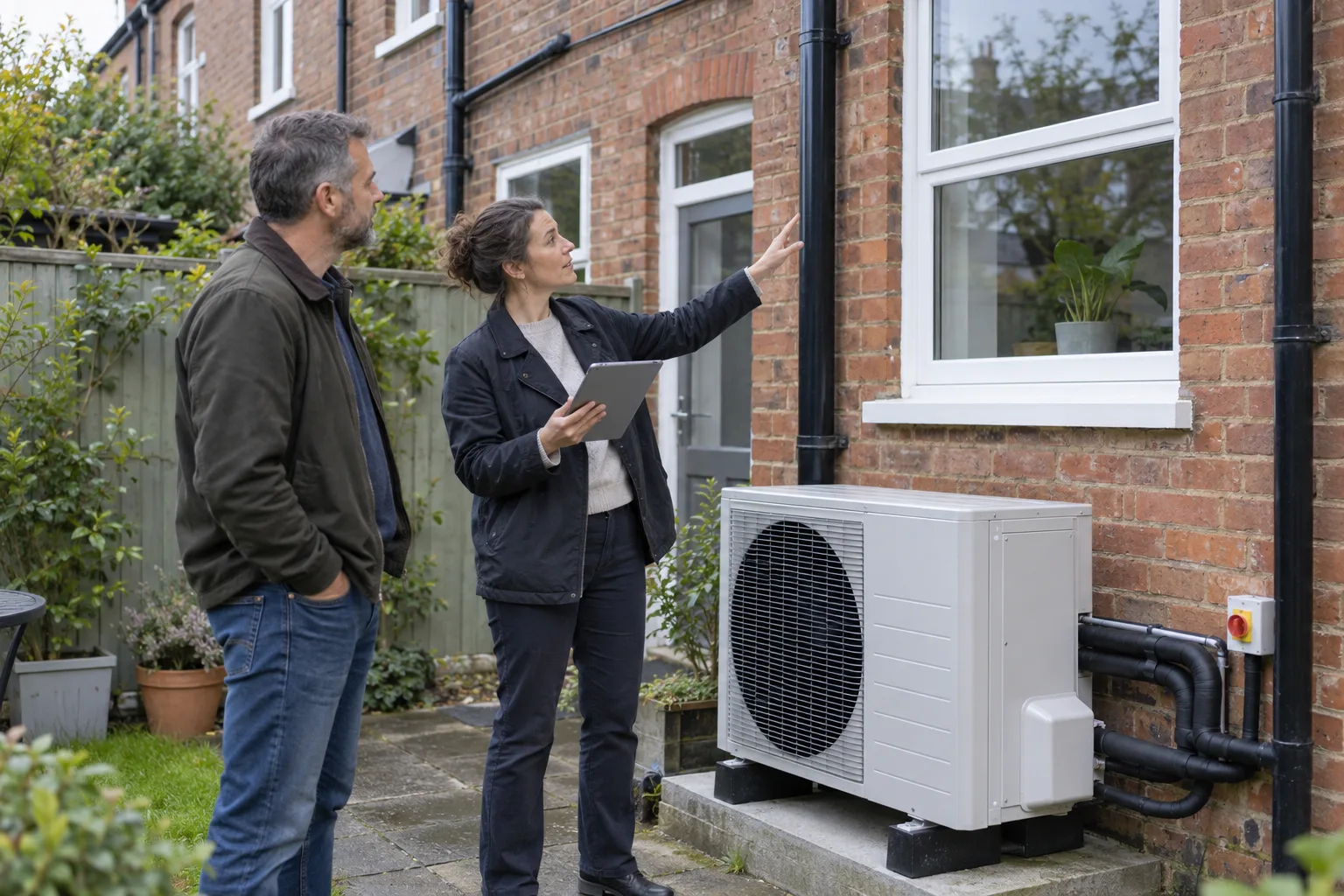
Between professional visits there are simple checks you can do yourself. Keep the outdoor unit clear of leaves, snow and vegetation, make sure nothing is blocking the airflow around it, glance at the system pressure gauge from time to time, and keep an eye out for unusual noise, ice build up or a drop in performance. None of this replaces the professional service, but it helps the system run well between visits.
How much does heat pump servicing cost in 2026
Servicing costs vary by system type, region and whether the work is a one off visit or part of a plan. Based on 2026 UK cost data, the typical ranges are as follows.
- Air source heat pump annual service: commonly £150 to £300 for a one off visit, with some quotes from around £120.
- Ground source heat pump annual service: around £200 to £350, reflecting the extra ground loop and antifreeze checks.
- Monthly service plans: roughly £10 to £20 a month for an air source system, and up to around £25 a month for a ground source system, usually bundling the annual service with breakdown cover.
Many installers include the first year or two of servicing in the original installation price, so check what you already have before booking anything separately. A service plan can be worth it if it spreads the cost and adds repair cover, but compare it against simply paying for a single annual visit, because a plan is not always cheaper overall.
Set against the running cost savings of a system kept at full efficiency, and the risk of a large out of warranty repair, a yearly service is usually money well spent.
Servicing and your warranty: the rule that catches people out
This is the part homeowners most often miss. A heat pump usually comes with two separate layers of protection, and both matter.
The first is the manufacturer product warranty, typically in the range of seven to ten years depending on brand and whether you registered the product and used an accredited installer. Nearly all manufacturers make this cover conditional on documented annual servicing carried out by a suitably qualified engineer. Skip a service, or fail to keep the paperwork, and you risk losing the rest of that cover just when you might need it.
The second layer comes through MCS. If your heat pump was installed under the Boiler Upgrade Scheme it had to be fitted by an MCS certified installer, and MCS certified installations carry a workmanship warranty backed by an insurance backed guarantee. This protects you against faults in the installation work itself, separately from the manufacturer cover on the equipment.
The Boiler Upgrade Scheme grant does not change your warranty terms directly, but because it requires an MCS certified install it usually means you qualify for the manufacturer's full warranty in the first place. To keep all of that protection alive, keep every service record, use an engineer who meets the manufacturer's requirements, and register the product when it is fitted.
Refrigerant, F-gas rules and who can work on your system
Heat pumps contain a refrigerant that carries heat around the sealed circuit. In 2026 the preferred refrigerant for new domestic heat pumps is R290, also known as propane, which has a very low global warming potential. Older and some current units use R32, which remains legal but is being gradually restricted, while the higher impact refrigerants of the past are being phased down.
For homeowners the practical point is simple. Domestic heat pumps are sealed systems with a small refrigerant charge, so you do not normally need to arrange periodic refrigerant leak checks yourself the way a large commercial plant operator would. However, any work that touches the refrigerant circuit, whether installation, repair or refrigerant recovery, must legally be carried out by an engineer who holds the appropriate F-gas qualification. This is another reason to use a properly certified company rather than a general handyman for anything beyond basic external cleaning.
How long should a heat pump last
Longevity is one of the strongest arguments for keeping up with servicing. According to the Energy Saving Trust, an air source heat pump that is correctly designed, professionally installed and properly maintained will commonly operate for around fifteen to twenty years, and often longer.
Ground source heat pumps last even better. The heat pump unit itself has a similar service life, but the buried ground loop is expected to keep working for decades beyond that, which is part of what makes ground source such a long term investment. In every case the phrase to hold on to is properly maintained. A system that is serviced on schedule reaches the top of these ranges. A neglected one does not.
Grants and the wider running cost picture
Servicing is only one part of what makes a heat pump affordable to own. The Boiler Upgrade Scheme continues to offer a £7,500 grant towards an air source or ground source heat pump in England and Wales, applied as a discount by your MCS certified installer rather than paid to you. For eligible homes off the mains gas grid, an enhanced grant of £9,000 is available on qualifying air source and ground source installations from 21 July 2026 until 31 March 2027.
These grants are one strand of the government's wider Warm Homes Plan, which brings together heat pump support, insulation and other measures to make homes cheaper to run and lower in carbon. A heat pump only delivers its promised low running costs if the fabric of the home is up to scratch and the system is kept in good order, which is why servicing, sensible controls and good insulation all work together.
Common faults a service can catch early
Most heat pump problems start small and stay cheap to fix if they are spotted in time. A yearly service is the natural moment to catch them. The issues engineers see most often include the following.
- A gradual drop in refrigerant charge, which reduces heat output and pushes up electricity use long before the system fails outright.
- A fouled or iced outdoor coil, often caused by leaves, debris or restricted airflow around the unit.
- Falling system pressure on the water side, or a tired expansion vessel that no longer holds pressure correctly.
- A blocked or frozen condensate drain, which can trip the unit out on a cold night.
- Control settings that have drifted away from the design, such as a flow temperature set too high, which quietly erodes efficiency.
- Worn circulation pumps or noisy fan bearings that are cheap to replace early and expensive to ignore.
None of these are dramatic on their own, but left unchecked they either raise your bills or lead to a breakdown. Catching them during a routine visit is exactly what the annual service is for.
Seasonal heat pump care through the year
You can support the professional service with a few simple habits across the seasons. In autumn, clear fallen leaves and garden debris from around the outdoor unit before the heating season begins and book the service if one is due. In winter, keep the unit clear of drifting snow and check that airflow around it is not blocked, but never chip ice off the coil by hand. In spring and summer, when the heating load is light, take the chance to check the surroundings, trim back any vegetation that has grown too close, and confirm the condensate drain is running freely. These small checks cost nothing and keep the system in good shape between visits.
Heat pump servicing questions homeowners ask
Do I legally have to service my heat pump? There is no law forcing a homeowner to service a domestic heat pump, but your manufacturer warranty almost certainly requires it, so in practice a yearly service is the sensible and cost effective choice.
Can I service a heat pump myself? You can and should do the basic external cleaning and visual checks, but the refrigerant, electrical and performance work must be done by a qualified engineer, and anyone touching the refrigerant circuit must hold an F-gas qualification.
Is heat pump servicing more expensive than a boiler service? A one off heat pump service can cost a little more than a typical gas boiler service, but heat pumps last longer and, kept in good order, run more efficiently, so the lifetime picture is favourable.
What to do next
If you already have a heat pump, dig out your installation paperwork and check three things: when your last service was, what your manufacturer requires to keep the warranty valid, and whether any servicing is still included from your original install. Book the next service before the heating season if one is due.
If you are still deciding whether to install a heat pump, factor a modest annual service cost into your running cost sums, choose an MCS certified installer so your grant and warranty are protected, and ask up front what servicing is included and what it will cost in later years.
Cucumber Eco works with MCS certified installers and can help homeowners and landlords understand the grants, the warranty rules and the ongoing care a heat pump needs. A well chosen, well maintained heat pump is a genuinely low fuss way to heat a home for the next two decades, provided that yearly check never gets forgotten.