The Home Energy Model is the government replacement for the current EPC assessment method, with domestic EPC reforms now expected in the second half of 2027. This guide explains what the change means in 2026, how it links to Warm Homes Local Grant, the Warm Homes Plan and BUS, and what homeowners and landlords should do now.
The Home Energy Model is one of the most important changes coming to home energy advice in England and Wales. It is the government replacement for the current domestic assessment method behind Energy Performance Certificates, better known as EPCs. In plain English, it will change how a home is assessed, how upgrade options are modelled, and how the property market understands energy performance.
That matters because EPCs sit behind almost every serious retrofit conversation. They affect sales and lettings. They influence landlord planning. They are used in grant checks. They shape what a homeowner thinks is worth doing first. They also affect the confidence people have when choosing insulation, solar panels, smart controls, heat pumps, batteries and ventilation upgrades.
The change is not live yet. The government update published on 17 March 2026 says domestic EPC reforms are now expected to launch in the second half of 2027, with further conclusions due later in 2026. That gives homeowners, landlords and installers a useful window. The current EPC system is still the live system today, but the direction of travel is clear. More accurate modelling, better input data and clearer upgrade advice are coming.
This guide explains what the Home Energy Model is, why it matters, what it could change for grants, and what to do now if your home has an EPC rating of D, E, F or G.
What is the Home Energy Model
The Home Energy Model is the new calculation engine being developed by government for assessing home energy performance. It is intended to replace the current Standard Assessment Procedure family of methods used for domestic energy ratings.
For existing homes, the key point is that the model is being designed as a replacement for Reduced Data Standard Assessment Procedure, usually called RdSAP. RdSAP is the simplified method most commonly used when producing a domestic EPC for an existing property.
The government methodology paper explains that RdSAP is currently the most common method used to generate domestic EPCs, while full SAP is used where more complete data is available, such as for a newly built home. The proposed Home Energy Model approach is more modular. That means the assessor input process can be structured around clearer data modules instead of one fixed and ageing calculation route.
For a homeowner, the technical detail matters less than the outcome. A better model should make EPC advice more relevant to the actual property. It should be better at reflecting modern heating systems, smart energy use, fabric upgrades, solar panels, batteries and the way homes are occupied.
Why the current EPC system is being replaced
EPCs are useful, but they are not perfect. They give a quick, standardised view of a property, but many homeowners recognise the weaknesses. Some recommended measures can feel generic. Some running cost assumptions do not match real bills. Some modern technologies are not represented as clearly as they should be.
The current EPC rating is based on a band from A to G, with A being the most efficient and G being the least efficient. GOV UK technical notes confirm that an EPC is required when a building is newly constructed, sold or let, and that EPCs are valid for 10 years.
That 10 year lifespan is helpful for the market, but it also means the certificate on a property can be out of date. A home may have had loft insulation, cavity wall insulation, solar panels, smart controls or a heat pump installed since the certificate was lodged. Alternatively, a certificate may still show recommendations that no longer make practical sense.
The Home Energy Model is part of a wider attempt to make home energy ratings more useful. The goal is not just to produce a letter rating. The goal is to give households, landlords, lenders, councils and installers better evidence for decisions.
The 2026 timeline homeowners need to know
The most important date is 17 March 2026. That is when the government updated the Home Energy Model EPC methodology paper and said the launch of domestic EPC reforms would move to the second half of 2027.
The same update says the government will work with industry and the devolved administrations to agree a new launch date and shared implementation plan by Summer 2026. It also says conclusions are planned later in 2026 alongside the full response to the 2024 Energy Performance of Buildings consultation.
That means 2026 is a preparation year, not a switch over year. Existing EPCs still matter. Current grant schemes still use current EPC evidence. Landlords still need to comply with current rules. Homeowners applying for funded upgrades should not wait for the new model if their property is cold, costly to heat or already eligible for help.
The practical message is simple. Use the current EPC to open funding routes now, but expect assessment quality and recommendations to change when the new system arrives.
What could change on future EPCs
The government has not yet published the final rules for the new EPC system, so nobody should claim certainty on the exact layout of future certificates. However, the methodology documents and the Warm Homes Plan show the likely direction.
Better evidence for each home
Future assessments are expected to give a more rounded view of home performance. Instead of relying only on a single headline energy cost rating, the reformed approach is expected to make it easier to understand fabric performance, heating system efficiency, smart readiness and energy cost.
That distinction matters. A home can have good insulation but expensive electric heating. Another home can have weak fabric but a low carbon heating system. Another may have solar panels and a battery but still leak heat through the roof and walls. A better assessment should help separate those issues instead of hiding them inside one simple score.
For homeowners, that could mean clearer upgrade priorities. A report might make it easier to see whether the next sensible step is loft insulation, wall insulation, ventilation, heating controls, solar panels, a battery or a heat pump. For landlords, it could make capital planning less speculative. For installers, it could support better design conversations with fewer assumptions.
Why this matters for Warm Homes Local Grant
Warm Homes Local Grant is one of the main funded routes for low income households in England. GOV UK says eligible homes must be in England, privately owned, and have an EPC of D, E, F or G. Household income must usually be £36,000 a year or less, although postcode and benefit routes can also apply.
Why EPC evidence is central
The public GOV UK page says the grant can support wall, loft and underfloor insulation, air source heat pumps, smart controls and solar panels. It also says the local council will usually contact applicants within 10 working days to get more information and arrange a survey.
The policy guidance goes deeper. It says eligible properties must have an EPC Energy Efficiency Rating in bands D to G. It also describes a non binding aspiration for upgraded homes to reach EPC band C where possible. If a home has already received support through earlier funded routes, the guidance says it must either reach EPC band C or receive a low carbon heating technology as part of further treatment.
That is why the Home Energy Model matters. Grant design depends on assessment evidence. If the new model gives councils and retrofit teams better information, it could improve measure selection and reduce poor sequencing. A home with weak roof insulation, missing ventilation and an old heating system needs a different plan from a home that mainly needs solar panels and smart controls.
Why this matters for the Warm Homes Plan
The Warm Homes Plan is the wider government programme behind many of the changes now shaping the market. The plan says the government wants to help upgrade 5 million homes by 2030. It also describes a major investment package across grants, finance and market support.
The plan includes £2.7 billion in grants and £2 billion in low interest loans as part of a universal offer for heat pumps, solar panels, batteries and more. It also says low income and fuel poor households will benefit from around £5 billion investment to 2030, with £4.4 billion in direct capital grants backed by an initial £600 million from the Warm Homes Fund.
The plan also links home upgrades to jobs. It projects that the number of jobs supported in energy efficiency and clean heating could rise from 60,000 in 2023 to up to 240,000 in 2030.
All of this needs good assessment. If millions of homes are being upgraded, the system needs to know which homes need which measures, in which order, and with what likely impact. That is where a better EPC model becomes more than paperwork. It becomes a planning tool.
Why this matters for BUS
The Boiler Upgrade Scheme, usually called BUS, is still the main national grant for many heat pump installations in England and Wales. GOV UK confirms current grant values of £7,500 for an air source heat pump, £7,500 for a ground source heat pump, £5,000 for a biomass boiler and £2,500 for an air to air heat pump. GOV UK also confirms that these grant values are effective from 28 April 2026.
The same GOV UK guidance says the maximum capacity is 45kWth for individual systems, 70kWth where a heat pump is installed with one or more additional heat pumps, and 300kWth for shared ground loops.
The Home Energy Model is not the same thing as BUS eligibility. BUS has its own rules and is administered through installers and Ofgem. However, EPC quality still matters in the heat pump conversation because homeowners rely on assessment evidence to understand the state of their home before investing.
A heat pump is not just a box outside the property. It is part of a whole heating system. The building fabric, radiator sizes, hot water demand, controls, flow temperature and electricity tariff all affect the experience. A better energy model should support better advice before households spend money or apply for funding.
What homeowners should do before 2027
The coming Home Energy Model should not be a reason to delay sensible work. If your home is cold, expensive to heat or eligible for funding, the right action in 2026 is to use the current system while preparing for the future.
Start with the current EPC
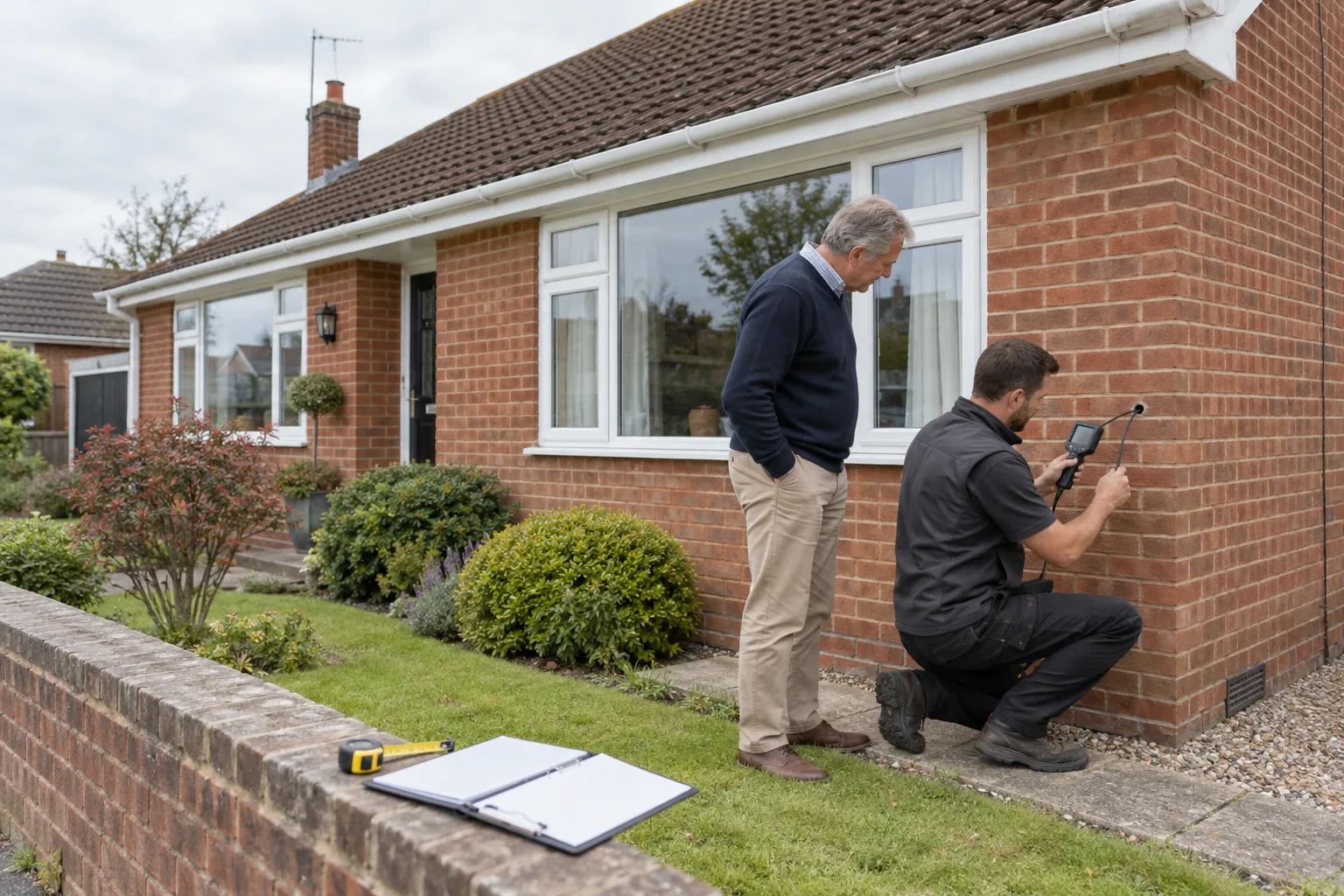
Start by checking your current EPC. If it is missing, out of date or does not reflect recent improvements, consider whether a new assessment would help. Remember that EPCs are valid for 10 years, but valid does not always mean accurate for today.
Next, look at the basic fabric. Loft insulation, cavity wall insulation, solid wall insulation, underfloor insulation, draught proofing and ventilation are often the foundations of a good retrofit plan. These measures can make any heating system work better, whether the home stays on gas for now or moves to a heat pump later.
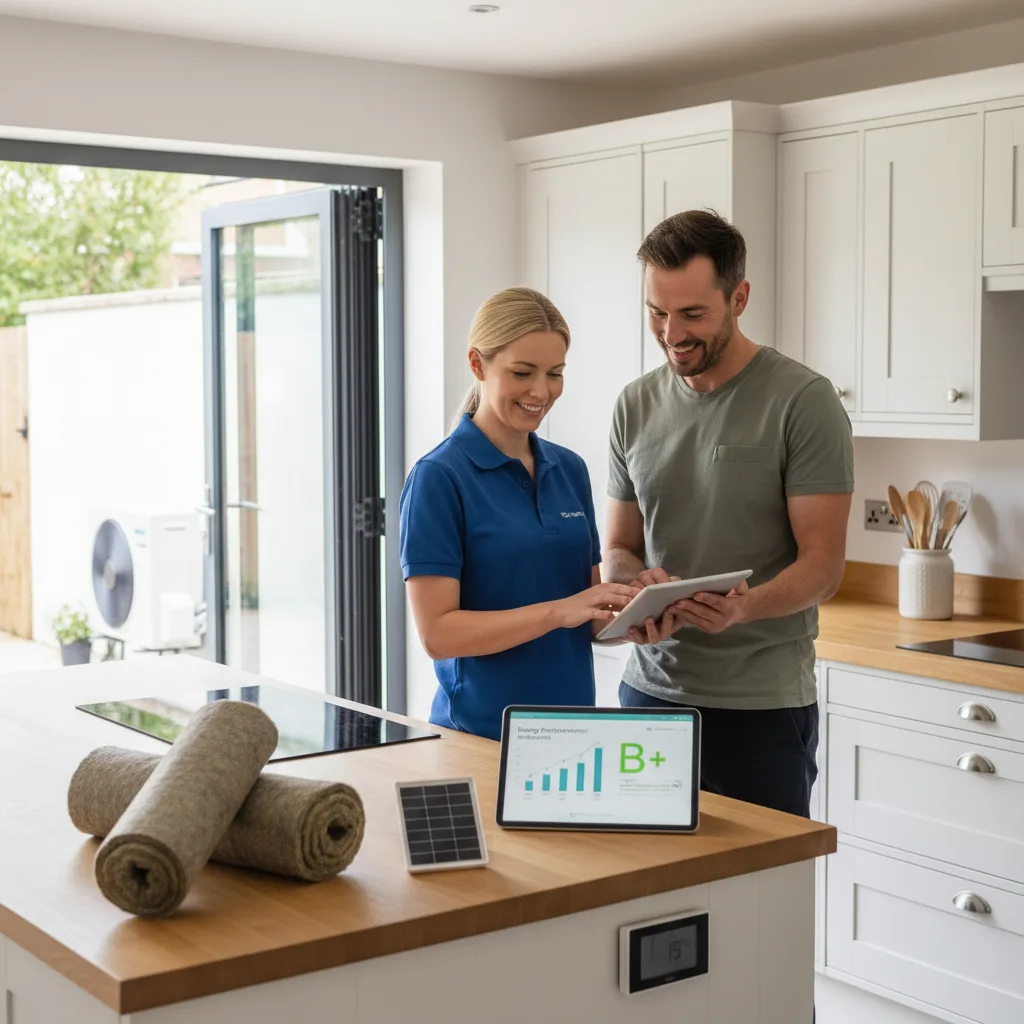
Then look at electricity. Ofgem says the April to June 2026 price cap is £1,641 a year for a typical direct debit dual fuel customer. The average electricity unit rate is 24.67p per kWh and the average gas unit rate is 5.74p per kWh. Those numbers explain why solar panels, batteries, smart controls and time of use tariffs are increasingly part of the retrofit conversation.
Finally, check funding before paying privately. Warm Homes Local Grant may cover insulation, solar panels, smart controls and air source heat pumps for eligible households in England. BUS may support eligible heat pump projects in England and Wales. The Warm Homes Plan points to more finance and support over the rest of the decade.
What landlords should watch
Landlords should pay particular attention to the Home Energy Model because EPC rules are central to rental strategy. The current certificate system remains live, but any reform to EPC metrics could affect how landlords think about upgrades, risk and compliance.
A property with an EPC of D today may still be lettable under current rules, but it may also be a funding opportunity or a future compliance risk. A property with an EPC of E, F or G needs closer attention. If the home is privately rented and occupied by an eligible tenant, Warm Homes Local Grant may be relevant, subject to local delivery rules and landlord consent.
The key mistake is waiting until the last moment. Retrofit planning takes time. Surveys, permissions, tenant access, ventilation checks, installer availability and grant paperwork can all slow progress. A landlord who starts with a proper assessment in 2026 is in a stronger position than a landlord who waits for reforms to land in 2027.
What installers and advisers should watch
For installers and advisers, the Home Energy Model is a signal that evidence quality is becoming more important. The market is moving away from single measure selling and towards whole home planning.
That does not mean every home needs every measure. It means the recommendation should fit the property. A home with uninsulated walls needs a different pathway from a flat with limited roof access. A rural oil heated property may need a different heating design from an urban gas property. A solar battery recommendation needs to reflect consumption, generation, export rates and tariff behaviour.
The better the assessment model, the more visible weak advice becomes. Installers who can explain the building, the heating system, the funding route and the expected savings in clear terms will be better placed than those who only quote for one measure.
The current EPC still matters
It is tempting to hear about a new system and assume the current one no longer matters. That would be wrong. The current EPC remains the document that buyers, tenants, landlords, councils and many grant teams recognise today.
If a home has a D, E, F or G rating, that can be important evidence for Warm Homes Local Grant. If a landlord needs to understand rental risk, the current EPC is still the starting point. If a homeowner is comparing upgrade options, the current EPC recommendations can still be useful, provided they are treated as a guide rather than a full retrofit design.
The best approach is to treat the EPC as a doorway, not the final plan. It can show whether the property is likely to qualify for support. It can flag obvious weaknesses. It can help structure the first conversation. But the final decision should still be based on a proper survey, good design and current scheme rules.
The bottom line
The Home Energy Model is not just a technical update for assessors. It is part of a bigger shift in how the UK plans domestic retrofit. The current system gives a useful snapshot, but the next system should give better evidence for real decisions.
For homeowners, the message is practical. Do not wait until 2027 if your home is cold or costly to run. Check your EPC now, look at insulation and ventilation first, then consider heating, solar panels, batteries and smart controls as part of one joined up plan.
For landlords, the message is about risk. A valid EPC may not be enough if the property is drifting behind the direction of policy. Use 2026 to understand the building and map a sensible route to a better rating.
For anyone considering grants, the message is clear. Warm Homes Local Grant, the Warm Homes Plan and BUS are live conversations now. The Home Energy Model will change the assessment landscape later, but the opportunity to improve homes is already here.