Hydrogen boilers have been discussed as a potential route to low-carbon home heating in the UK for several years. This guide explains where the technology actually stands in 2026, what has happened to the government trials, and why most homeowners should not wait before making their heating upgrade.
If you have been following the debate about the future of home heating in the UK, you have almost certainly come across the idea of hydrogen boilers. They work in a broadly similar way to your existing gas boiler, they can heat your home and your hot water, and they produce no carbon dioxide at the point of use. On paper, they sound like the ideal route from today's gas boiler to the low-carbon heating system of the future.
The reality in 2026 is considerably more complicated. The UK government has spent several years gathering evidence, commissioning safety assessments, and planning trials to work out whether hydrogen has a viable role to play in home heating. Village-scale trials have been proposed and cancelled. A neighbourhood trial in Scotland is producing data. The government's strategic decision on hydrogen for home heating, which was expected in 2026, had not been formally published as of July 2026.
This guide sets out exactly where things stand, what the evidence shows, and what it means for homeowners who need to make a practical heating decision today.
What Is a Hydrogen Boiler?
A hydrogen boiler burns hydrogen fuel to heat water, which is then circulated through your radiators and used to heat your hot water cylinder. The combustion process produces water vapour rather than carbon dioxide, which means there are no direct carbon emissions when the boiler is running.
If the hydrogen itself is produced by electrolysis, using renewable electricity to split water into hydrogen and oxygen, the resulting hydrogen is referred to as green hydrogen. A home heated on green hydrogen would have a very low carbon footprint across the entire energy chain.
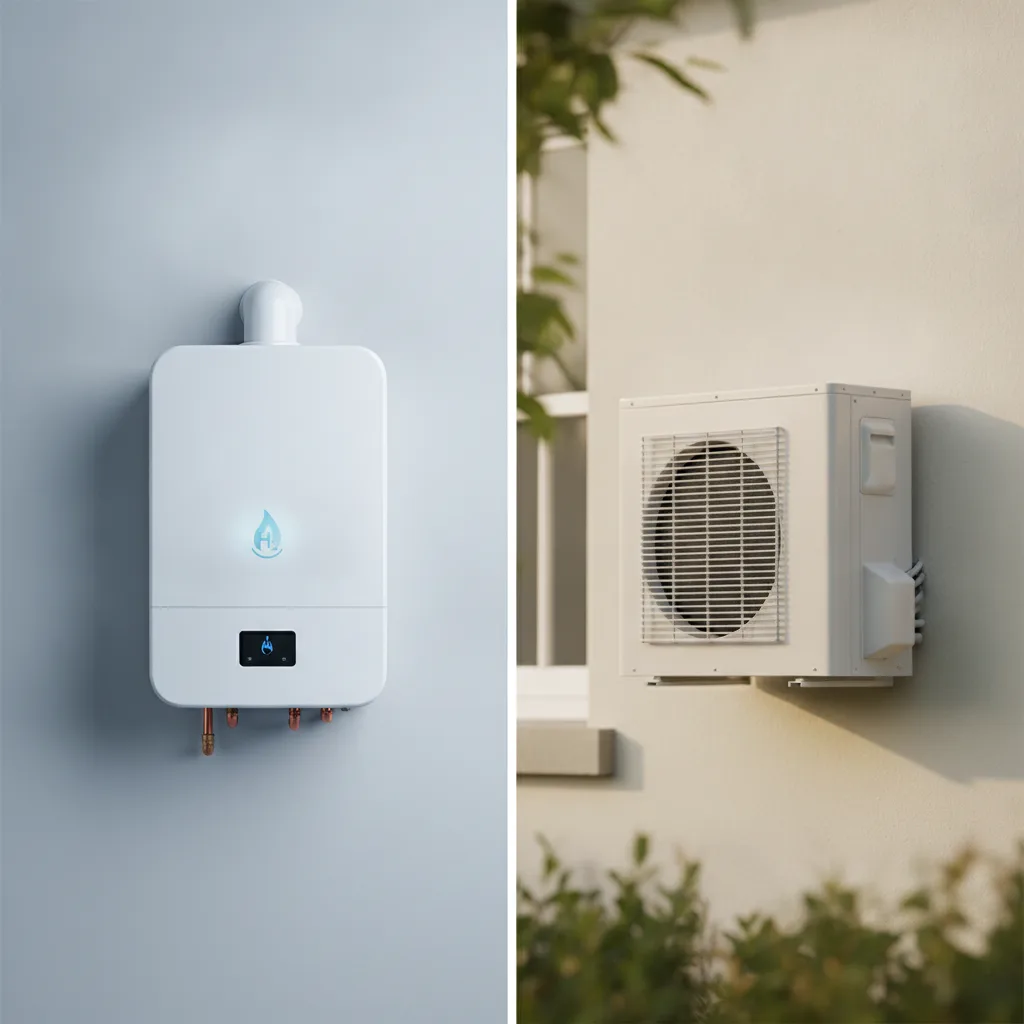
Hydrogen-ready boilers are a variant of this technology designed to operate on either natural gas or hydrogen. The idea is that they could be installed now on the existing gas network and then switched over to hydrogen later, once a hydrogen distribution network becomes available. Several major manufacturers including Worcester Bosch, Baxi, and Vaillant have developed prototype hydrogen and hydrogen-ready models. However, hydrogen boilers of any type are not currently commercially available to UK homeowners.
The Government's Position in 2026
The UK government set out clearly, in its hydrogen heating overview on gov.uk, that it intended to take a decision in 2026 on whether, and if so how, hydrogen would contribute to the decarbonisation of home heating. That formal decision had not been publicly announced as of July 2026.
The government's approach is cautious rather than committed. Hydrogen for home heating is treated as a possibility that needs to be tested, not a settled policy direction. The strategic decision will be informed by evidence from the H100 Fife neighbourhood trial in Scotland, from safety assessments by the Health and Safety Executive, and from similar schemes across Europe.
The government has also stated that it would only consider requiring that new gas boilers be hydrogen-ready from 2030 if the 2026 decision concludes that hydrogen has a substantive role to play. If the decision goes the other way, that requirement will not come into effect.
What Happened to the UK Hydrogen Village Trials?
The original government plan included large-scale village trials in England, designed to test whether entire communities could be heated with 100% hydrogen delivered through a converted gas network. Those trials did not proceed.
The proposed trial in Whitby, Ellesmere Port was dropped in July 2023. Local consent issues and community opposition made the site unworkable. The government's guidance for that trial was subsequently withdrawn.
The proposed trial in Redcar, Teesside was cancelled in December 2023. The main planned source of hydrogen supply for that location was not going to be available, which meant the trial could not go ahead as designed. The government decided not to pursue any town-scale hydrogen pilot until after the 2026 strategic decision on hydrogen's role in heating.
The cancellation of both trials was a significant development. They were intended to provide the large-scale real-world evidence on which the government's long-term decision would partly rest. Without that data, the 2026 decision must rely on smaller scale trials and European evidence.
The H100 Fife Trial
The one live domestic hydrogen trial of any meaningful scale in the UK is H100 Fife, run by SGN in Levenmouth, Fife. This is a genuinely pioneering project. SGN constructed a new dedicated hydrogen gas network alongside a new residential development and installed a 5MW alkaline water electrolyser powered by an offshore wind turbine. The hydrogen is produced locally from renewable electricity, making it genuine green hydrogen.
Construction was completed in 2023. From late 2025 into 2026, homes began connecting to the network on a rolling basis. Residents in the trial pay the same standing charge and unit rate for hydrogen as they would for natural gas, with the difference funded by the trial budget rather than passed on to participants.
H100 Fife is providing safety, operational, and behavioural data directly to the government and to SGN. The Health and Safety Executive separately completed its assessment of the safety evidence for 100% hydrogen heating in March 2026, assessing material provided by gas networks and DESNZ. Both bodies of work feed into the government's strategic decision.
The trial is important evidence but it is also limited in scope. It covers a small number of new-build homes on a bespoke network, using locally produced green hydrogen. Replicating that model at national scale would be a fundamentally different engineering and economic challenge.
Why Hydrogen Heating Faces Significant Challenges
The trials and the broader research programme have helped clarify the obstacles that stand between hydrogen heating and any kind of mainstream roll-out. There are several, and they are substantial.
Energy efficiency
Producing green hydrogen requires large quantities of renewable electricity. When you account for the energy lost at each stage, including electrolysis (around 70 to 80% efficient), compression, storage, transmission, and eventual combustion in a boiler, using green electricity to make hydrogen to then burn for heat is considerably less efficient than using that same electricity directly in a heat pump. A modern air source heat pump can produce three to four units of heat for every unit of electricity it consumes. A hydrogen boiler cannot match that ratio.
Infrastructure cost
Carrying 100% hydrogen through the existing gas network is not straightforward. Hydrogen behaves differently from natural gas: it is a smaller molecule, it can cause embrittlement in certain pipe materials, and it requires different seals and components. Upgrading or replacing the UK's gas distribution network to carry pure hydrogen at scale would represent an enormous capital investment, the cost of which would ultimately need to be recovered through energy bills or public funds.
Green hydrogen supply
Almost all of the hydrogen currently produced in the UK and globally is produced from natural gas using a process called steam methane reforming. This is grey hydrogen and it carries significant carbon emissions. Green hydrogen, produced from renewable electricity, is cleaner but more expensive and currently produced in much smaller quantities. Building a green hydrogen supply large enough to heat millions of UK homes would require enormous additional investment in both electrolysis capacity and renewable electricity generation.
Running cost uncertainty
Even if a hydrogen distribution network were built and green hydrogen became available to households, there is no clear evidence that it would be affordable to run. Current analysis suggests that green hydrogen for home heating would cost more per unit of energy than either natural gas or electricity for the foreseeable future. Heating with hydrogen could mean higher bills rather than lower ones, at least in the near to medium term.
What This Means if You Are Replacing Your Boiler Now
For homeowners facing a heating decision in 2026, the situation is straightforward on one point: hydrogen boilers are not available. There is no hydrogen gas network serving domestic properties anywhere in the UK outside the H100 Fife trial. The government has not committed to hydrogen as a mainstream home heating solution. Even if the 2026 strategic decision supports a role for hydrogen, building the infrastructure and developing the market to reach most homes would take many years.
Waiting for hydrogen is not a practical option for someone whose boiler has broken down, is nearing the end of its life, or who wants to reduce their carbon footprint and energy bills in the foreseeable future.
Heat Pumps: The Available Option
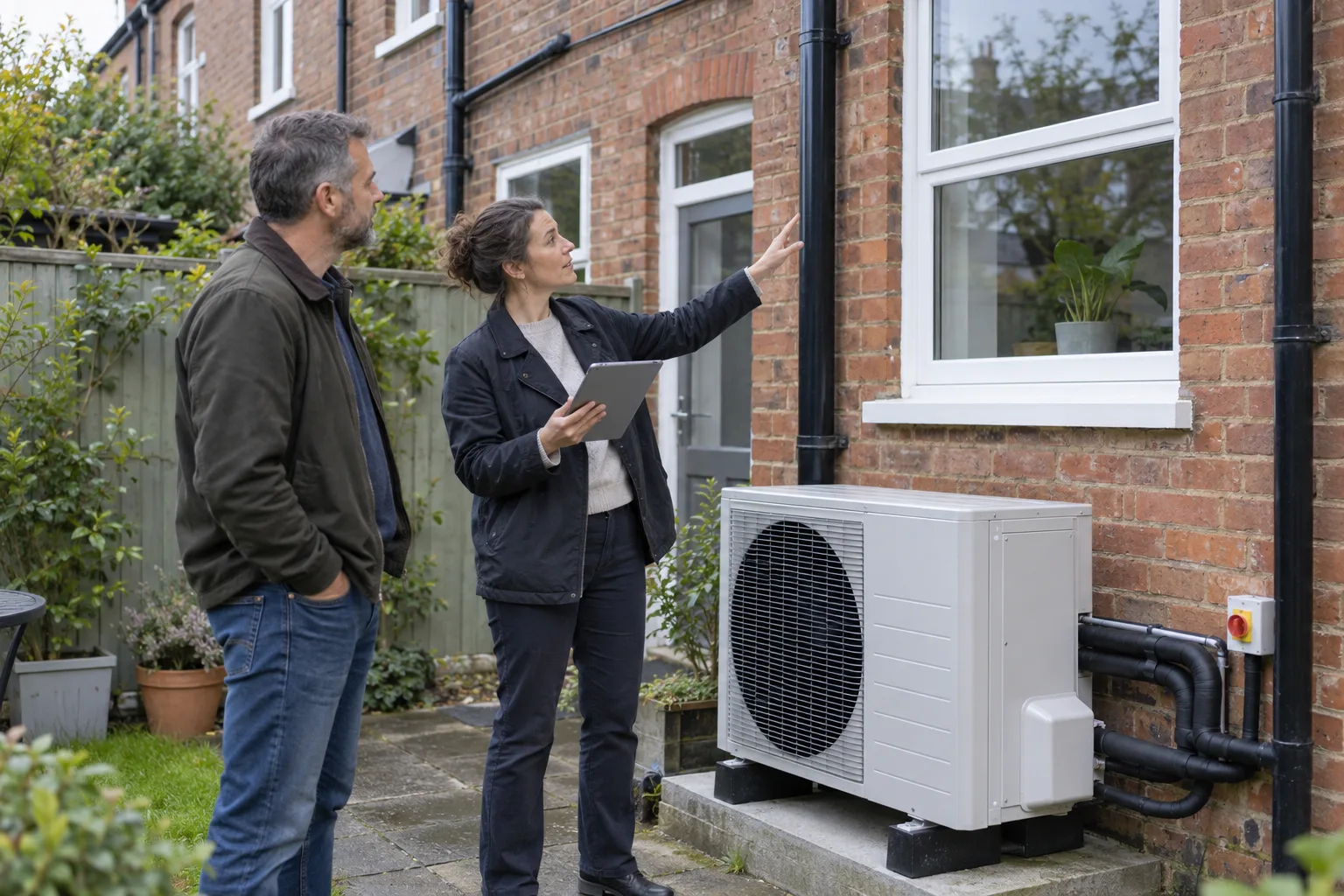
The low-carbon heating technology that is commercially available, technically mature, and actively supported by government grants is the air source heat pump.
An air source heat pump extracts heat from outdoor air and uses it to heat your home and hot water. It works effectively down to around minus 15 to 20 degrees Celsius, covering the full range of UK winter temperatures. It produces no carbon emissions at the point of use and runs on electricity, which is becoming cleaner as the UK grid continues to add renewable generation.
Unlike hydrogen boilers, heat pumps are a proven technology. Tens of thousands have been installed across the UK and hundreds of thousands more across Europe. The supply chain, installer base, and regulatory framework are all in place.
Boiler Upgrade Scheme Grants in 2026
The Boiler Upgrade Scheme (BUS), administered by Ofgem, provides upfront grants to help homeowners replace fossil fuel heating systems with heat pumps or biomass boilers. The current grant levels are:
- Air source heat pump: £7,500
- Ground source heat pump (including water source and shared ground loops): £7,500
- Biomass boiler: £5,000
From 21 July 2026 to 31 March 2027, an enhanced grant of £9,000 is available for air source or ground source heat pumps installed in properties that are not connected to the gas grid. This applies to homes currently using oil, LPG, or other non-gas fuels.
The grant is applied as a discount on the installer's invoice. You do not receive the money directly. Your installer must be MCS-certified and registered with the BUS. The property must be in England or Wales, and you must be the property owner.
To be eligible, your property must have a valid Energy Performance Certificate with no outstanding recommendation for loft or cavity wall insulation, unless that work has been carried out or the property is structurally unsuitable for it.
Check eligibility and find registered installers at gov.uk/apply-boiler-upgrade-scheme.
What Does a Heat Pump Cost After the Grant?
Before the grant, installing an air source heat pump typically costs between £7,000 and £13,000 in the UK in 2026. The range reflects the size of the property, the complexity of the installation, and whether changes are needed to your existing heating system such as radiator upgrades or a new hot water cylinder compatible with lower flow temperatures.
After the £7,500 BUS grant, many standard installations in well-insulated homes cost the homeowner between £3,000 and £6,000. VAT on heat pump installations is currently 0% until 31 March 2027, which reduces the total further.
Running costs depend on your electricity tariff. On a standard electricity tariff, a heat pump can cost a similar amount to run as a gas boiler, because electricity costs more per unit than gas. On a dedicated heat pump tariff, which provides cheaper electricity during off-peak hours when the pump does most of its heating work, a well-installed system can cost £200 to £400 less per year to run than a gas boiler. Over a typical 15-year lifespan, that difference compounds significantly.
MCS Certification: What to Check Before You Appoint an Installer
Any installer carrying out a heat pump installation funded through the Boiler Upgrade Scheme must be certified under the Microgeneration Certification Scheme (MCS). MCS certification covers both the installer and the heat pump product being installed. From 28 May 2026, MCS 020a is the recognised planning standard for heat pump installations under permitted development.
A properly certified installer will carry out a full heat loss calculation before recommending a heat pump size and specification. This is required under MCS standard MIS 3005. Skipping the heat loss survey is a significant red flag: an oversized heat pump runs inefficiently, an undersized one cannot meet demand.
When comparing quotes, check each installer against the MCS register at mcscertified.com. Make sure the quote includes a heat loss calculation, a detailed system design, and the SCOP (Seasonal Coefficient of Performance) of the specified unit. For a well-designed installation in a reasonably insulated home, a SCOP of 3.5 or above is a realistic and worthwhile target.
Planning Permission and Permitted Development for Heat Pumps
In most cases, installing a single air source heat pump on a house in England or Wales qualifies as permitted development, meaning no planning application is needed. The conditions that must be met are:
- The outdoor unit must not exceed 1.5 cubic metres in volume (including housing).
- The unit must not be installed on a pitched roof.
- The installation must comply with MCS 020a planning standards.
- In a conservation area, the unit must not be visible from a highway bounding the property.
- Permitted development does not apply to listed buildings or scheduled monuments.
Your installer should be familiar with these conditions and advise you accordingly. If there is any doubt about your specific property, check with your local planning authority before proceeding. Details of the rules are available on the Planning Portal at planningportal.co.uk.
Should You Wait for Hydrogen or Act Now?
For the great majority of homeowners, acting now is the more sensible decision.
Hydrogen boilers are not available to buy. There is no domestic hydrogen network outside a single trial in Fife. The government has not formally committed to hydrogen as a mainstream home heating solution. Any infrastructure build-out needed to deliver hydrogen to ordinary homes at scale would take the better part of a decade and still depends on a policy decision that has not yet been made.
In the meantime, heat pump technology is mature, commercially available, and backed by a £7,500 government grant plus 0% VAT. Every year spent waiting is another year of fossil fuel use and another year of bills on an unsubsidised gas or oil system.
If your boiler is ageing, inefficient, or has already broken down, the practical path forward is a heat pump with Boiler Upgrade Scheme support, installed by an MCS-certified installer who will design the system properly for your home.
How Cucumber Eco Can Help
Cucumber Eco helps homeowners across England and Wales understand their options, check eligibility for the Boiler Upgrade Scheme, and connect with MCS-certified installers. We can review your EPC, advise on any insulation work that might be needed before installation, and guide you through every step from first enquiry to completed installation.
To find out whether your home qualifies for a BUS grant and what a heat pump would cost and save you, get in touch at cucumbereco.co.uk.