
Infrared heating panels are cheap to fit, silent and maintenance free, but they run at direct electric efficiency and attract no Boiler Upgrade Scheme grant. This guide covers how they work, what they cost to buy and run in 2026, where they make sense, and how they compare with a heat pump.
Infrared heating panels have moved from a niche product into a mainstream talking point for anyone trying to cut a heating bill without ripping out their whole system. They are slim, they are quiet, and the sales pitch is compelling: heat the people and objects in a room rather than a large volume of air, and you use less energy doing it. The reality is more nuanced. Infrared can be an excellent choice in the right room and a costly mistake in the wrong one. This guide sets out how the panels actually work, what they cost to buy and run in 2026, whether any grants help, and the checks worth making before you commit.
What infrared heating panels are
An infrared heating panel is a flat electric heater, usually mounted on a wall or ceiling, that warms surfaces and bodies directly using long wave infrared radiation. That is the same kind of gentle radiant warmth you feel from the sun on a cold clear day, or from standing near a warm brick wall. Instead of heating the air and relying on that warm air to circulate, an infrared panel sends energy straight to whatever is in front of it. Walls, floors, furniture and people absorb that energy and then slowly release it back into the room.
This is a genuinely different mechanism from a conventional radiator, which is mostly a convection device. It matters because it changes how a room feels at a given thermostat setting. Many people report feeling comfortable at a slightly lower air temperature with infrared, because the surfaces around them are warm rather than cold.
Panels come in a range of finishes, from plain white metal to mirror glass and printed picture panels, which is part of the appeal for people who do not want a bulky heater on show.
How much infrared panels cost to buy
Hardware costs are modest compared with a full heating system. In 2026 a single wall mounted panel typically costs between £125 and £500 depending on size, wattage and finish. Standard panels are usually rated somewhere between 300W and 1,000W, with 600W a common size for an average room. Mirror and picture panels sit at the higher end, while plain metal panels are cheapest.
Because each panel only serves one room or zone, a whole home fit adds up. A modest house might need six to ten panels, plus wiring, brackets and controls. That said, installation is far simpler than a wet heating system. There are no pipes, no pump, no cylinder and no flue. A competent electrician can wire panels into existing circuits, and many are supplied with a plug for the simplest installs.
Always budget for proper controls. A panel left running on a manual switch will cost far more than one on a good thermostat and timer, and controls are where a lot of the real world savings live.
What infrared panels cost to run
This is the number that decides whether infrared makes sense for you, and it comes down to two things: the price of electricity and how many hours the panels actually run.
Under the Ofgem energy price cap for 1 July to 30 September 2026, the average electricity unit rate for a standard variable tariff paid by direct debit is 26.11 pence per kWh, with a daily standing charge of 57.19 pence. The overall cap for a typical dual fuel household is set at £1,862 a year, a rise of 13 per cent on the previous period. Your own rate will vary by region and tariff, so check a recent bill.
Running cost follows directly from wattage. A 600W panel uses 0.6 kWh for every hour it is switched on. At 26.11 pence per kWh that is roughly 16 pence per hour of actual heating. The key phrase is actual heating. A well controlled panel with a good thermostat cycles on and off, so it does not draw full power for the whole time it is in use. Run that same 600W panel for the equivalent of three full hours a day across a heating season and you are looking at broadly £1 a day for that room.
There is an important honesty point here. Infrared panels are direct electric heaters, and every unit of electricity they draw becomes heat in the room. That makes them close to 100 per cent efficient at the point of use, which is often quoted as a selling point. But a heat pump is different. It moves heat rather than making it, and delivers around three to four units of heat for every unit of electricity. So although both run on electricity, a heat pump uses far less of it to keep a whole house warm. For a full property that needs steady all day heat, that efficiency gap usually outweighs the lower upfront cost of panels.
Where infrared panels genuinely make sense
Infrared is not a straight replacement for a whole house system in most cases, but there are situations where it is hard to beat:
- Single rooms used occasionally, such as a home office, spare bedroom, garden room or conservatory, where you want fast targeted warmth without heating the rest of the house.
- Hard to heat spaces with high ceilings or poor air circulation, where warming surfaces works better than trying to warm a large volume of air.
- Well insulated rooms where heat loss is low, so the panels rarely need to run at full output.
- Properties where installing wet pipework is impractical or too disruptive, for example a listed building or a small flat.
- As a top up alongside a main system, taking the chill off one room without firing up the central heating for the whole house.
In each of these the low install cost, zoned control and lack of maintenance play to infrared's strengths.
Where infrared panels are usually the wrong choice
Equally, there are cases where panels will disappoint:
- Poorly insulated homes. Radiant heat helps how a room feels, but it cannot compensate for heat pouring out through an uninsulated loft, solid walls or draughty windows. In a leaky home the panels run constantly and the bills climb.
- Whole house heating in a property that needs warmth all day, where the sheer amount of electricity used at direct electric efficiency becomes expensive against a heat pump.
- Homes chasing the lowest possible carbon footprint and running cost at scale, where a heat pump plus insulation is the stronger long term package.
The single biggest determinant of whether infrared works for you is the fabric of the building. Fix insulation and draughts first, and everything downstream gets cheaper.
How infrared compares with storage heaters and electric radiators
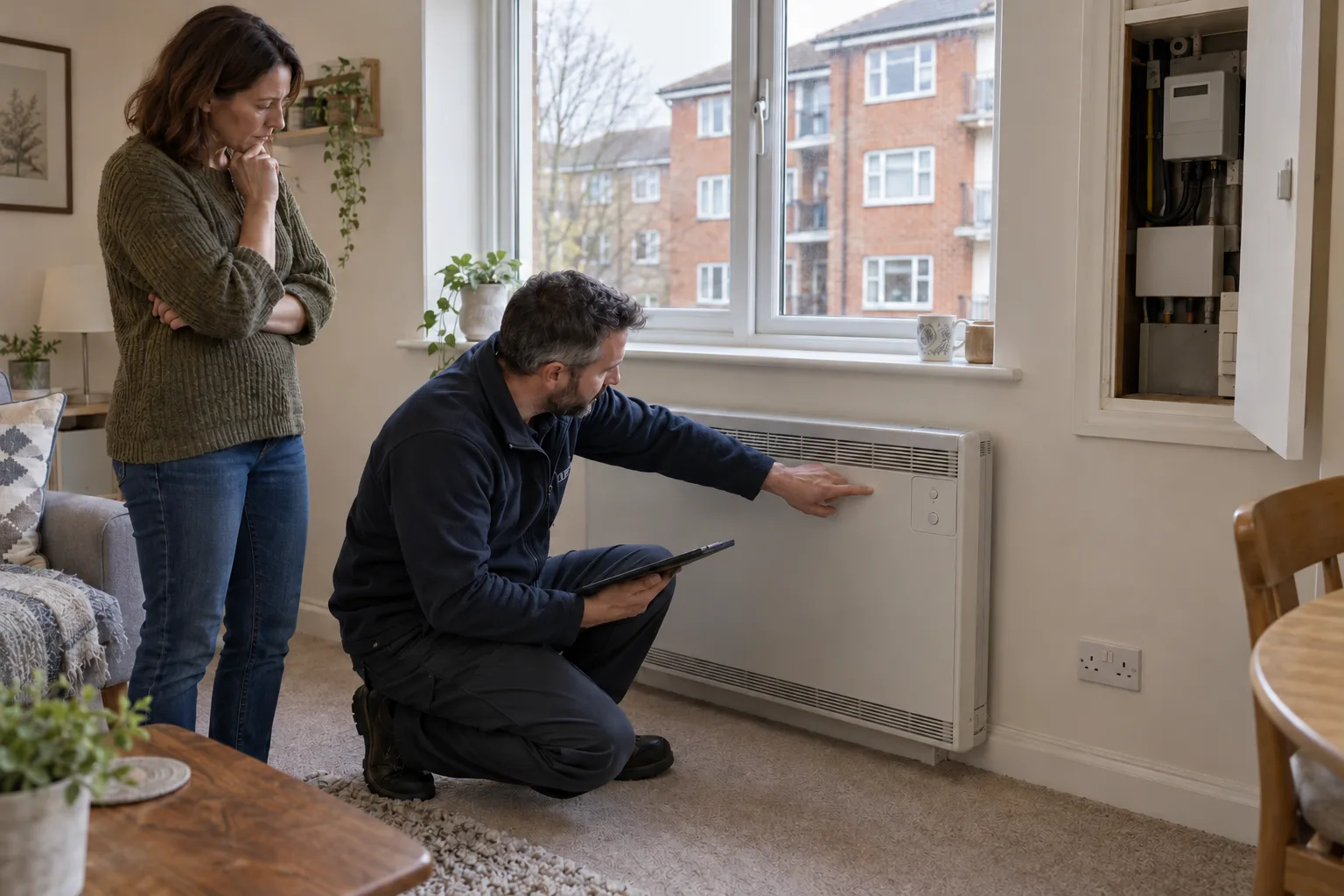
Anyone weighing up infrared usually has other electric options on the table, so it helps to be clear on how they differ. Traditional storage heaters charge up overnight on a cheaper off peak rate and release that heat slowly through the day, which can work well if you are home during the day and on the right tariff, but they give you little control over when the warmth actually arrives. Conventional electric panel radiators heat the air by convection and respond quickly, but they share infrared's underlying limitation of running at direct electric efficiency.
Infrared's advantage over both is comfort per unit of energy in the right room. Because it warms surfaces and people rather than air, you often feel warm sooner and at a lower thermostat setting, which can trim the hours the heater runs. Its disadvantage is the same as every direct electric heater: the meter still turns at one unit of electricity for one unit of heat, so none of these options can match a heat pump for whole house running cost. The choice between them is really about how a room is used and which tariff you are on, not about one technology being universally cheaper.
Do infrared panels qualify for any grants
This is where expectations need managing. The main government heating grant, the Boiler Upgrade Scheme, does not cover infrared or any other form of direct electric heating. The scheme is deliberately aimed at low carbon systems that replace a fossil fuel boiler. In 2026 it offers £7,500 towards an air source heat pump or a ground source heat pump, £5,000 towards a biomass boiler in eligible rural off gas grid properties, and £2,500 towards an air-to-air heat pump. Eligible off gas grid homes heated by oil or LPG can receive an enhanced amount, with an extra £1,500 taking the air source or ground source grant to £9,000, available until 31 March 2027.
Infrared panels appear on none of those lists, so there is no Boiler Upgrade Scheme voucher for them.
There is a little more room on insulation and wider fabric measures. Grant support such as the Warm Homes Local Grant is targeted at insulation and low carbon heating for lower income households in England, and the government's broader Warm Homes Plan sets the direction for home energy upgrades over the coming years. These do not fund infrared panels directly, but the insulation they can pay for is exactly what makes any electric heating, infrared included, affordable to run.
On VAT, the position is worth checking with your installer at the time of purchase, because energy saving materials relief has specific rules and end dates that change, and infrared panels sit in a grey area compared with clearly listed measures like insulation.
If your goal is the lowest running cost with grant help, the honest route for most homes is insulation first, then a heat pump if you qualify, rather than infrared. Panels remain a strong self funded option for the specific rooms described above.
Infrared panels versus a heat pump
It helps to see the two side by side, because they are often pitched as rivals when they actually suit different jobs.
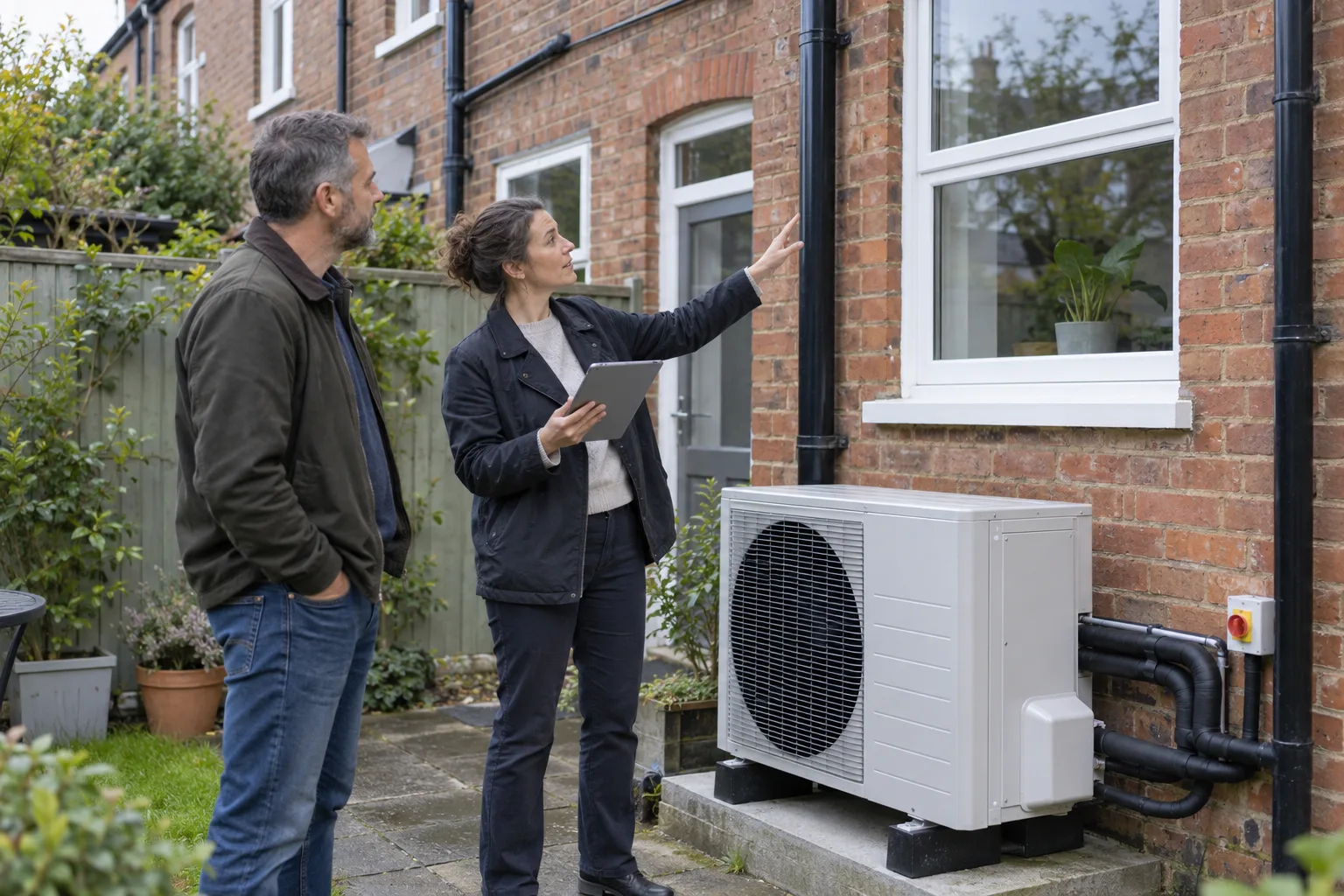
An air source heat pump is a whole house solution. It has a high upfront cost, often in the region of £3,000 to £7,000 after the £7,500 grant depending on the property, but it heats your whole home and your hot water at an efficiency no direct electric heater can match. It suits homeowners planning to stay put, and it pairs well with solar panels to cut daytime running costs further.
Infrared panels have a low upfront cost, no grant, and are best as a room by room or supplementary solution. They win on simplicity, silence and instant zoned control. They lose on whole house running cost against a heat pump.
For many households the smart answer is not one or the other. A heat pump for the main living space and bedrooms, with an infrared panel in a rarely used garden office or spare room, gives you efficiency where it counts and convenience where it does not.
Practical checks before you buy
Before committing to infrared, work through this short list:
- Assess the room's insulation and draughts honestly. If either is poor, address it first or the panels will run constantly.
- Size the panels correctly for the room. Undersized panels run flat out and never quite warm the space, while oversized panels waste money. A reputable supplier will size to the room's volume and heat loss.
- Budget for good controls. A wireless thermostat and timer per zone is essential to the running costs quoted by manufacturers.
- Check your electrics. Multiple panels on existing circuits should be signed off by a qualified electrician.
- Compare against your current heating on a realistic hours basis, using your own electricity unit rate rather than a headline figure.
- Consider your longer term plan. If a heat pump is likely within a few years, keep infrared to the rooms where it will still earn its place.
The bottom line
Infrared heating panels are a genuinely useful tool, not a miracle. They are cheap to fit, silent, maintenance free and excellent for warming specific rooms quickly. They are also direct electric heaters, so in a poorly insulated home or as a whole house system they can be expensive to run and they attract no Boiler Upgrade Scheme grant.
Used deliberately, in well insulated rooms that need occasional targeted heat, or as a top up alongside a heat pump, they can be exactly the right answer. Used as a blanket replacement for central heating in a leaky home, they usually are not. As with almost every energy decision, the building fabric comes first: insulate, draught proof, then choose the heating that fits how you actually live.
If you want tailored advice on whether infrared, a heat pump, or a combination suits your property, and which grants you might qualify for, our team can talk it through and point homeowners and landlords in the right direction.