A practical 2026 guide to high heat retention storage heaters, including Warm Homes Local Grant funding, running cost checks, tariff questions, EPC recommendations and when a heat pump may be a better fit.
Why storage heaters are back in the conversation
High heat retention storage heaters are not new, but they are getting more attention in 2026 because three things are happening at once.
First, many homes still use older direct electric heating. That can mean panel heaters, old night storage heaters, fan heaters or a mix of portable heaters and fixed units. These homes can be expensive to run if the heating is poorly controlled or if the building loses heat quickly.
Second, grant schemes are pushing households towards lower carbon heating and better fabric. Warm Homes Local Grant can support energy performance upgrades and low carbon heating in eligible homes in England. DESNZ policy guidance lists high heat retention storage heaters as a low carbon heat measure under the scheme.
Third, electricity tariffs are changing. Ofgem says the energy price cap from 1 July to 30 September 2026 includes an average direct debit electricity unit rate of 26.11 pence per kWh. That rate is not the same as a specialist time of use tariff, but it shows why electric heating choices need careful design. If a home relies on electricity for space heating, the tariff, controls and insulation all matter.
The important point is that storage heaters are not a universal answer. They can be sensible in the right flat or small electrically heated home. They can be a poor choice where the property is suitable for a heat pump, where the tariff is wrong, or where insulation is too weak.
The short answer
High heat retention storage heaters may make sense in 2026 for some electrically heated flats and small dwellings, especially where a heat pump is not practical and where the household can use a suitable tariff.
They are most likely to work well when the home has decent insulation, a clear room by room heating plan, modern controls, and enough lower cost electricity hours to charge the heaters. They are least likely to work well where heat demand is high, rooms are large, controls are ignored, or the resident is stuck on a poor tariff.
Warm Homes Local Grant can include high heat retention storage heaters within the low carbon heat cost cap. Boiler Upgrade Scheme is different. GOV.UK lists grants for heat pumps and biomass boilers, not storage heaters.
What high heat retention means
Energy Saving Trust explains that modern high heat retention storage heaters hold heat for longer, are well insulated and have automated controls. That is the main difference from older storage heaters.
Traditional storage heaters often needed the user to guess how much heat to store overnight and how much to release during the day. If the weather changed, the heater could run out of stored heat in the evening or release too much heat earlier than needed.
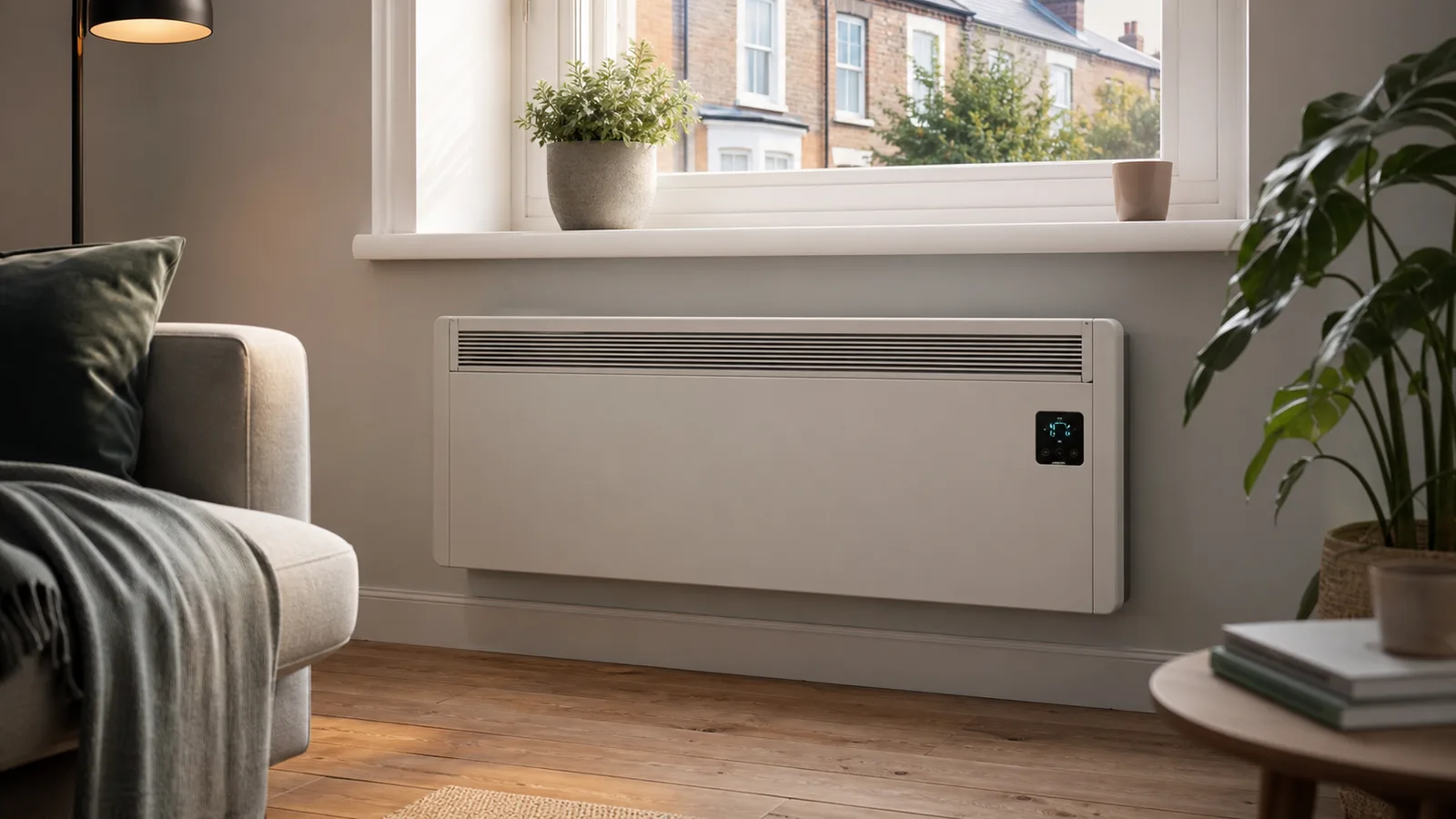
Modern high heat retention units are designed to reduce that problem. They usually have better insulation around the core, automatic charge control, a thermostat and a programmer. The aim is to store the right amount of heat and release it when the room needs it.
That does not make them magic. They still use electricity. The benefit comes from matching stored heat, room demand, tariff timing and controls.
How they work in plain English
A storage heater takes electricity and stores heat in an internal core. The heater then releases that heat into the room later.
The classic idea is simple. Charge the heater when electricity is cheaper, then use the stored heat when the home is occupied. In practice, success depends on details. The tariff must actually provide cheaper hours. The heater must be sized correctly. The resident needs a programme that matches real life. The building needs to hold heat well enough for the stored heat to be useful.
Energy Saving Trust says modern storage heaters can release heat more quickly when needed, sometimes using a fan. It also says improved controls can include automatic charge control, thermostat and programmer. Those controls are important because the user should not have to make constant manual adjustments.
Where they fit under Warm Homes Local Grant
Warm Homes Local Grant is available in England for eligible privately owned homes, including owner occupied and privately rented homes. GOV.UK says eligible homes need an EPC of D, E, F or G, and household income must usually be £36,000 a year or less, with postcode and benefit routes possible.
GOV.UK says councils arrange a home survey and may suggest measures such as wall, loft and underfloor insulation, air source heat pumps, smart controls and solar panels. The council organises and pays for agreed work, although landlords may need to contribute for some improvements.
DESNZ policy guidance gives the detail for delivery. It says Warm Homes Local Grant has twin average cost caps, £15,000 for energy performance and £15,000 for low carbon heat. It says high heat retention storage heaters sit in the low carbon heat category.
That means a storage heater package should be treated as part of the heating design, not just a quick appliance swap.
The heat pump comparison
The first question should not be whether storage heaters are better or worse than heat pumps in general. The better question is which option is right for this specific home.
DESNZ guidance says the default low carbon heating technology would be a heat pump. It also says high heat retention electric storage heaters with at least 0.8 plus SAP responsiveness should be considered in electrically heated flats and small dwellings only where heat pumps are unsuitable.
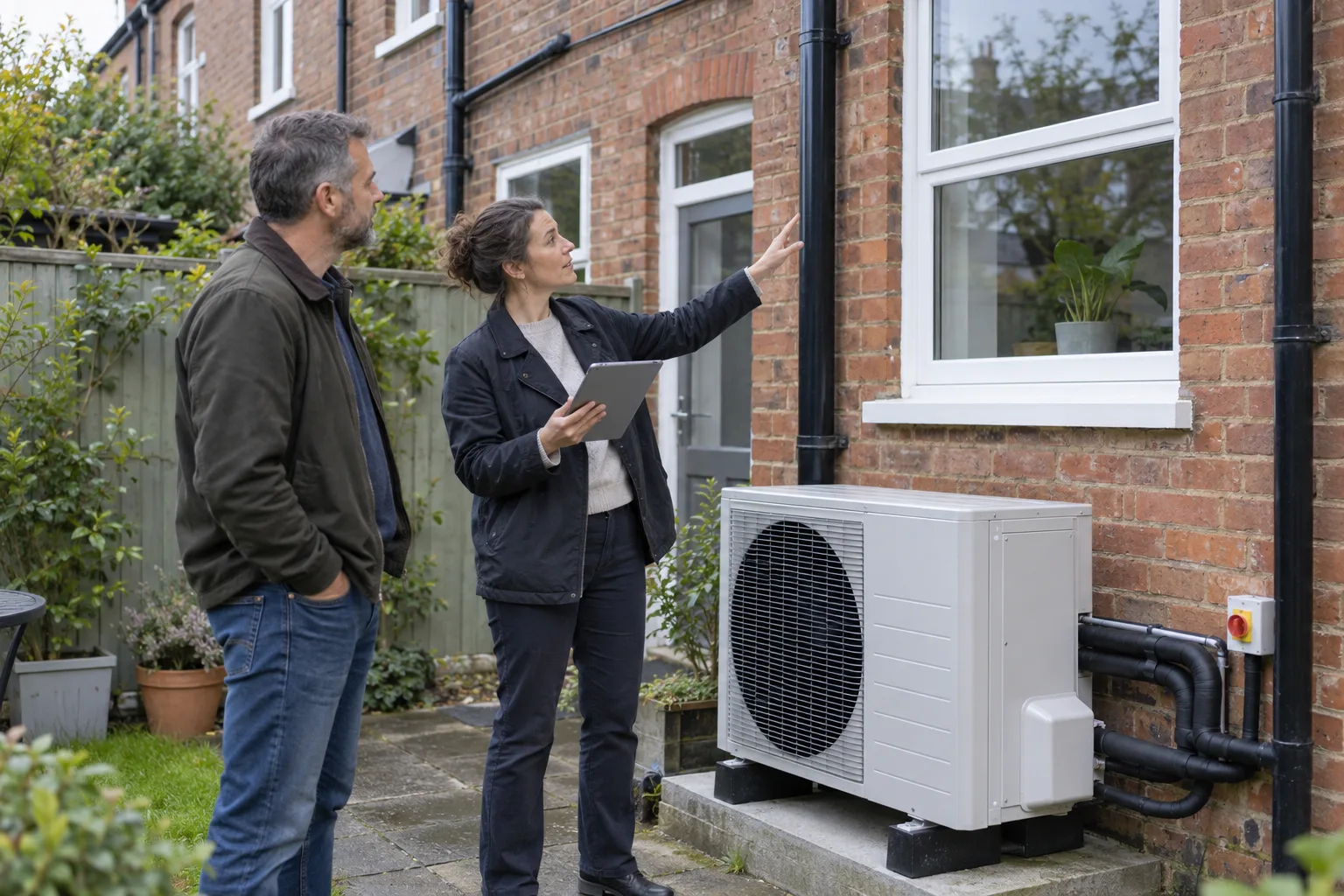
That is a useful hierarchy. If a home can take an air source heat pump, and if the system can be designed properly, a heat pump may deliver more heat per unit of electricity. If the property is a small flat with practical barriers to a heat pump, high heat retention storage heaters may be a more deliverable route.
GOV.UK says Boiler Upgrade Scheme grants are currently £7,500 for an air source heat pump, £7,500 for a ground source heat pump, £5,000 for a biomass boiler and £2,500 for an air to air heat pump. It also says one grant is available per property. Storage heaters are not listed in that grant route.
Running costs depend on four things
Running cost is the question most households care about, but it cannot be answered from the heater alone.
The first factor is heat demand. A poorly insulated home needs more heat. That is why insulation and draught proofing often matter before heating upgrades.
The second factor is tariff. A storage heater depends on when electricity is bought. A household on a standard variable tariff may not see the same benefit as a household with a suitable off peak period.
The third factor is control. If the programme is wrong, the home may be too hot in the day and cold in the evening. Modern controls help, but only if they are commissioned and explained.
The fourth factor is occupancy. A person at home all day has a different heating pattern from someone out at work. A storage heater plan should reflect that.
What Ofgem prices mean for electric heating
Ofgem says the price cap from 1 July to 30 September 2026 is £1,862 per year for a typical direct debit dual fuel household. Ofgem also says the average direct debit electricity rate for that period is 26.11 pence per kWh, with a daily electricity standing charge of 57.19 pence.
Those figures are national averages and include VAT. They are not a personalised quote and they are not a promise that every storage heater user pays that rate.
For electric heating, the key lesson is that each kWh matters. A home using thousands of kWh for heating needs a sensible tariff and enough fabric improvement to reduce demand. Storage heaters can help shift some demand into cheaper periods, but they do not remove the need for a careful heat loss and tariff check.
When storage heaters can be a good fit
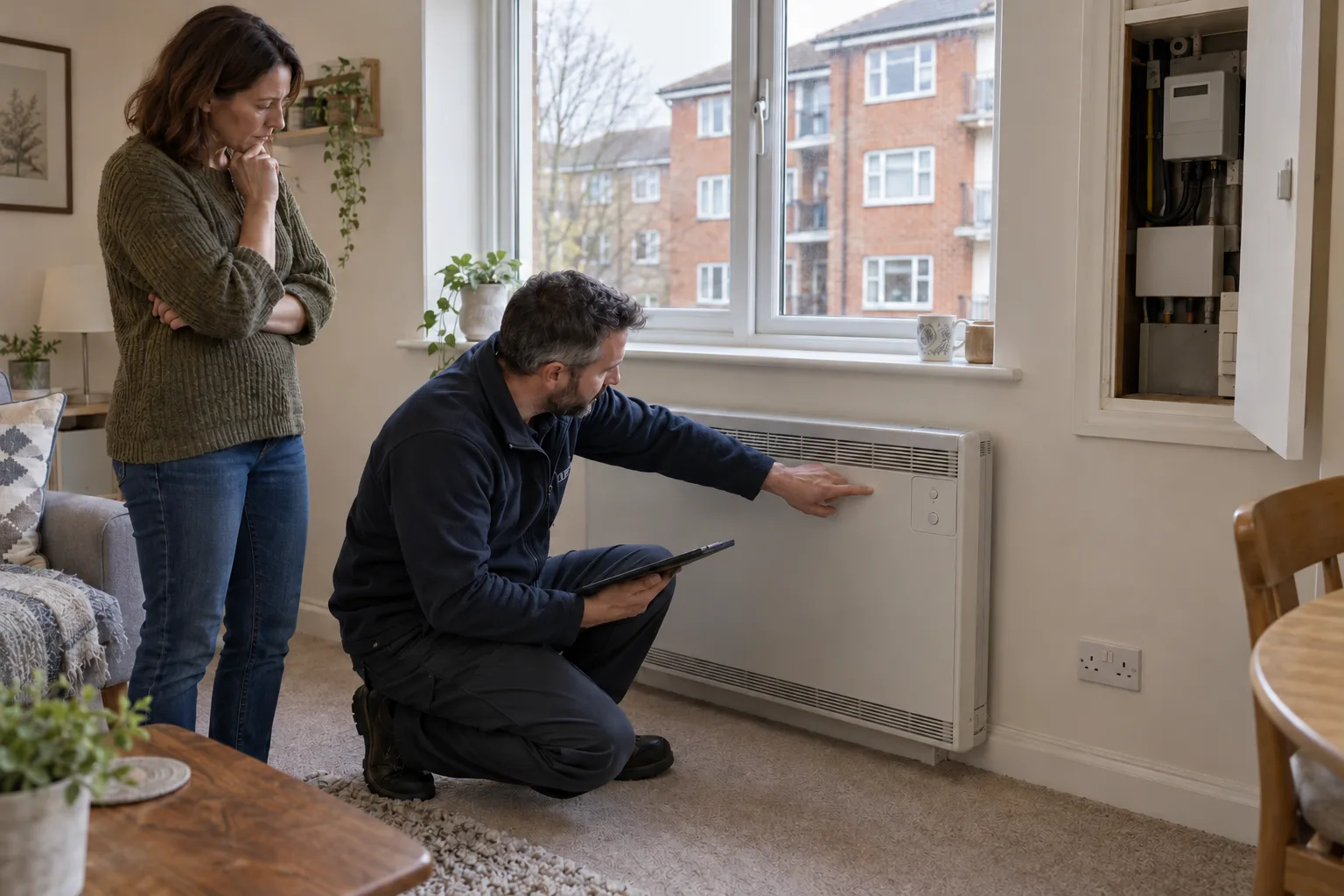
They can be a good fit when the property is small, electrically heated and hard to convert to a wet heating system. They may also suit some flats where external heat pump units are difficult, where leasehold permission is complex, or where the resident needs a lower disruption option.
They work best when the survey confirms that the rooms are suitable, the electrical supply is appropriate, the tariff supports charging, and the household understands the controls.
They also work better when the fabric is improved. Loft insulation, wall insulation, floor insulation, better glazing and draught proofing can all reduce the heat the units need to store and release.
When to be cautious
Be cautious if the home is large, poorly insulated or has high heat demand. Be cautious if the household cannot access a suitable tariff. Be cautious if the resident needs fast heat in unpredictable rooms with long gaps between use.
Also be cautious if the recommendation is based only on replacing like for like. An old storage heater being present does not prove that a new storage heater is the best answer. The survey still needs to compare realistic options.
For grant work, the decision should come from the whole home assessment, not from stock availability or the easiest install.
What landlords should know
Landlords should not treat storage heaters as a box ticking exercise. A poor electric heating system can affect tenant comfort, complaints and EPC improvement plans.
Warm Homes Local Grant can apply to privately rented homes if eligibility is met, but landlord contributions can apply. DESNZ guidance says one eligible private rented property per landlord can be fully funded across the scheme, and later properties require a 50 percent landlord contribution.
The practical landlord question is whether the upgrade leaves the tenant with a system they can afford and understand. That means checking tariffs, controls, insulation, ventilation and room comfort.
What homeowners should check before saying yes
Ask these questions before agreeing a storage heater package.
- Is my home suitable for a heat pump instead
- If a heat pump is unsuitable, why
- Which rooms will receive new heaters
- Has each heater been sized from the room heat demand
- What tariff will the system depend on
- Will the electrical supply need any upgrade
- Will insulation be improved at the same time
- Who will explain the controls after installation
- What happens if the home is cold in the evening
- What documents will I receive after the work
These questions are simple, but they stop the decision becoming just a product swap.
The controls matter as much as the heater
Energy Saving Trust says modern electric storage heaters can include automatic charge control, thermostat and programmer. The programmer sets the temperature and timing. The automatic charge control works out how much electricity is needed to meet that programme. The thermostat stops heat being released when the room is already warm enough.
That means the handover is not a minor detail. The resident needs to know how to set the programme, how to change it, what the heater does automatically and what not to turn off.
If the user does not understand the controls, a good heater can perform badly. If the controls are set well, the system can be far easier to live with than older manual units.
Why insulation should be checked first
Heating upgrades are easier to get right when heat demand is lower. A room with missing loft insulation, draughty doors, weak glazing or cold walls may need a bigger heater and more electricity.
Warm Homes Local Grant is designed for packages, not isolated thinking. GOV.UK lists insulation, air source heat pumps, smart controls and solar panels as possible measures after survey. DESNZ guidance separates energy performance measures from low carbon heat, but the home still needs one joined up design.
For a storage heater home, that design might include loft insulation, draught proofing, smart controls, solar panels or other fabric work before or alongside the heaters.
EPC recommendations and product checks
Energy Saving Trust says some high heat retention storage heaters may appear as recommendations in a home EPC. It also points to the BRE Product Characteristics Database for a list of high heat retention storage heaters.
That is useful because not every electric heater is a high heat retention storage heater. A basic panel heater, convector heater or old manual storage heater should not be confused with a modern high heat retention unit.
If the grant recommendation says high heat retention storage heaters, ask for the product details. The installed product should match the assessment and the scheme requirements.
A practical decision route
Use this route before choosing.
- Check the EPC and current heating type
- Confirm whether the home is owner occupied or privately rented
- Check Warm Homes Local Grant eligibility
- Survey insulation, draughts and room heat demand
- Consider heat pump suitability first
- If heat pump is unsuitable, assess high heat retention storage heaters
- Check tariff options and meter setup
- Size heaters room by room
- Agree controls and handover
- Keep product and grant paperwork
This keeps the decision grounded in the property rather than the appliance.
Bottom line
High heat retention storage heaters can be a sensible 2026 upgrade for the right electrically heated flat or small dwelling. They are especially relevant where a heat pump is not practical and where Warm Homes Local Grant can support a low carbon heat package.
They are not the default answer for every home. Heat pumps should be considered first where suitable, and fabric measures should not be skipped. The best outcomes come from matching the heater, tariff, insulation, controls and occupancy pattern.
For households, the main thing is to ask for the reasoning. If storage heaters are recommended, there should be a clear explanation of why they suit the property, how they will be controlled, what tariff is assumed and what other upgrades are needed to keep the home warm at a sensible cost.