A whole house retrofit assessment under PAS 2035 is the first step in upgrading your home's energy efficiency. This guide covers what the assessment involves, what it costs in 2026, and how to get the cost fully funded through the Warm Homes Local Grant if your household qualifies.
If your home is draughty, expensive to heat or sitting on an EPC rating below C, a whole house retrofit assessment is the logical starting point. It gives you a professional, independent picture of where heat is being lost, which upgrades will have the most impact, and how to sequence them properly so that improvements work together rather than creating new problems.
This guide explains what a whole house retrofit assessment involves under the PAS 2035 standard, who carries it out, what it costs in 2026, and whether you can get the cost covered through government funding.
What Is a Whole House Retrofit Assessment?
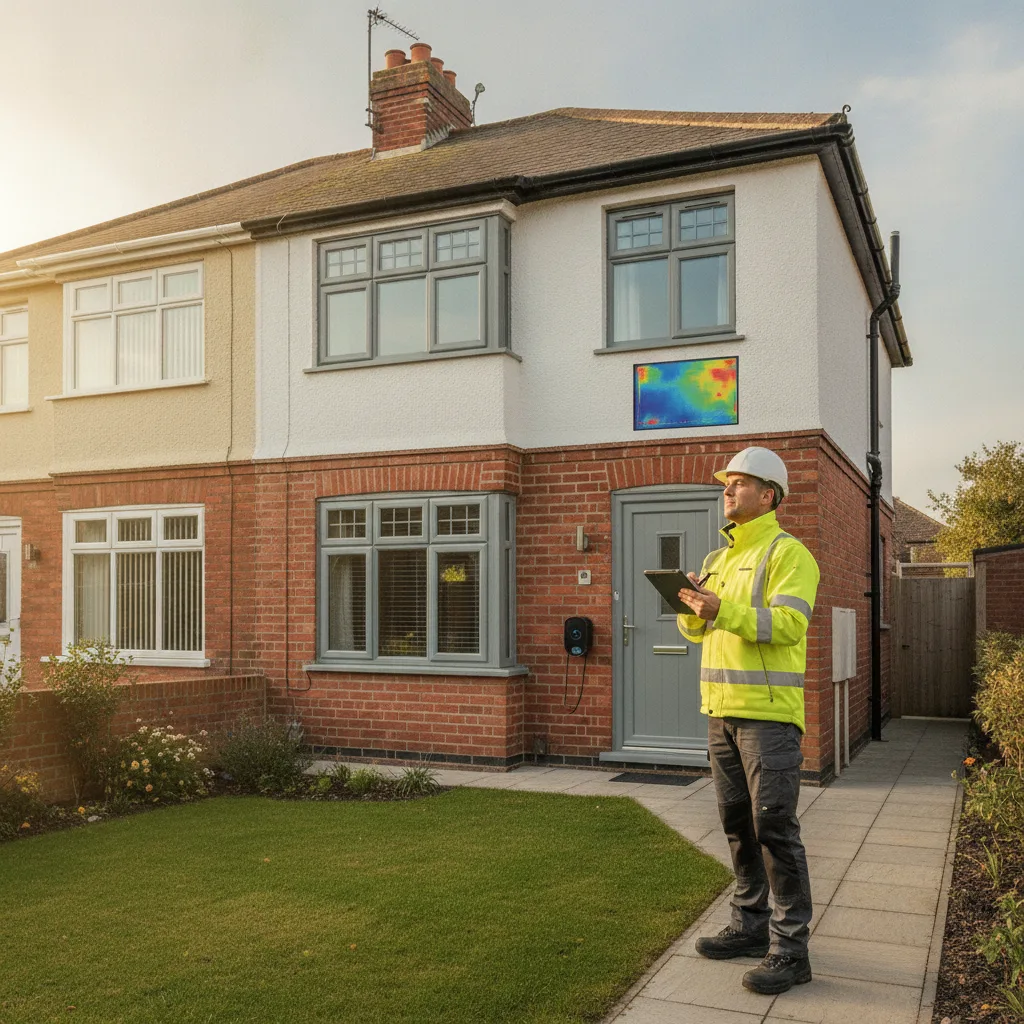
A whole house retrofit assessment is a structured survey of your home carried out by a qualified professional. The aim is to understand the current energy performance of the building and identify the improvements needed to make it warmer, more efficient and cheaper to run.
Unlike a standard EPC, which produces a single rating based on a brief visit, a whole house retrofit assessment goes much deeper. It looks at how the building fabric, heating system, ventilation and occupancy patterns interact, and it produces a Medium Term Improvement Plan (MTIP) that sets out which measures to install and in what order.
The assessment is the first formal step in the PAS 2035 retrofit process, which is the UK government standard for domestic energy efficiency work. Under PAS 2035, any project carried out using government grant funding must begin with this kind of whole house approach.
How PAS 2035 Sets the Standard for Retrofit Quality
PAS 2035 was introduced in 2019 and updated in 2023. It is a publicly available specification published by BSI that defines how retrofit work on domestic buildings should be assessed, designed, installed and verified. It applies to projects receiving government funding, including work delivered under the Warm Homes Local Grant and the Social Housing Decarbonisation Fund.
The standard exists because poorly planned retrofit work can cause serious problems. Insulating a home without addressing ventilation, for example, can lead to condensation and mould. Installing a heat pump in a poorly insulated property can leave it unable to heat the house effectively. PAS 2035 is designed to prevent these outcomes by requiring a whole house view before any measures are installed.
The key roles under PAS 2035 are the Retrofit Assessor, the Retrofit Coordinator and the Retrofit Designer. On smaller projects, one person may carry more than one of these roles, but the Retrofit Coordinator must always be in place and takes first-line responsibility for the whole project.
What Does a Retrofit Assessment Actually Cover?
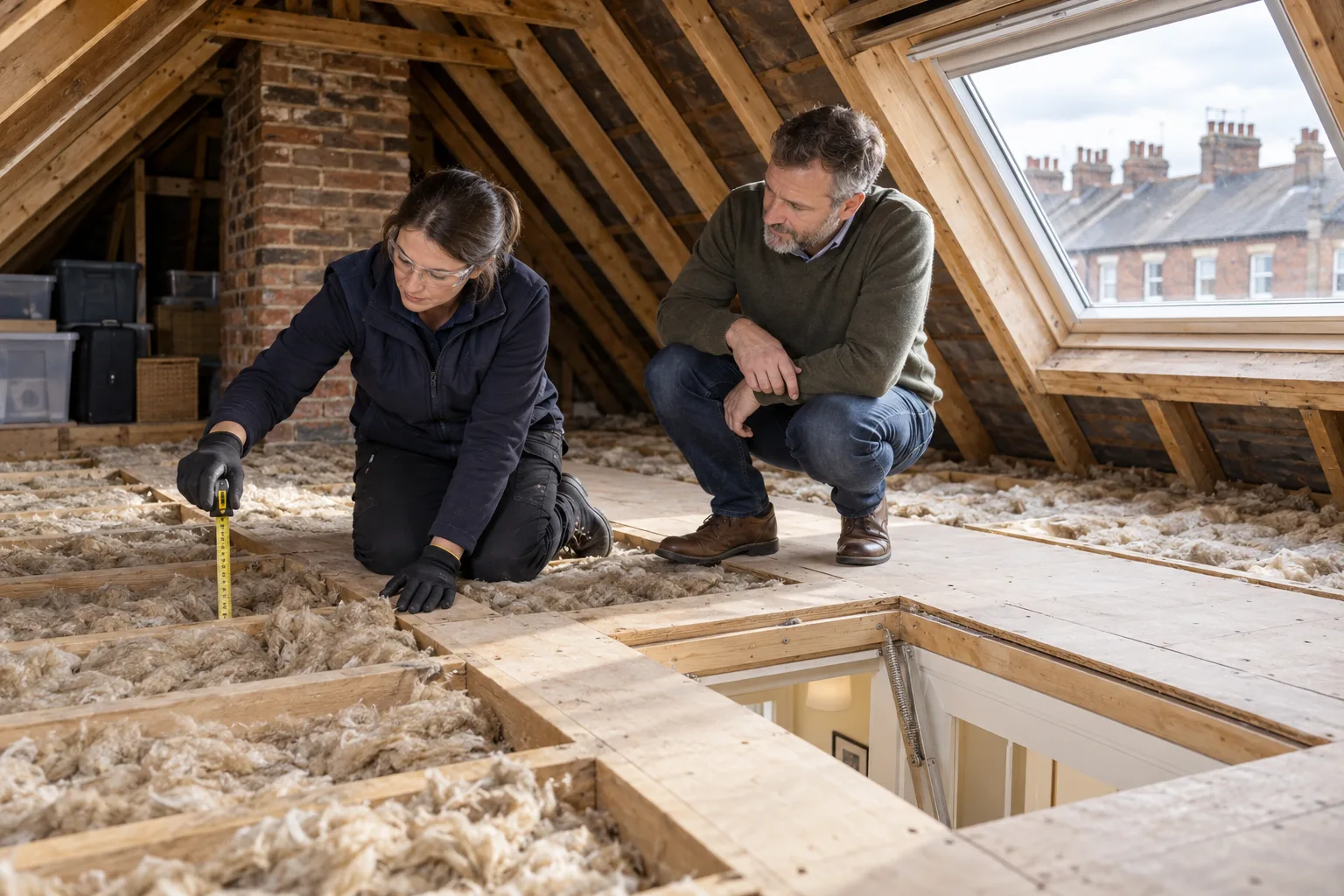
During the assessment, the assessor visits the property and carries out a detailed inspection of the building fabric and systems. The typical scope includes:
- A full inspection of the walls, roof, floors, windows and doors to identify how heat escapes
- A check of the existing heating system, hot water cylinder and controls
- An assessment of ventilation, including natural ventilation, trickle vents and any existing extract fans
- A review of the property type, age, construction method and any unusual features such as solid walls, listed status or non-standard materials
- A conversation with the occupants about how they use the home, their heating habits and any comfort problems they currently experience
- An energy assessment using RdSAP, SAP or in some cases PHPP modelling software
Once the data has been collected, the assessor produces an energy report and passes it to the Retrofit Coordinator, who uses it to produce the Medium Term Improvement Plan. The MTIP is the document that drives the retrofit project forward. It sets out a recommended sequence of measures, explains the reasoning behind each one, and identifies any risks or constraints that need to be managed.
Who Carries Out the Assessment?
The assessment must be carried out by a qualified Retrofit Assessor who is registered with a TrustMark approved scheme provider. TrustMark is the government endorsed quality scheme for retrofit professionals, and all assessors working on government funded projects must hold TrustMark registration.
The Retrofit Coordinator overseeing the project must hold a Level 5 Diploma in Retrofit Coordination and Risk Management, or an equivalent qualification recognised under TrustMark scheme requirements. This is a substantial professional qualification that covers building science, risk assessment, occupant wellbeing and project management.
You can check whether a contractor holds TrustMark registration by searching the TrustMark database at trustmark.org.uk. Always verify registration before agreeing to work, especially if you are arranging an assessment as part of a grant funded project.
How Much Does a Retrofit Assessment Cost in 2026?
For a straightforward property, the cost of an initial retrofit assessment typically falls between £120 and £240. Larger homes, properties with unusual construction or homes with complex retrofit histories will sit toward the higher end of that range.
If a full Retrofit Coordinator service is required to manage the project through to completion, the Retrofit Coordinator cost is additional. This typically runs from around £500 to £1,500 depending on the scale and complexity of the work being overseen.
These costs are separate from the installation costs of any measures that follow from the assessment. However, there are routes to get both the assessment cost and the coordinator cost covered through government grants, which are explained below.
What the Warm Homes Local Grant Covers
If you are eligible for the Warm Homes Local Grant, the cost of a PAS 2035 retrofit assessment and a Retrofit Coordinator is explicitly included in the funding. The grant guidance from the Department for Energy Security and Net Zero confirms that PAS 2035 assessor, coordinator and compliance costs are eligible expenses under the scheme.
The Warm Homes Local Grant is available to owner occupiers with a household income of up to £36,000 per year whose home has an EPC rating of D, E, F or G. It is funded by the government and delivered by local authorities. Owner occupiers pay nothing, with 100% of eligible costs covered up to a cap of £30,000 per property.
The grant is available across England and is designed to upgrade around 9,000 homes over the period from April 2025 to March 2028. A total of £500 million has been allocated to the scheme across its delivery period. Unlike some earlier schemes, the Warm Homes Local Grant is fuel neutral, meaning it is available whether your home is heated by gas, oil, LPG, electricity or solid fuel.
To access the grant, you need to apply through your local council. Each local authority administers the scheme differently, so the application process and waiting times vary. Contact your council directly or speak to a registered installer who can help with the application.
The Medium Term Improvement Plan: What You Receive After the Assessment
The central output of a whole house retrofit assessment is the Medium Term Improvement Plan (MTIP). This is a structured document that sets out:
- The current energy performance of your home, based on energy modelling
- The recommended retrofit measures and the sequence in which they should be installed
- The risks associated with each measure and how they should be managed
- Projected improvements to comfort, running costs and EPC rating following each stage
- Any constraints that affect the options available, such as listed building status, structural issues or tenure
The MTIP is not a rigid prescription. You do not have to carry out all the measures at once, and the plan is designed to allow a phased approach over several years if that suits your circumstances better. The key benefit of the whole house approach is that each phase builds on the last without creating problems for later work.
For example, the plan might recommend improving the building fabric first by insulating the walls and loft, then upgrading ventilation, and finally replacing the heating system with an air source heat pump. Doing it in that order ensures the heat pump is sized for a well insulated home, which keeps running costs low and efficiency high.
What Measures Does Retrofit Typically Cover?
A whole house retrofit plan can recommend any combination of measures depending on what your home needs. Measures commonly included in retrofit projects funded through the Warm Homes Local Grant include:
- Loft insulation, including room in roof insulation for converted lofts
- Cavity wall insulation or external wall insulation for solid wall properties
- Underfloor insulation for suspended timber floors
- Double or triple glazing to replace single glazed windows
- Air source heat pumps to replace gas, oil or LPG boilers
- High heat retention storage heaters where a heat pump is not suitable
- Solar panels to generate electricity and reduce bills
- Draught proofing of doors, windows and letterboxes
- Heating controls including programmable thermostats and smart controls
- Hot water cylinder upgrades for compatibility with heat pumps
Not all measures will be appropriate for every home. The assessment identifies which measures are suitable and which carry risks in your specific property. A hollow cavity wall that has previously been incorrectly filled, for instance, may need a different insulation approach to a property with an unfilled cavity.
Does My Home Need a PAS 2035 Assessment Before Accessing Grants?
For grant funded retrofit projects, a PAS 2035 assessment is generally required. Any work carried out under the Warm Homes Local Grant or the Social Housing Decarbonisation Fund must comply with PAS 2035 where the work involves medium or major measures such as insulation or heating system replacements.
For simpler installations such as loft top up insulation where conditions are straightforward, a lighter touch approach may apply. However, for most households looking to replace oil or LPG heating, install a heat pump, or carry out significant insulation work, the full PAS 2035 pathway will be required.
If you are paying privately for retrofit work and not using government grant funding, you can proceed without a PAS 2035 assessment. However, a whole house assessment is still worth commissioning. It reduces the risk of installing measures in the wrong order, provides an independent view of what your home actually needs, and gives you a documented basis for any future grant applications.
How to Book a Retrofit Assessment in 2026
The simplest route is to contact a TrustMark registered retrofit installer or assessor in your area. They can carry out the initial assessment, produce the MTIP and, where needed, coordinate the installation of measures. If you are applying through the Warm Homes Local Grant, your local council may have a panel of approved contractors who can carry out the full process on your behalf.
You can search for TrustMark registered retrofit professionals at trustmark.org.uk. Look for professionals listed under the Retrofit Assessor or Retrofit Coordinator categories and check that their registration is current.
If you are unsure whether your home qualifies for grant funding or which route is most suitable, speaking to an experienced MCS certified installer is a good first step. They can review your circumstances, check your EPC rating and household income eligibility, and guide you toward the most appropriate funding route before any formal assessment takes place.
Common Questions About Whole House Retrofit Assessments
How long does a retrofit assessment take?
A site visit for a standard property typically takes between one and three hours. The full assessment report and MTIP may take a further one to two weeks to produce, depending on the assessor's workload and the complexity of the property.
Can I get a retrofit assessment if I rent my home?
If you are a private tenant, your landlord would need to arrange the assessment and apply for any grant funding. The Warm Homes Local Grant includes provision for privately rented homes, with the first eligible property per landlord fully funded and a 50% contribution required for additional properties.
Does the assessment affect my EPC rating?
The assessment itself does not change your EPC rating. However, the measures recommended in the MTIP, once installed, will typically improve it significantly. Most retrofit projects funded through the Warm Homes Local Grant aim to bring homes from band D, E, F or G up to band C or above.
What if my home has previously had failed cavity wall insulation?
This is one of the situations where a whole house assessment is especially valuable. A Retrofit Assessor can identify whether existing insulation is performing correctly or causing problems, and the MTIP will recommend the appropriate remediation before any new measures are installed.
Next Steps
A whole house retrofit assessment under PAS 2035 is the most reliable way to understand what your home actually needs, in what order upgrades should happen, and what risks need to be managed before work begins. For homes eligible for Warm Homes Local Grant funding, the cost of the assessment is covered, making it a genuinely zero cost starting point.
Whether your priority is cutting energy bills, improving comfort, reducing your carbon footprint or raising your EPC rating, the assessment gives you the evidence base to make those decisions confidently rather than guessing which measure to tackle first.
To find out whether your home qualifies for a funded assessment and what improvements might be possible, visit cucumbereco.co.uk or contact the Cucumber Eco team directly.