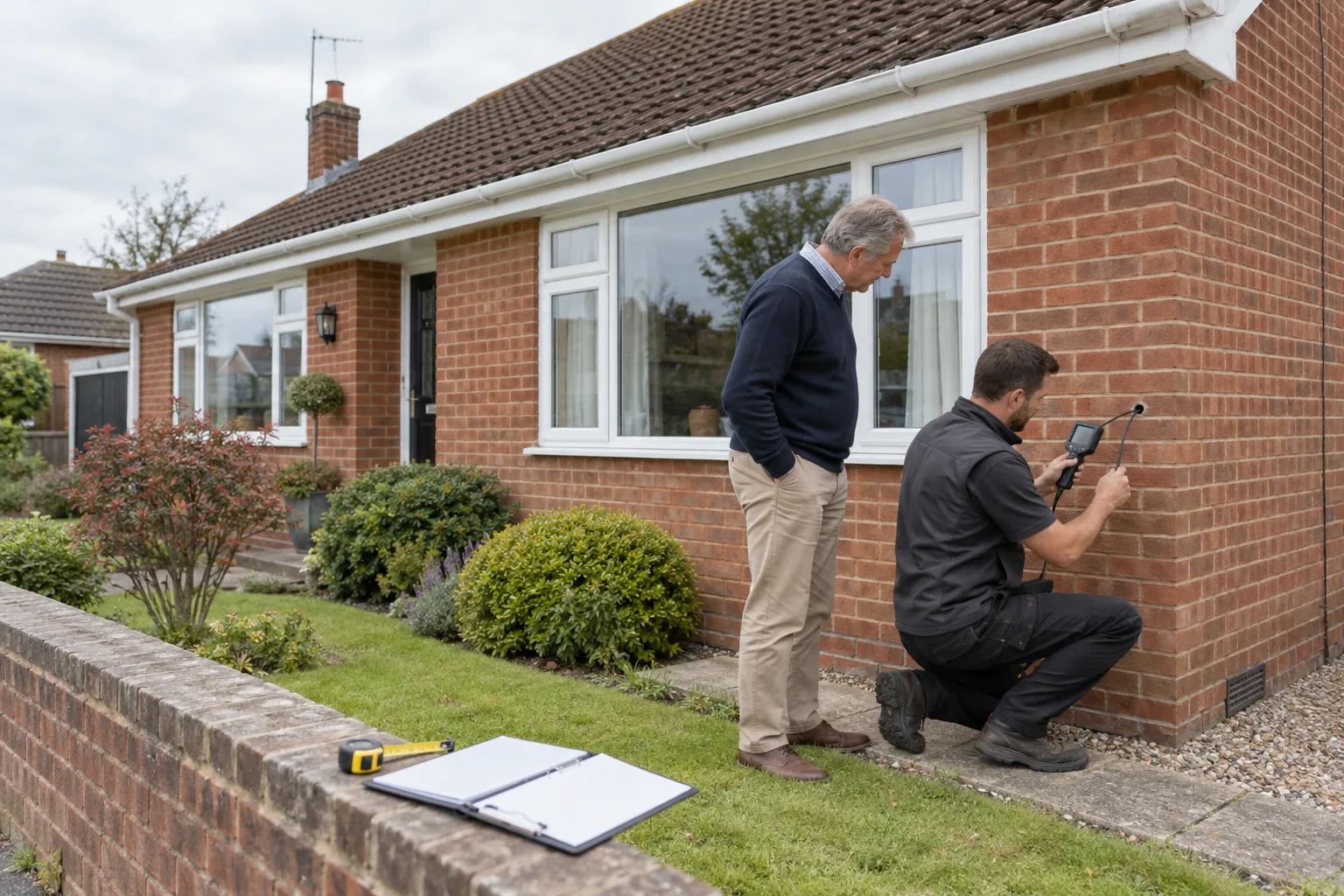
An airtightness test can replace a default EPC input with certified property evidence, but it does not guarantee points or change the register by itself.
An airtightness test can give an accredited assessor measured evidence about how much uncontrolled air passes through a rental property’s external envelope. Under RdSAP 10, an acceptable pressure-test certificate can replace the relevant default input. That may make the EPC model more representative of the building, but it is not an automatic points upgrade and it cannot change a lodged certificate on its own.
For a D-rated rental, the commercial question is therefore not simply whether testing is available. It is whether air permeability is a material input in the property’s evidence-first route from EPC D to C. Review the existing EPC and model credible scenarios before paying for a test or ordering building work.
The short answer
Yes, certified test evidence can affect the calculation, but the result is property-specific. The current RdSAP 10 conventions allow a measured air-permeability figure from a blower-door test at 50 Pa or a low-pressure-pulse test at 4 Pa to replace the default when the required documentary evidence is available. The certificate must come from a person with suitable expertise and experience. Results from background-ventilation tests are not the same input and are not included for this purpose.
What an airtightness test measures
Air leakage is uncontrolled air movement through gaps and imperfections in the building envelope. It is different from planned ventilation. CIBSE TM23 covers the two recognised approaches: fan pressurisation, commonly called a blower-door test, and the low-pressure-pulse method. Both create a controlled pressure difference and use the building’s response to calculate air permeability.
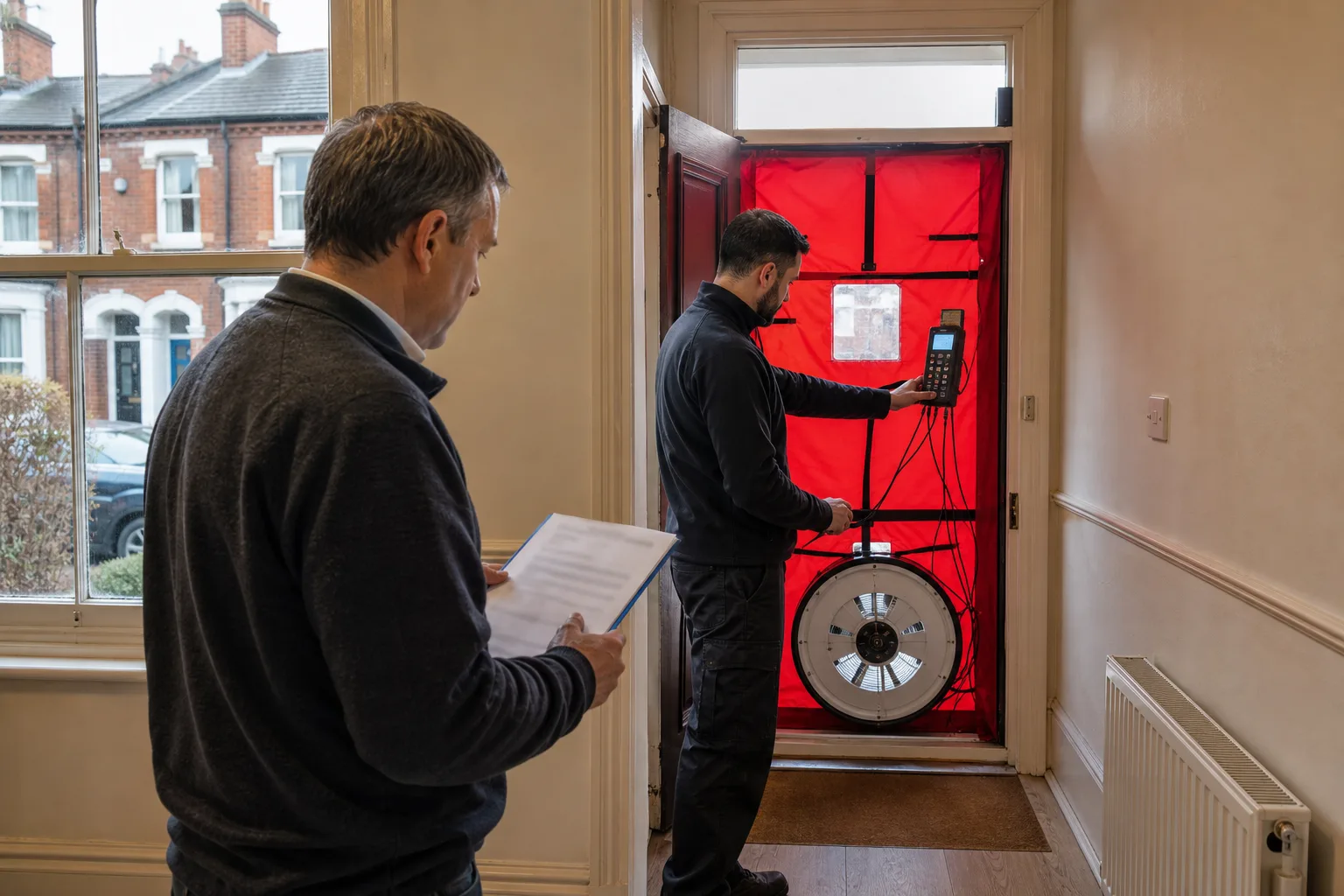
A blower-door test temporarily fits a calibrated fan into an external doorway. Windows and external doors are prepared for the test, internal doors are managed as instructed and the tester records the airflow required to hold the test pressure. A pulse test uses controlled bursts of air at a lower pressure. The landlord should follow the tester’s preparation instructions rather than sealing vents or altering the building informally.
Why the result can matter to an EPC
Existing-home EPCs use RdSAP because complete construction data is rarely available. The official government EPC guide explains that the method uses assumptions for existing buildings and that supporting information helps an assessor produce an accurate rating. RdSAP 10 provides a specific evidence route for pressure-test results, so a valid certificate can replace the air-permeability default with a measured figure for that dwelling.
The calculation then considers that input alongside the property type, dimensions, construction, insulation, glazing, heating, controls, ventilation and fuels. That is why nobody can promise a fixed number of EPC points from an airtightness test without modelling the whole property. A measured figure may support a route to C, make little difference to the band or show that other inputs and measures matter more.
Testing does not change the EPC register
A testing contractor produces evidence, not a new EPC. Only an accredited domestic energy assessor can complete the energy assessment and lodge the resulting data. The existing lodged EPC remains the public certificate until a new one is produced. A coordinated specialist EPC assessment should confirm the evidence route, model the expected effect and arrange the appropriate assessment and lodgement sequence.
When a landlord should consider testing
Testing is most useful as an assessment decision, not a generic upgrade. Consider it when all of the following are true.
- The current EPC is D-rated and the exact score gap to C is known.
- A property review shows that the air-permeability input could be commercially material compared with other evidence or measures.
- The test will use an accepted method and produce the certificate or supporting evidence required by the assessor and accreditation scheme.
- The test cost and access requirements compare favourably with the credible alternative routes.
Check the evidence route before the appointment
Ask the domestic energy assessor what they will need to validate before commissioning the test. The RdSAP conventions require a measured air-permeability figure and a pressure-test certificate produced by someone with suitable expertise and experience. They identify recognised government-approved airtightness Competent Persons Schemes as a way of demonstrating that expertise. The property and test evidence must be capable of being matched without ambiguity.
Keep the final certificate with the landlord’s property file, together with the current EPC, plans, insulation records, glazing certificates, boiler details and photographs used for the assessment. A screenshot of a tester’s instrument, a verbal estimate or a generic report about a similar property is not a substitute for evidence that the assessor can validate for the dwelling being lodged.
Compare the test with the alternatives
A landlord should compare the testing scenario with other credible routes in the same model. Existing documentary evidence may already resolve a material assumption without a site test. Heating controls, insulation evidence or a proportionate measure may provide better value. Some properties will still need larger fabric or heating work. The assessment should rank these routes by likely effect, evidence quality, cost, disruption and the need for a new lodged EPC, rather than presenting testing as the default answer.
Three mistakes to avoid
First, do not book a test because another landlord gained points. Two similar terraces can have different geometry, extensions, ventilation, heating and score gaps. Their modelled outcomes can therefore differ.
Second, do not confuse uncontrolled leakage with ventilation. A low air-leakage result is not permission to block trickle vents, extractor routes or combustion-air provisions. Testing records the dwelling; ventilation and moisture safety still need proper assessment.
Third, do not treat one test as a substitute for auditing the rest of the EPC. Use the EPC evidence checklist to compare walls, roof, floor, glazing, heating, controls and property geometry. A different input may be more important or cheaper to resolve.
Keep today’s rules separate from the 2030 policy
The current domestic MEES guidance sets the present minimum for relevant privately rented property in England and Wales at E, subject to the regulations and valid exemptions. The government has separately confirmed a higher-standard policy for 1 October 2030, with legislation and implementation detail still required. Our MEES 2030 guide keeps the present legal position and future direction distinct. An airtightness test is an evidence option within a property assessment, not proof of compliance with either regime.
Test only when the evidence route earns its place
Cucumber Eco can review the current EPC, identify the score gap and compare certified airtightness evidence with documentary evidence, proportionate small measures and larger upgrades. The initial assessment is free, and the aim is to find the lowest-cost credible route before you commit. Start your free EPC assessment.
Frequently asked questions
Does an airtightness test guarantee a better EPC rating?
No. A valid test can replace the relevant RdSAP default with measured evidence, but the whole property calculation determines the rating. The effect can differ between properties and should be modelled before any outcome is claimed.
Can the testing company change my lodged EPC?
No. The tester provides a certificate or report. An accredited domestic energy assessor must validate and use acceptable evidence in an assessment, then lodge the resulting EPC. The old lodged certificate is not edited by the test.
Is a background ventilation test acceptable instead?
Not for the RdSAP air-permeability input described here. The current conventions specify a blower-door result at 50 Pa or a low-pressure-pulse result at 4 Pa with the required documentary evidence, and state that background-ventilation test results are not included.