

Do Landlords Need a Level 5 EPC Assessor?
Most rental homes do not need a Level 5 EPC assessor. Learn what the term means, when non-domestic expertise matters and how to choose the…
Read the guideCurrent guidance for UK landlords and letting agents planning around EPC evidence, MEES requirements, funding and property improvements. Each guide separates confirmed rules from proposals and links the subject back to a practical property decision.
This collection brings together the articles most directly related to letting, compliance planning and improving rental homes. Articles retain their original EPC, grants or energy category, so you can move between the landlord view and the technical subject without losing context.
Most rental homes do not need a Level 5 EPC assessor. Learn what the term means, when non-domestic expertise matters and how to choose the…
Read the guide
Energy-efficiency finance can spread upgrade costs, but the new government-backed loan offer is not yet a confirmed landlord route. Compare…
Read the guide
A bungalow cavity-wall quote depends on exposed wall area, condition and access. Learn the cost benchmarks, suitability checks, funding routes…
Read the guide
Listed status is not a blanket EPC exemption. Learn how landlords should separate certificate rules, current MEES duties, consents and planned…
Read the guide
HHSRS excess cold and EPC ratings answer different questions. Learn what landlords in England should check before repairs, upgrades or…
Read the guide
GBIS closed on 31 March 2026. Learn what that means for landlords, existing installations and the funding routes still worth checking.
Read the guide
An EPC, gas safety record and EICR do different jobs. Use this England-focused checklist to organise marketing, tenant handover and renewal…
Read the guide
A holiday let may need an EPC, but there is no blanket rule. Check the stay length, annual letting period, energy-bill responsibility and…
Read the guide
A heat pump can raise, lower or leave the current EPC energy rating broadly unchanged. Learn what decides the result before committing a rental…
Read the guide
A leasehold flat can reach EPC C, but the lowest-cost route depends on its position in the block, recorded evidence, lease terms and any…
Read the guide
An all-electric rental can reach EPC C, but the route depends on its heating, tariff, hot water, fabric and recorded evidence. Learn what to…
Read the guide
An EPC potential rating is a modelled recommendation outcome, not always the property's absolute ceiling. Learn how landlords should use it.
Read the guide
A gas boiler does not automatically prevent a rental reaching EPC C today. Learn when evidence and smaller measures may avoid premature boiler…
Read the guide
Draught proofing can affect an EPC, but there is no fixed points uplift. Learn what assessors record and when it may help a D-rated rental…
Read the guide
An EPC recommendation list is useful evidence, not automatically a compulsory work schedule. See when MEES changes the answer and how landlords…
Read the guide
A cylinder jacket can improve a rental EPC, but there is no fixed points gain. Compare loose jackets, factory insulation and replacement before…
Read the guide
A conservatory can affect a rental EPC if it is open to the home. Learn how separation, glazing and solid-roof conversions change the assessment.
Read the guide
Hidden cavity-wall insulation can be missed without proof. Use this landlord checklist to prepare address-specific evidence for an EPC assessor.
Read the guide
LEDs can improve a current EPC, but there is no fixed points gain. Learn what assessors count and when lighting could help a D-rated rental…
Read the guide
A boiler service is important for maintenance and safety, but it does not add EPC points by itself. Learn what heating evidence can matter and…
Read the guide
There is no fixed landlord EPC price. Compare the cost and purpose of a standard certificate, a free D-to-C review, specialist testing and…
Read the guide
Compare the Boiler Upgrade Scheme and Warm Homes: Local Grant for a D-rated rental, including who qualifies, who applies, landlord…
Read the guide
A practical landlord–letting-agent handover for a D-rated rental: verify the current EPC, agree the marketing task, prepare access and…
Read the guide
An EPC assessor produces the certificate; a retrofit professional plans a wider project. Learn which route a D-rated landlord needs before…
Read the guide
Solar panels can improve a current EPC, but there is no fixed points figure. Learn which property and system details determine the result for…
Read the guide
Insulation can improve an EPC, but it is not automatically the lowest-cost route from D to C. Learn what landlords should check before…
Read the guide
An EPC rating D covers scores from 55 to 68, so two D-rated rentals can need very different plans. Learn what to check before choosing work or…
Read the guide
A valid EPC does not automatically expire when you improve a rental property. Learn when a landlord needs a new certificate and when…
Read the guide
TRVs can be recorded in a current EPC assessment, but they are only one part of the heating-controls input. Learn when controls may help a…
Read the guide
The right EPC evidence can replace some assumptions before a landlord pays for major work. Learn which documents and photographs to gather for…
Read the guide
A landlord EPC portfolio plan should rank each D-rated property by score gap, evidence quality, certificate timing and disruption before money…
Read the guide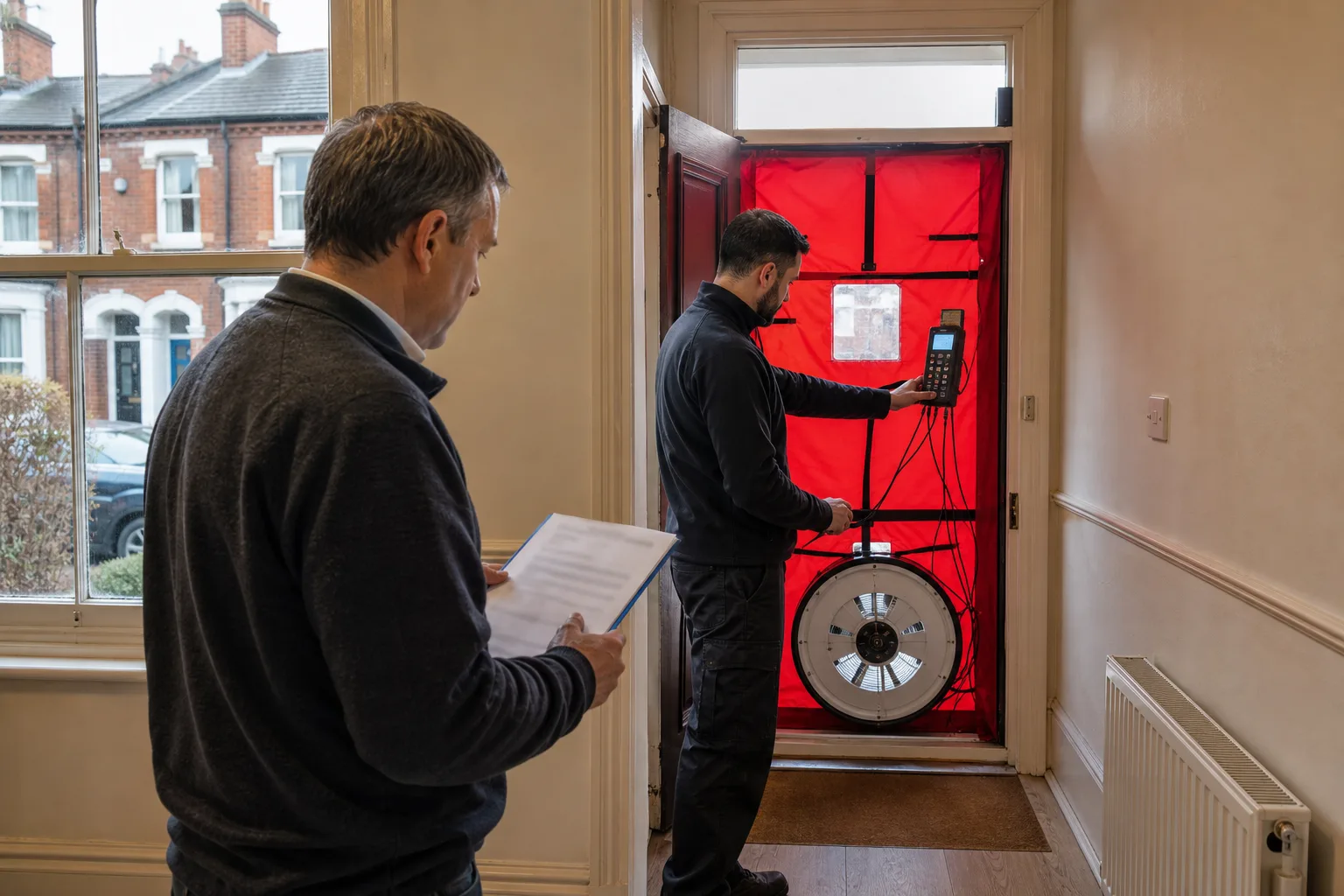
An airtightness test can replace a default EPC input with certified property evidence, but it does not guarantee points or change the register…
Read the guide
A D-rated rental does not always need major work to reach C. Start with the score gap, recorded inputs and acceptable evidence before comparing…
Read the guide
A smart meter can improve billing data and unlock time-of-use tariffs, but it does not add points to a current EPC. Here is what landlords…
Read the guide
A lower EPC does not automatically mean the property has become less efficient. Compare the inputs, assumptions and evidence before paying for…
Read the guide
A practical guide to checking an EPC before applying for grants or planning retrofit work in 2026. It explains how the EPC register, Warm Homes…
Read the guide
A practical 2026 guide for landlords preparing for the higher private rented sector energy standard by 2030. It explains the new EPC direction,…
Read the guide
The Government has delayed the Home Energy Model (HEM) EPC reform from October 2026 to the second half of 2027. But the MEES 2030 deadline is…
Read the guideA national deadline or grant headline cannot show which measure is suitable for one rental property. Start with the decision you need to make, then confirm the building evidence, dates and current scheme conditions.
Use the dated EPC and MEES guides to understand the current direction, which details are confirmed and which points may still change. Keep the existing certificate, tenancy dates and improvement records together before deciding what action is proportionate.
Not Rated or Assumed entries can affect the improvement plan. A specialist assessment can establish whether further evidence or testing is useful before a landlord commits to heating, insulation or renewable technology.
Grant availability, tenant circumstances, building suitability and installation design all matter. Compare the current funding route with customer-paid options and confirm what the property actually needs before relying on a headline grant value.
Cucumber Eco helps landlords interpret EPC evidence, compare suitable improvement routes and understand when a specialist assessment is the useful next step. The initial assessment is designed to identify the question that needs answering before work is specified.