An EPC assessor normally needs every room, the boiler and safe loft access. Use this landlord checklist to prevent avoidable assumptions and repeat visits.
Yes. For an existing home, the government says an energy assessor will need access to all rooms, the boiler and the loft where there is safe access. Landlords should also make heating controls, meters, hot-water equipment and relevant property evidence easy to inspect.
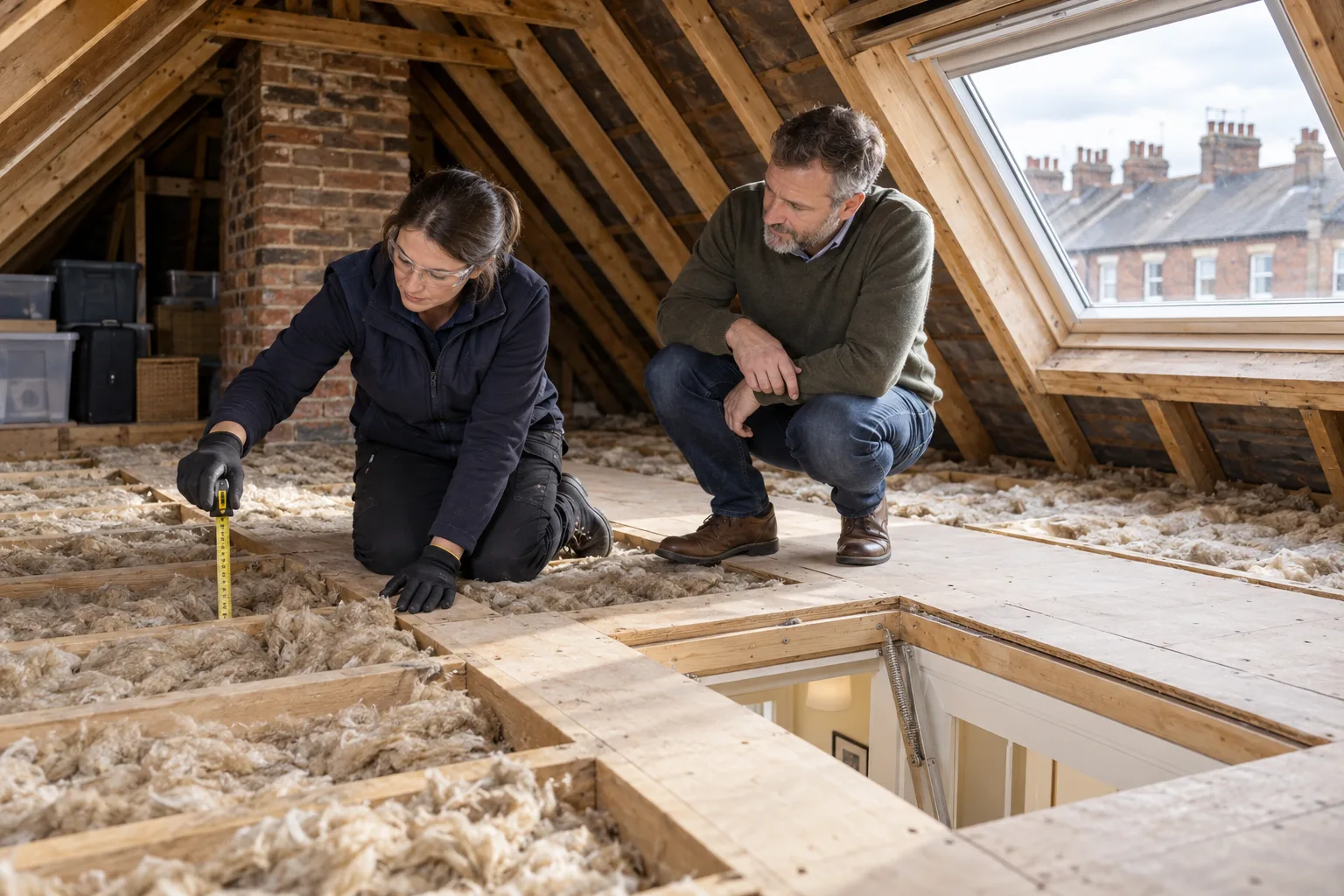
That does not mean opening floorboards, exposing wiring or creating an unsafe route into the roof. A domestic EPC is a physical, largely visual survey. If part of the building cannot be inspected, the assessor may have to use an age-based assumption instead of recording a feature that cannot be seen or supported.
The short answer for landlords
Plan the appointment on the basis that every room and relevant fixed service should be accessible. The official government guide to domestic EPC assessments specifically names all rooms, the boiler and the loft where access is safe. It also says the assessor may photograph heaters, meters, unusual features and areas that cannot be inspected.
A locked bedroom, blocked boiler cupboard or inaccessible loft does not automatically prove the home is inefficient. It does, however, reduce what can be verified during the visit. Where inspection is not possible, the government guide says an assumption may be made based on the building’s age.
If the property is occupied, agree the visit through the normal tenancy or management process and explain what needs to be reachable. This article is an assessment-preparation checklist, not legal advice on access to a rented home.
What the assessor needs to inspect
The assessment records the dwelling rather than the occupants’ actual energy habits. The government guide says the calculation considers the property type and age, dimensions, floors, extensions, rooms in the roof, glazing, construction materials, insulation, chimneys, heating systems and fuel. Appliances and the way a household chooses to heat the home do not set the rating.
All rooms and connected spaces
The assessor needs to understand the complete heated envelope and the arrangement of the home. Make bedrooms, living rooms, kitchens, bathrooms, utility rooms, extensions, conservatories and rooms in the roof accessible where they form part of the dwelling. Open internal doors and identify any space that is locked, separately occupied or difficult to enter before the appointment.
Do not assume that a floor plan replaces access. For an existing building, the government guide says the assessor must carry out a physical survey and must validate information that the owner supplies.
Boiler, hot-water system and heating controls
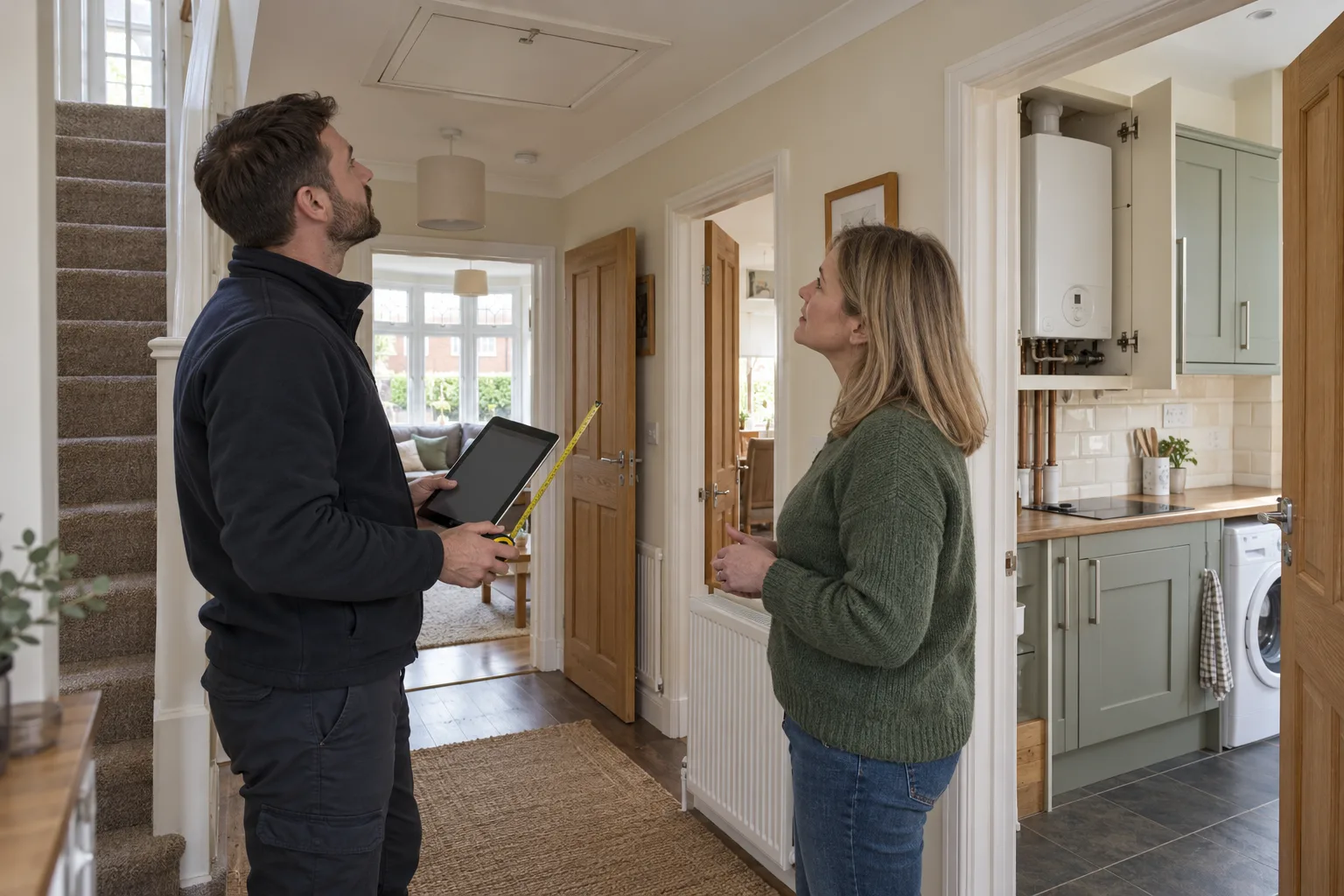
Clear the route to the boiler, hot-water cylinder, room thermostat, programmers and other fixed heating controls. If a unit is inside a cupboard, remove stored items that prevent a safe view. The government guide identifies boiler and cylinder make and model, heating fuel, room thermostats and heating timers as information the assessor may need.
Do not dismantle casings or attempt to service equipment for the EPC visit. The aim is safe identification and observation, not intrusive testing.
Loft, meters and fixed features
Provide safe access to the loft hatch where a loft exists, but do not improvise unsafe access. The assessor is not required to take unnecessary risks. If the loft is fully boarded, obstructed or unsafe, tell the assessor in advance and gather any supporting documents you hold.
Gas and electricity meters should also be reachable. Make fixed heaters, fireplaces, solar equipment, glazing and extensions easy to identify. The assessor decides what must be recorded and what evidence can be accepted under the applicable methodology.
When a room or loft cannot be accessed
Contact the assessor before the visit rather than waiting until they arrive. They can explain whether the appointment can proceed, whether the missing area is material and what evidence may be useful. Do not assume that a photograph sent afterwards will automatically replace an inspection.
The government guide states that when parts of the building cannot be inspected, an assumption may be made from the building’s age. That assumption is not a penalty and it is not proof that a previous assessor made a mistake. It is part of the reduced-data method used when complete information is unavailable.
For a landlord trying to understand a D-to-C route, an avoidable assumption can matter because the decision should start with accurate property inputs. Access alone does not add EPC points, and it does not ensure a higher band. It simply gives the accredited assessor a better opportunity to record what is actually present.
Evidence to gather before the appointment
Visible access and documentary evidence solve different problems. A survey lets the assessor observe the home on the day. Documents may support features that are hidden or clarify when work was completed, but the assessor remains responsible for validating what is used in the calculation.
The government guide recommends finding current information before the visit. Useful material can include:
- Property deeds, searches or other records that support the age of the building.
- Dates and records for extensions, conversions or rooms in the roof.
- Certificates or records for replacement glazing.
- Documents for cavity, internal, external, floor or roof insulation that cannot be fully seen.
- Boiler and hot-water-cylinder manuals or installation records showing the make and model.
- Records for renewable or low-carbon systems installed at the property.
Evidence must be genuine, relevant to the address and clear enough for the assessor to evaluate. Do not create retrospective paperwork or describe planned work as complete. Our separate EPC evidence guide for landlords owns the broader question of which property records may help and how to organise them.
A landlord’s EPC access checklist
- Check the official register first. Confirm the current certificate, score, recommendations and expiry date before booking another assessment.
- Use an accredited energy assessor. The government provides the official route to find one and advises checking that the assessor belongs to an accreditation scheme.
- Tell the assessor about the property type, extensions, converted spaces, unusual construction and any access restrictions when booking.
- Agree the visit with the tenant or managing agent through the appropriate property-access process. Explain that every room and relevant fixed service needs to be reachable.
- Clear safe routes to bedrooms, cupboards containing heating or hot-water equipment, meters, controls and the loft hatch.
- Gather property-specific evidence before the appointment. Keep originals safe and provide clear copies where appropriate.
- List completed changes since the previous EPC, but do not promise that a measure will deliver a particular score.
- After lodgement, read the new certificate and compare the recorded features with the property before committing to major work.
What not to do before the EPC visit
- Do not buy a major measure simply because it appears on a generic online checklist.
- Do not remove safety guards, open equipment or enter an unsafe loft to make a feature visible.
- Do not hide a room, heater or fixed feature because you think it may reduce the score.
- Do not treat accepted evidence as a certain band change.
- Do not assume that an assessment or test changes the EPC register by itself; a certificate must be produced and lodged by an accredited assessor.
If the current certificate is D-rated, use the result as a decision input rather than a shopping list. The evidence-first D-to-C plan explains how to compare property evidence, proportionate measures and other suitable routes before spending heavily.
Why complete access matters commercially
The immediate benefit is a smoother appointment with fewer avoidable unknowns. The bigger commercial value is a more dependable starting point for deciding what the property may need next. A landlord who can show the assessor the boiler model, insulation evidence, controls and every relevant space is better placed to understand the lodged result.
Today’s general domestic MEES minimum for covered private rentals in England and Wales remains EPC E unless a valid exemption applies. A D-rated property therefore needs a property-specific plan rather than a claim that every landlord must install the same measure now. The current government landlord guidance should be checked for the live legal position.
Cucumber Eco can review the current EPC, flag material assumed or not-inspected inputs and help compare a credible route towards C. Start your free EPC assessment.
Primary sources checked
These live government pages were checked on 17 October 2026 for the assessment process and current landlord boundary used in this guide.
- Government guide to EPCs for the marketing, sale and let of dwellings: room, boiler and safe loft access; photographs; inaccessible areas; evidence; and the information used in an assessment.
- Get a new energy certificate: arranging an assessment, choosing an accredited assessor and receiving the digital certificate.
- Find an energy certificate: the official service for checking an existing certificate before booking a new assessment.
- Current domestic MEES landlord guidance: the current minimum standard and the boundary between present requirements and future planning.
Frequently asked questions
These answers cover the main room-access and evidence questions landlords ask before a domestic EPC appointment.
Does an EPC assessor need access to bedrooms?
Yes. The government guide says the assessor needs access to all rooms in an existing home. Tell the assessor before the visit if a bedroom or other space will be locked or unavailable.
Does the assessor need to enter the loft?
The assessor needs loft access where it is safe. They are not required to take unnecessary risks. If access is unsafe or the loft cannot be inspected, contact the assessor in advance and provide any relevant records for them to evaluate.
Can documents replace access to a room?
Do not assume so. Documents may support hidden features or property history, but an existing home still requires a physical survey and the assessor must validate the information used.
Will giving access to every room improve the EPC rating?
Not necessarily. Complete access supports an accurate assessment; it does not create EPC points or guarantee a higher band. The result depends on the whole dwelling and the accepted evidence.