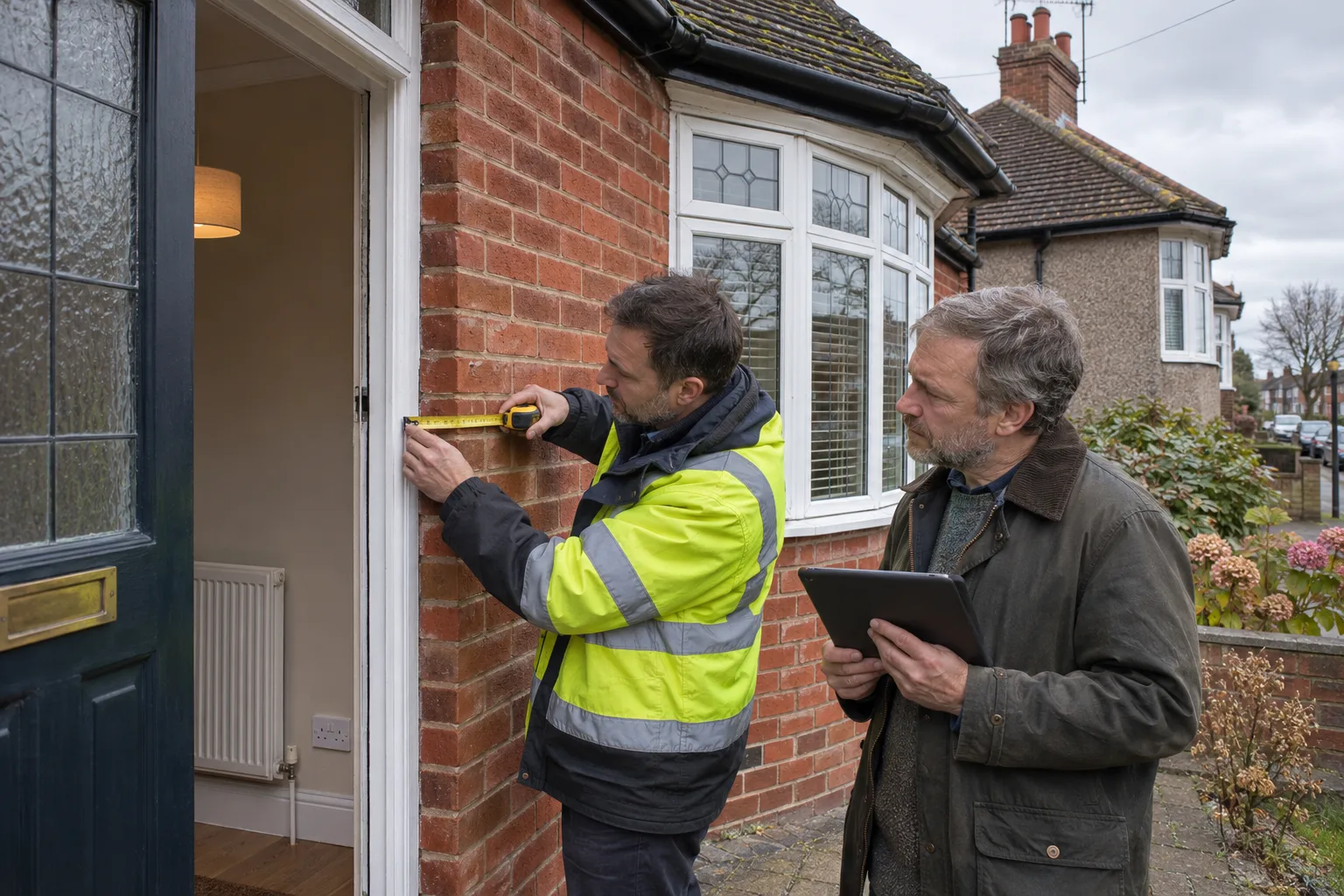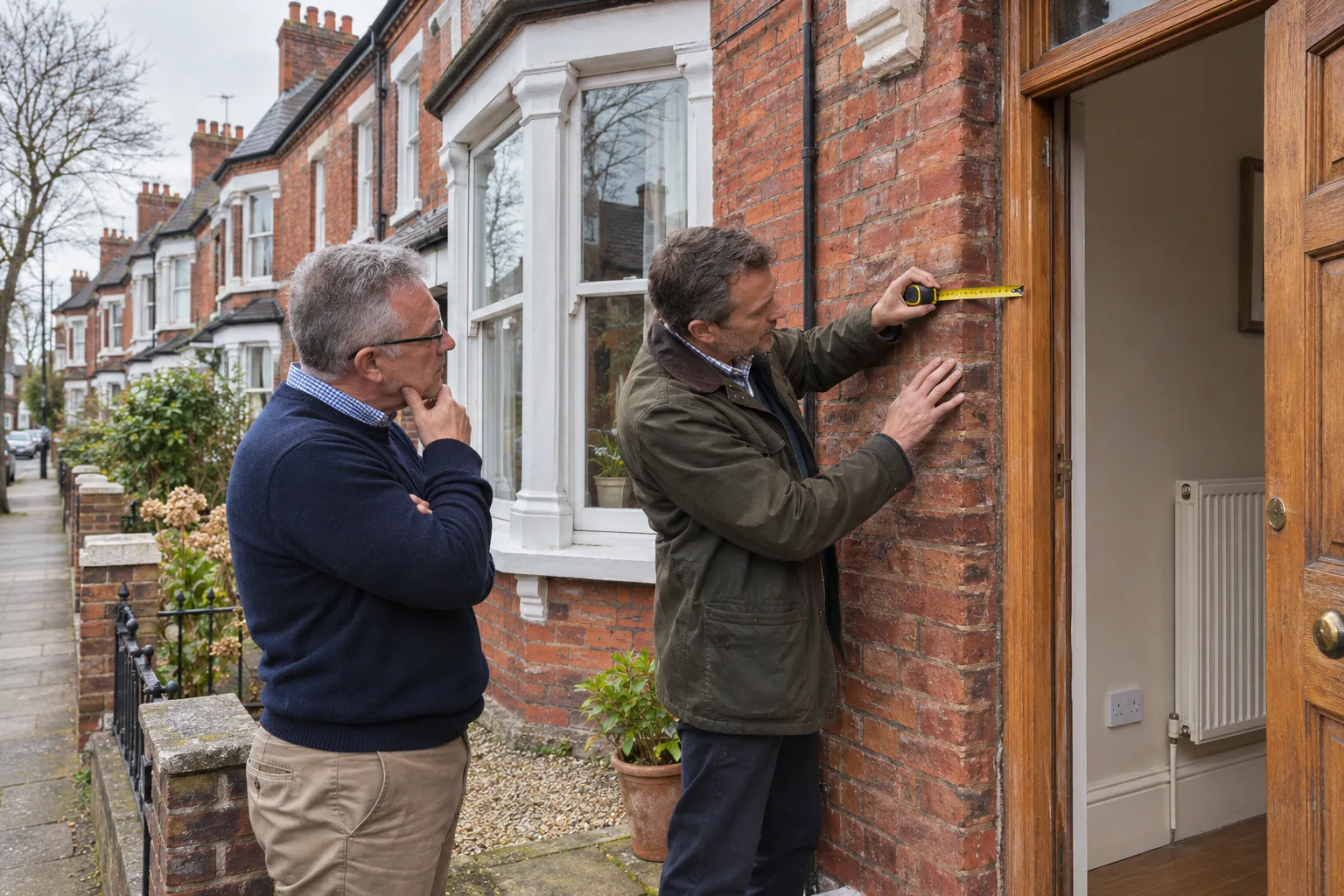
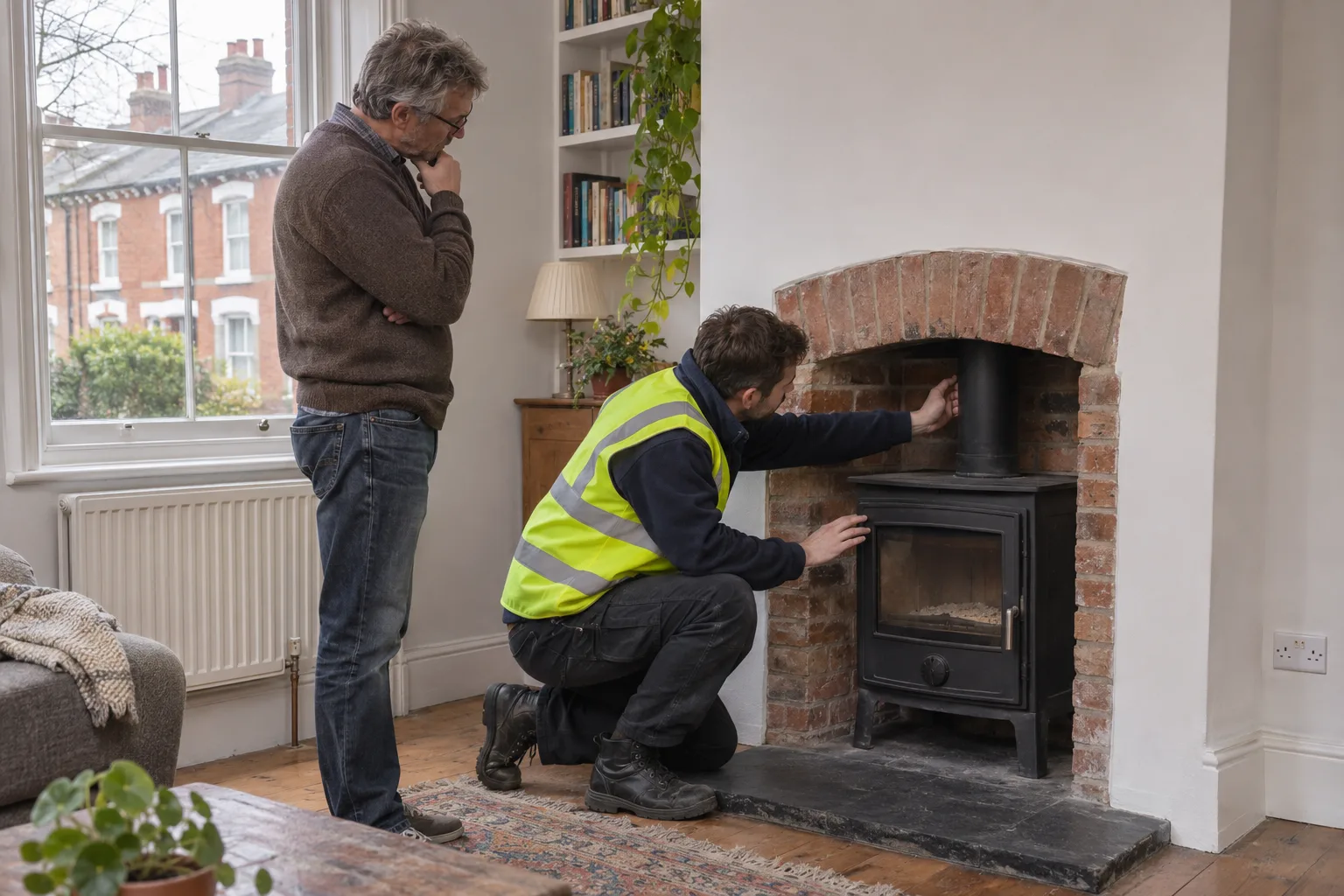
A fixed log burner can affect an EPC even when central heating serves every room. Learn what landlords should check before changing the stove or fireplace.
A log burner can affect a domestic EPC because a fixed stove is normally recorded as part of the heating system, even when the boiler already heats every room. That does not mean a wood-burning stove automatically raises or lowers the rating. The result depends on how the appliance is classified, its fuel, the main heating system, the fireplace and flue arrangement, and the rest of the property calculation.
For a landlord with a D-rated rental, the commercial question is not “does a log burner add points?” It is whether the current certificate describes the installed appliance correctly and whether keeping, altering or removing it changes the lowest-cost credible route to C. A stove that is rarely used by the tenant can still be relevant because an EPC uses standardised assumptions rather than the household’s actual routine.
Check the certificate and the physical appliance before paying for heating changes. Start your free EPC assessment to compare the recorded heating inputs with the property’s wider D-to-C options.
The short answer: a fixed log burner is an EPC input
The current RdSAP 10 specification treats secondary heating as a room-heater type. The current conventions say a fixed secondary emitter is included even when the main system heats all rooms. A closed wood-burning stove in a living room therefore cannot simply be ignored because the occupier says it is decorative or rarely lit.
The assessor records the fuel and room-heater type used by the method. The calculation then combines the main heating, secondary heating and other property inputs using standard occupancy and fuel assumptions. It does not copy the tenant’s actual split between boiler heat and logs, and it does not award a universal number of “stove points”.
If the dwelling is heated only by room heaters, different rules determine which appliances form the main heating system. This article focuses on the more common landlord question: a fixed stove present alongside central heating.
Closed stove, open fire and sealed fireplace are not the same
A closed wood-burning stove
A typical log burner has a door, controlled air supply and a flue. In a home with central heating it will usually be considered as secondary heating. The assessor identifies the appliance and applies the appropriate solid-fuel convention; they should not treat the visible fireplace opening as an open fire when the installed system is a closed stove.
An open fireplace capable of holding fuel
The MHCLG-approved RdSAP conventions version 12.2 say an open fireplace is considered in the heating assessment when it can support an open fire, including having a suitable grate, even when no fuel is present. Open fireplaces are also counted in the ventilation calculation as open chimneys.
A sealed or properly decommissioned fireplace
A fireplace that has been removed or sealed can have a different ventilation treatment, but a vent left to manage moisture may still need to be recorded. The conventions distinguish a fully sealed chimney, a blocked chimney with a smaller ventilation opening and an open chimney. A cosmetic cover or a note saying “not in use” does not establish which condition applies.
These distinctions explain why two similar-looking Victorian living rooms can produce different assessment inputs. The assessor needs to record what is physically present on the survey date, not what a landlord intends to use in future.
Why the effect on the rating can go either way
The main heating system changes the comparison
A stove recorded alongside an efficient mains-gas boiler is a different calculation from the same stove in a home with direct electric room heaters, storage heaters, oil heating or no central system. The method considers the combination of systems, so advice copied from another property is unreliable.
The fuel classification matters
RdSAP includes separate fuel assumptions for wood logs, pellets, anthracite, manufactured smokeless fuel and dual-fuel appliances. The conventions tell the assessor how to record an appliance that can burn only one fuel and how to treat multi-fuel equipment in and outside a smoke-control area. The label, model information and physical appliance can therefore matter.
Efficiency and ventilation are separate effects
The room-heater type contributes a heating-efficiency input. The chimney or flue arrangement contributes a ventilation input. A closed stove with controlled air supply is not automatically treated like an open chimney, while a capable open fireplace can affect both heating and ventilation. One feature should not be used as a shortcut for the other.
The whole property determines the band
The final rating also uses floor area, heat-loss walls, roof and floor insulation, glazing, hot water, controls, lighting and other inputs. A stove entry can change the model without moving the property across a band boundary. Conversely, on a property close to C, a small input difference may alter the decision about which measure to model next. Only the complete assessment can show the outcome.
A landlord checklist for the current EPC
1. Download the newest certificate
Use the official find an energy certificate service and confirm the address, assessment date, score and certificate version. Read the main-heating and secondary-heating descriptions together rather than searching only for the word “wood”.
2. Identify what is installed
Check whether the feature is a closed stove, an open fire, a decorative fireplace, a room heater with a back boiler or another appliance. Do not dismantle it. Clear photographs of the appliance, door, data plate where safely visible, fireplace opening and flue route can help the assessor identify what needs checking.
3. Gather property-specific records
Keep the installation certificate, manufacturer and model details, commissioning information and any document showing later removal or decommissioning. The assessor must be confident that records relate to the actual property and that the physical evidence does not contradict them. A generic product brochure is not enough.
4. Compare the certificate with the survey-day condition
Ask whether the stove was present and accessible when the EPC was completed. Note whether the certificate records secondary heating, an open fireplace or no secondary system. A mismatch is a reason for a precise assessor query, not proof that the rating is wrong.
5. Ask for a modelled scenario before altering the fireplace
If the rental is D-rated, compare the current setup with realistic options in the evidence-first D-to-C plan. Model the stove decision alongside insulation evidence, heating controls and proportionate measures. Do not remove a usable feature solely on the assumption that its absence must improve the score.
Common log-burner EPC mistakes to avoid
“The tenant never uses it, so it does not count”
EPCs use a standardised asset-rating method. The government guide explains that standard occupancy assumptions can differ from the way a building is actually used. A fixed appliance can therefore remain an input even when the present tenant prefers the boiler.
“It is condemned or disconnected, so the assessor must ignore it”
The current conventions state that fixed heating fitted but not working or condemned is still taken into account when deciding the primary and secondary heating. If an appliance has been physically removed or the fireplace altered, the assessor records the condition found. A label or verbal statement alone does not rewrite the survey evidence.
“A wood stove is renewable, so it must improve the EPC”
The calculation uses specified heating efficiencies, fuel prices, emissions and system rules; it is not a simple renewable-versus-fossil label. A low-carbon characteristic does not guarantee a higher current Energy Efficiency Rating, and current-EPC treatment should not be presented as the final treatment under future Home Energy Model metrics.
“An EPC confirms the stove is safe and compliant”
It does not. The official domestic EPC guide says an EPC assesses the energy efficiency of installed services but does not assess their safety, maintenance or fitness for purpose. Landlords should keep the separate safety, installation, tenancy and local air-quality checks in the appropriate competent hands.
What to do when the certificate appears wrong
Start with the assessor named on the certificate. Send the certificate reference, photographs and relevant appliance records, then ask one specific question: “The living-room appliance is a closed wood-burning stove, but the EPC appears to show an open fire/no secondary heating. What was recorded, and what evidence would you need to review it?”
If several inputs differ between two certificates, use the replacement-EPC comparison checklist rather than attributing the entire score change to the stove. Heating, geometry and fabric differences should be checked separately.
An assessor or accreditation scheme can review an accuracy concern under the applicable process. A landlord, stove installer or consultant cannot directly edit the EPC register. Documentary evidence and specialist review can support a qualified reassessment, but they do not change a lodged certificate by themselves.
How this fits a D-to-C landlord decision
A log burner should be treated as one input in the heating picture. The gas-boiler rental guide explains why a working boiler does not automatically need replacement, while the boiler-service EPC guide separates maintenance from assessment evidence. The same discipline applies here: confirm the installed system, then model the property rather than buying a generic fix.
The current domestic private-rented minimum in England and Wales remains EPC E unless a valid exemption applies. The current landlord MEES guidance should be kept separate from the confirmed higher-standard policy for 2030.
Government policy for the future standard uses a fabric metric plus either a heating-system or smart-readiness metric, subject to implementation through legislation. The government response on higher private-rented standards also recognises current-style EER C certificates lodged before 1 October 2029 until they expire or are replaced. Do not assume today’s log-burner treatment predicts the final product-level result under reformed EPCs.
Primary sources checked
The secondary-heating, room-heater, fuel and flue distinctions come from the June 2026 BRE RdSAP 10 specification and RdSAP conventions version 12.2, applicable from 6 August 2026.
The role and limits of an EPC, standard occupancy, assessor requirements and installed-service scope come from the government guide for domestic EPCs and the Energy Performance of Buildings Regulations 2012. Current and planned landlord standards are sourced separately above so present law is not confused with future policy.
Frequently asked questions
These answers concern domestic EPCs for rented homes in England and Wales. The assessment result remains property-specific.
Does a log burner improve an EPC rating?
Not automatically. A fixed stove is recorded as part of the heating assessment, but the direction and size of any effect depend on the main heating, stove and fuel classification, flue or chimney arrangement and the whole dwelling calculation.
Does a log burner count if the boiler heats every room?
Yes, a fixed secondary emitter is included under the current conventions even when the main heating serves all rooms. The assessor must identify the installed appliance and apply the relevant room-heater rules.
Does an unused open fireplace affect an EPC?
It can. A fireplace capable of supporting an open fire is considered in the heating assessment even if no fuel is present, and an open chimney is also part of the ventilation calculation. A properly sealed or decommissioned fireplace can be treated differently.
Will removing a log burner raise the EPC to C?
There is no universal answer. Removal changes the physical heating and possibly ventilation inputs, but the complete property determines the score. Model the realistic before-and-after scenarios before spending money or altering the fireplace.
Can a stove certificate change a lodged EPC?
No. It may help an accredited assessor identify the appliance and validate the input, but only a qualified assessment and a newly lodged or formally corrected certificate changes the register.
Confirm the heating input before changing the room
A fixed log burner is not an invisible lifestyle extra in an EPC. It is a heating input with appliance, fuel and ventilation consequences. Identify whether the property has a closed stove, open fire or sealed fireplace, gather the records, compare the current certificate and ask the assessor for a property-specific model before deciding to keep, alter or remove it.
Start your free EPC assessment to review the stove, heating evidence and lowest-cost credible route from D to C before committing to work.