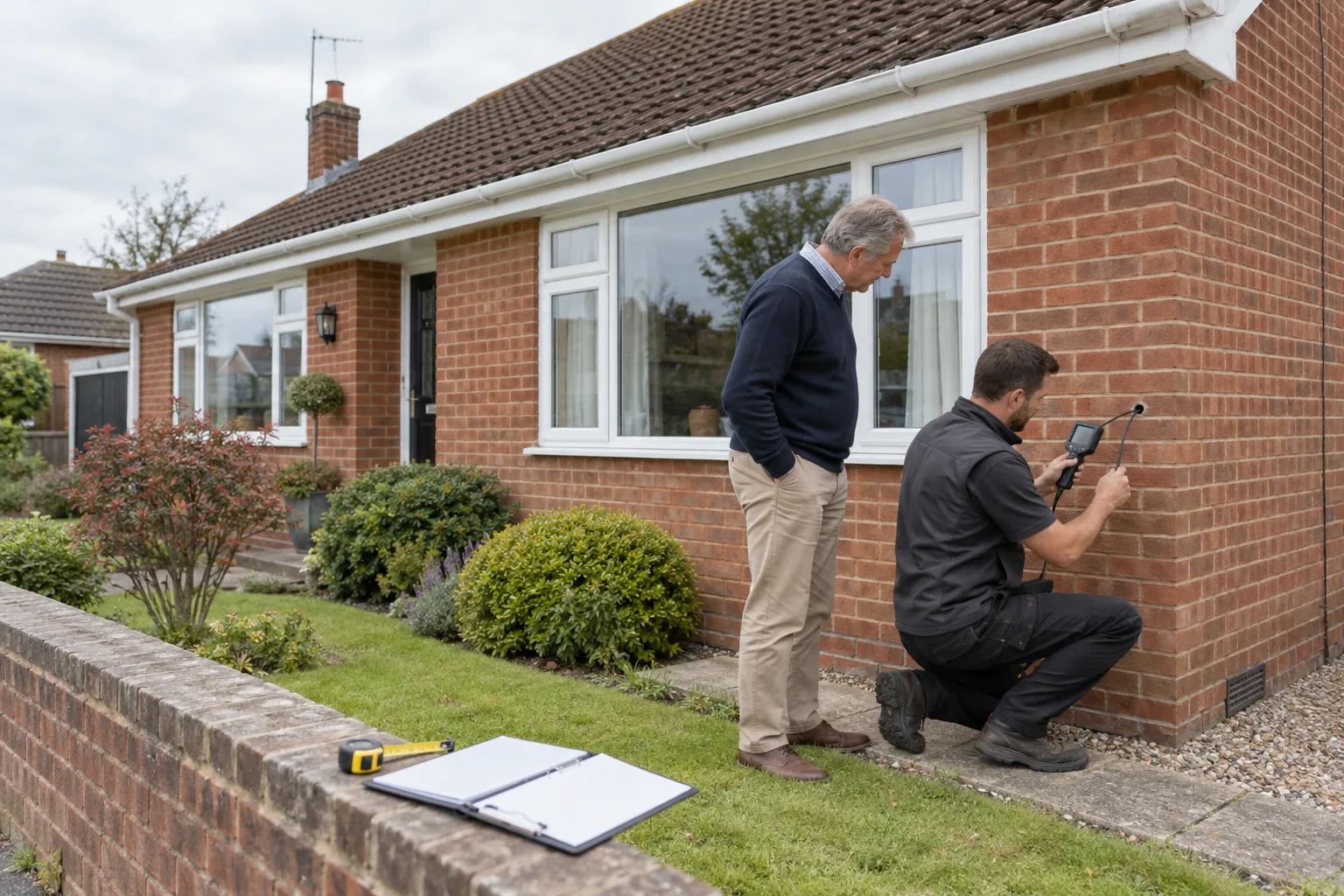

A practical 2026 guide for landlords preparing for the higher private rented sector energy standard by 2030. It explains the new EPC direction, the £10,000 cost cap, Warm Homes Local Grant, Boiler Upgrade Scheme support and the upgrade order that protects rental homes from rushed decisions.
Landlords have a new energy efficiency deadline to plan around. The government has confirmed that privately rented homes in England and Wales will need to meet the higher private rented sector energy standard by 1 October 2030, subject to the final legislation and parliamentary approval.
That sounds distant, but for landlords with older homes, empty periods, mortgage renewals or planned refurbishments, the practical work starts now. A rental home that sits at EPC D, E, F or G today may need fabric upgrades, heating changes, smart controls or a new assessment before it can keep being let after the 2030 deadline.
The most important point is that the future rule is not just about chasing one old style EPC score. Government has confirmed that the next version of domestic EPCs will use four headline metrics: energy cost, fabric performance, heating system and smart readiness. For private rented homes, the planned higher standard will focus first on the fabric of the building, then on either heating or smart readiness.
For landlords, this changes the sensible order of work. Insulation, draught control, ventilation and heat loss should come before expensive heating changes. A heat pump or smart control upgrade can help, but a cold leaky property is still a cold leaky property.
What has changed for private rented homes
The current domestic private rented sector rule is still EPC E. Since 1 April 2020, landlords have generally been unable to let or continue letting a covered domestic property with an EPC rating below E unless a valid exemption is registered.
The confirmed direction of travel is a higher standard by 2030. Government says private landlords of all tenancies will be required to comply by 1 October 2030. Until then, the existing EPC E standard continues to apply.
The government response also confirms a £10,000 cost cap per property for the future higher standard. If the property cannot meet the new standard after the landlord has made the relevant improvements up to that cap, the landlord may be able to register an exemption. That exemption is expected to last ten years.
There is also an important date for planned work. Spend on relevant energy efficiency improvements will be recognised towards the first £10,000 cap from 1 October 2025. That means landlords should keep clear records of invoices, assessment reports, installer details and before and after evidence.
The 2030 deadline landlords need to know
The key date is 1 October 2030. By that date, all qualifying private rented tenancies are expected to meet the higher standard, unless the landlord has a valid exemption.
There is also a grandparenting route for some homes. Government says privately rented homes that have an EPC score of C or higher against the current Energy Efficiency Rating before 1 October 2029 may be treated as compliant with the higher standard until that EPC expires or is replaced, subject to the final rules.
That makes 2026 a useful planning year. A landlord with a property close to EPC C might want to act early, especially if the property already needs loft insulation, cavity wall insulation, heating controls or other straightforward upgrades. A landlord with a lower rated solid wall property should not wait until 2029, because the work may need surveys, funding checks, tenant access and staged installation.
An EPC is normally valid for ten years or until a newer EPC is produced for the same property. Even so, relying on an old report can be risky if the property has changed, the heating system has been replaced or the future EPC method changes the result.
Why the new EPC system matters
The EPC system is being reformed. Government has confirmed plans for new style domestic EPCs with four headline metrics. These are energy cost, fabric performance, heating system and smart readiness.
The Home Energy Model consultation explains that these metrics are intended to give a clearer picture of how a home performs. This matters because the current headline EPC rating can be shaped heavily by fuel costs, which can sometimes make electric heating look worse even where the fabric is strong.
For landlords, the most practical change is that fabric comes first. Fabric means the parts of the home that keep heat in. It includes walls, roofs, floors, windows, doors, airtightness and the way moisture is managed.
That is good news for sensible retrofit planning. Fabric upgrades can reduce heat loss, improve comfort for tenants and prepare the home for low carbon heating later. It also means that landlords should be careful about doing a heating upgrade without checking whether the building needs insulation first.
The practical upgrade order
A landlord should start with evidence, not guesswork. The current EPC is useful, but it is only one part of the picture. The best approach is to combine the EPC recommendations with a proper retrofit survey, photos, installer advice and a review of the tenant experience.
The usual order is:
- Check the current EPC and expiry date.
- Identify whether the property is already C, close to C, or far below C.
- Review obvious fabric gaps such as loft insulation, cavity walls, suspended floors and draughts.
- Check damp, ventilation and building condition before adding insulation.
- Decide whether the home needs low cost measures, major insulation, a heating upgrade or a staged plan.
- Check whether the tenant may qualify for Warm Homes Local Grant support.
- Keep full evidence for cost cap and exemption purposes.
This order matters because the cheapest improvement is not always the right improvement. For example, cavity wall insulation can be a good measure for suitable cavity walls, but it should not be installed where the wall is exposed, damp, damaged or unsuitable. Solid wall insulation can be powerful, but it needs careful design because it changes moisture behaviour. Loft insulation can be simple, but it still needs safe ventilation, hatch detailing and care around cables and downlights.
Measures most likely to help landlords
Loft insulation is often the first place to look. Energy Saving Trust says a quarter of heat can be lost through the roof in an uninsulated home, and current advice is normally to insulate a cold loft to 270 mm mineral wool where suitable. In many rental homes, topping up a thin layer is less disruptive than wall or floor works.
Cavity wall insulation can also be effective where the home has suitable cavity walls. The assessment should check wall type, cavity condition, exposure, existing defects and damp risk. A poor installation can create problems, so the survey stage matters.
Floor insulation can help homes with suspended timber floors. Energy Saving Trust says floor insulation could lower energy bills by around £70 a year in Great Britain for a typical home. The actual result depends on floor type, air leakage, access and heating use.
Draught proofing is often overlooked. Energy Saving Trust says professional draught proofing of windows and doors could cost around £250 for a whole house, and draught proofing around windows, floors and doors could save around £85 a year in Great Britain. It can also make rooms feel more comfortable at lower temperatures.
Heating controls are another common gap. Programmers, room thermostats, thermostatic radiator valves and smart controls can improve control and support the future smart readiness metric. They are not a substitute for insulation, but they are often part of a sensible package.
How the Warm Homes Local Grant can help
The Warm Homes Local Grant is one of the most relevant funding routes for lower income tenants in private rented homes in England. Government guidance says the grant is delivered by local authorities and is intended for low income households in privately owned homes with EPC D to G.
The scheme can fund energy performance improvements and low carbon heating where suitable. The government examples include insulation, solar panels and air source heat pumps. The exact package depends on the home, the local authority delivery route and the assessment.
For landlords, the key point is that tenant eligibility is central. The property must be privately owned, but the household must also meet the income, benefit or postcode route used by the scheme. The usual income threshold is £36,000 a year or less, although local delivery can include other eligibility routes.
Landlords should not assume every rental property qualifies. They should also not assume the grant will pay for any chosen measure. The local authority or delivery partner will assess the home and decide what is suitable.
The Warm Homes Plan sits behind this wider direction. It commits long term funding to warmer homes, better advice, grants and clean heat support. For private rented homes, the direction is clear: cold, inefficient homes are being pushed towards fabric improvement first, then better heating and control.
Where the Boiler Upgrade Scheme fits
The Boiler Upgrade Scheme is separate from the Warm Homes Local Grant. It applies in England and Wales and provides one grant per property towards eligible low carbon heating.
Current government guidance lists £7,500 towards an air source heat pump, £7,500 towards a ground source heat pump, £5,000 towards a biomass boiler and £2,500 towards an air to air heat pump. The scheme does not fund hybrid heat pump systems.
For landlords, the Boiler Upgrade Scheme can be useful where the property is ready for a heat pump and the heating system is being replaced. It is not the answer for every EPC problem. A heat pump in a poorly insulated home may need bigger radiators, careful heat loss design and tenant education. It may also raise questions about running costs if the tenant is on a standard electricity tariff.
That is why fabric first is still the best strategy. If the home loses less heat, the heating system can be smaller, quieter and cheaper to run.
How Ofgem energy prices affect decisions
Energy prices affect both tenants and EPC calculations. Ofgem says the typical direct debit dual fuel price cap for 1 April to 30 June 2026 is £1,641 a year. Average direct debit unit rates for that period are 24.67p per kWh for electricity and 5.74p per kWh for gas, with average daily standing charges of 57.21p for electricity and 29.09p for gas.
These figures do not mean a tenant will pay £1,641. Actual bills depend on how much energy is used, the region, the meter, the tariff and how the home is heated. A colder rental home can still cost far more than a typical home if tenants need more heat to reach a safe temperature.
The commercial point for landlords is simple. Lower heat demand supports affordability. It can reduce complaints, improve tenant comfort and make the property more resilient as EPC rules tighten.
Landlord records to keep from 2026
Evidence will matter. Landlords should keep a clear folder for each property. It should include:
- The current EPC and expiry date.
- Any previous EPCs.
- Retrofit assessments and installer surveys.
- Quotes and invoices.
- Photos before, during and after installation.
- Product datasheets and warranties.
- Ventilation checks.
- Tenant access records.
- Grant application evidence where relevant.
- Post works EPC or assessment results.
This is useful for compliance, future sale or refinance, and any cost cap discussion. It also helps avoid paying twice for the same investigation.
Common mistakes landlords should avoid
The first mistake is waiting until 2029. The closer the deadline gets, the more pressure there will be on assessors, installers, local authorities and tenants. Prices may also rise if demand spikes.
The second mistake is treating the EPC recommendation list as a shopping list without checking suitability. EPC software cannot see every defect, damp risk or access issue. A survey still matters.
The third mistake is replacing heating before reducing heat loss. A low carbon heating system works best when the home can hold heat.
The fourth mistake is ignoring ventilation. Better insulation and draught control can improve comfort, but a home still needs enough controlled ventilation to manage moisture.
The fifth mistake is assuming grants are automatic. Warm Homes Local Grant depends on household eligibility and local delivery. Boiler Upgrade Scheme support depends on the heating system, the property and an eligible installer process.
A simple 2026 action plan
Start with the current EPC. If the property is already C, check when the certificate expires and whether any recent works mean a new assessment would help or hurt. If the property is D, list the lowest disruption fabric measures first. If the property is E, F or G, check current compliance immediately, because the existing minimum standard is still E unless a valid exemption applies.
Next, speak to the tenant if funding may depend on household income or benefits. The Warm Homes Local Grant is designed around eligible households, so landlord and tenant cooperation can make or break the application.
Then plan works around voids, tenancy renewals and other maintenance. Loft insulation, heating controls and draught proofing may be easier to arrange while occupied. Floor insulation, internal wall insulation or major heating work may need more notice and careful scheduling.
Finally, document everything. By 2030, the question will not only be what has been done. It will also be what can be proved.
The bottom line for landlords
The 2030 private rented sector energy standard is now close enough to affect property decisions. Landlords do not need to panic, but they do need a plan.
The best plan starts with the building fabric, checks grant eligibility, keeps records and avoids last minute decisions. Warm Homes Local Grant may help some eligible rented homes in England. The Boiler Upgrade Scheme may support suitable heat pump projects in England and Wales. The Warm Homes Plan shows the wider policy direction.
For landlords, the strongest move in 2026 is to understand each property now. A rental home with good insulation, controlled ventilation, sensible heating and clear records will be in a much better position when the 2030 deadline arrives.