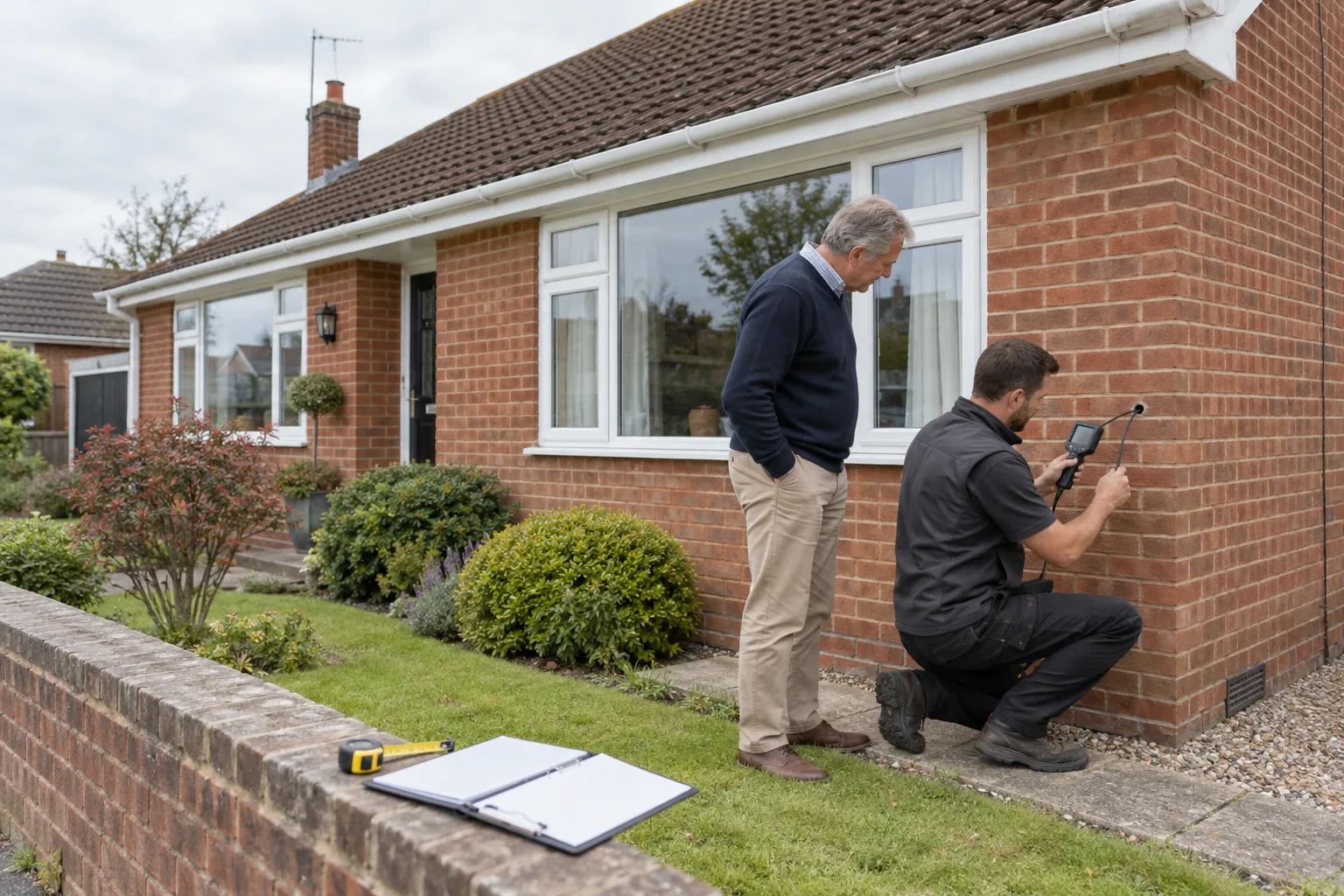

A landlord EPC portfolio plan should rank each D-rated property by score gap, evidence quality, certificate timing and disruption before money is committed.
A landlord with several D-rated rentals does not need several identical upgrade plans. The better commercial move is to rank the portfolio before commissioning work: find the properties closest to C, the certificates with material evidence gaps, the homes where access is practical and the deeper-D cases that need a broader budget decision.
A portfolio triage does not replace an EPC for any individual dwelling. It creates an order of work so that a property-specific specialist EPC assessment can be used where it has the clearest value. That protects capital, reduces avoidable tenant disruption and turns a compliance concern into a manageable sequence of decisions.
The short answer: assess the best decision first
Start with the property where an assessment can most clearly change the next spending decision. That is often a high-D rental with a small score gap and identifiable assumptions, but it is not a fixed rule. An expiring certificate, a planned void period, uncertain insulation evidence or a major heating decision can move another property higher up the list. The triage should show why each property is ranked, not merely sort the portfolio by band letter.
Build one reliable portfolio register
Create one row for every rental property before comparing routes. A spreadsheet is enough if the data is current, consistent and linked to the supporting documents. Record the following items.
- The EPC issue and expiry dates, current band, numerical score and the minimum score gap to C.
- The property type, age bands, floor area, main heating, hot-water system, controls, glazing and recorded insulation.
- Entries marked assumed, not inspected or not rated, plus any conflict between the certificate and what is installed.
- Available plans, invoices, Building Control records, product details and previous survey evidence.
- Tenancy, access and planned maintenance windows that may affect survey or works timing.
Do not treat an older EPC as proof that every previous input was correct. Use it as a comparison point. If two certificates disagree, the EPC input-comparison checklist helps identify the construction, heating or evidence fields worth investigating.
Use the score gap as the first filter, not the final answer
Under the current Energy Efficiency Rating, band C covers scores from 69 to 80 and band D covers 55 to 68. A score of 68 and a score of 55 therefore describe very different commercial problems, even though both certificates show D. The high-D property may justify a focused evidence and small-measure review. The low-D property may require a wider comparison of fabric, heating and renewable options.
A close score does not guarantee a cheap route. The calculation considers the complete dwelling, and the recorded inputs may already be correct. Once the portfolio shortlist is set, use the separate evidence-first D-to-C plan to compare documentary evidence, suitable measurements, proportionate small measures and larger upgrades for each selected property.
Sort the portfolio into four action buckets
1. Near C with a clear evidence question
Prioritise high-D properties where a material feature is assumed or unsupported but credible evidence may exist. The official EPC guide explains why assessors need suitable supporting information for features that cannot be inspected. Gather the documents first; the accredited assessor must still decide what is acceptable and use it in a new assessment.
2. Near C with a possible small-measure route
A property with accurate inputs may still have a proportionate route through suitable controls, radiator valves, lighting, insulation top-ups or another modest measure. Model the actual dwelling before ordering anything. There is no universal one-point product, and a measure that closes one property’s gap may do little for another.
3. Deeper D requiring a capital comparison
Lower-D properties deserve an early budget conversation rather than an optimistic quick-fix assumption. Compare the credible fabric, heating and renewable combinations, their disruption, maintenance implications and tenant timing. This bucket may not be assessed first if another property offers a faster decision, but it should not be hidden until the end of the programme.
4. Certificate or current-compliance issues
Separate D-to-C planning from today’s legal checks. The current domestic private-rented minimum in England and Wales is EPC E, subject to the scope of the regulations and valid exemptions. A missing, expired, F- or G-rated certificate can create a different and more immediate question. Verify the property’s circumstances against current official guidance rather than assuming the future C policy is already the enforceable minimum.
Let policy timing inform the sequence, not manufacture urgency
The government has confirmed a single 1 October 2030 compliance date for the planned higher private-rented standard in England and Wales. New powers and amended regulations are still part of the implementation route. The confirmed policy also recognises a property with EER C or above on an EPC before 1 October 2029 as compliant with the higher standard until that certificate expires or is replaced. The detailed MEES 2030 decision guide owns the full regulatory context.
For portfolio planning, those dates support an orderly review of D-rated homes. They do not justify testing the whole portfolio, promising that each property will reach C or buying the same measure across all homes. Prioritise decisions that are supported by the current certificate, accepted evidence and a property-specific model.
A practical four-week portfolio triage
- Week one: inventory the certificates, scores, dates and major property systems. Flag missing data rather than guessing.
- Week two: collect evidence in a separate property folder and mark each item as available, missing or needing validation.
- Week three: rank the shortlist using score gap, evidence opportunity, certificate timing, planned works and access. Record the reason for the order.
- Week four: assess the highest-value decisions, model credible routes and book only the evidence, survey or works that the accepted route requires.
Three portfolio mistakes that waste money
Do not buy one standard upgrade package for every D-rated property. Construction, heating, score gaps and recorded evidence vary, so the same measure can produce different modelled effects.
Do not assume the highest score must be assessed first. A 68 with complete, accurate inputs may have less immediate decision value than a 65 with a documented extension or uncertain insulation entry.
Do not report a modelled C as though it were lodged. Evidence, testing and scenario modelling inform the assessment route; the public register changes only when an accredited assessor completes and lodges the resulting EPC.
Turn the portfolio into an ordered plan
Cucumber Eco can review the current certificates, identify the properties where evidence or a proportionate route deserves attention and help sequence the next assessments before capital is committed. Start your free EPC assessment.
Frequently asked questions
Which D-rated property should a landlord assess first?
Start with the property where an assessment can most clearly improve the next decision. Consider the score gap, quality of existing evidence, certificate timing, planned works and tenant access together. A high-D property is a common priority, but the correct order remains portfolio-specific.
Do all D-rated rentals need the same EPC improvements?
No. Band D covers a wide score range, and the calculation also reflects each dwelling’s construction, heating, controls, ventilation and evidence. One property may need accepted documents, another a small measure and another a larger upgrade combination.
Can one EPC assessment cover a whole landlord portfolio?
Portfolio triage can organise the programme, but each EPC is property-specific. The assessor must review the dwelling, validate its evidence and lodge its certificate separately. Similar homes should not be assumed to have identical inputs or outcomes.