A practical 2026 guide to planning solar panels and heat pumps as one home energy system. It explains grant routes, running cost logic, roof and electrical checks, battery considerations and the order of works before accepting quotes.
Why solar panels and heat pumps are now being planned together
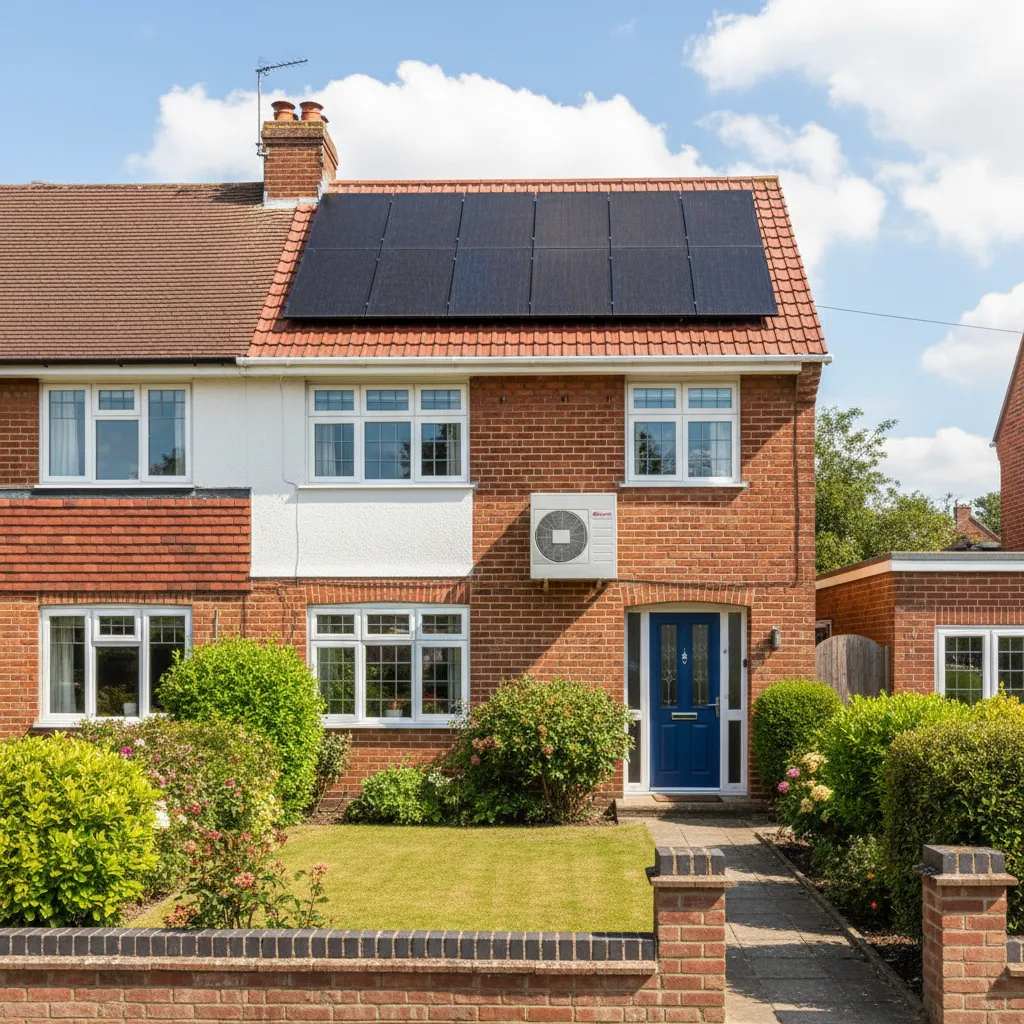
Solar panels and heat pumps are often discussed as separate upgrades. In practice, they work best when they are planned as one home energy system. Solar panels reduce the electricity you buy from the grid. A heat pump moves more heat into the home than the electrical energy it uses. When the two are designed around the same property, the result can be lower running costs, better use of roof space, and a clearer plan for moving away from gas or oil.
This matters in 2026 because household electricity remains expensive, heating grants have changed, and more homeowners are trying to avoid doing the same retrofit twice. A home that adds solar panels first may later find that the cable route, consumer unit, inverter capacity or battery position was not planned with heating in mind. A home that adds a heat pump first may miss the chance to use solar generation to cover part of daytime heating, hot water and appliance demand.
The right answer is not always to fit both at once. Some homes should deal with insulation, ventilation, radiators or controls first. Some roofs are shaded or too small. Some households are out during the day and need battery storage before solar can support the heating load properly. But if your home is suitable, a joined up plan can make both technologies perform better.
The short version for homeowners
If you want the quick answer, solar panels and a heat pump can be a strong match when the home has a suitable roof, a well designed low temperature heating system, and controls that help use electricity at the right time.
The Boiler Upgrade Scheme can provide £7,500 towards an air to water heat pump or ground source heat pump, and £2,500 towards an air to air heat pump. The Warm Homes Local Grant can fund eligible improvements in England, including insulation, air source heat pumps, smart controls and solar panels. Energy Saving Trust says a typical domestic solar panel system is around 3.5 kWp and costs around £6,100, although actual cost depends on size, roof access, equipment and installer.
Solar will not cover a whole winter heating load on its own. UK solar generation is highest in spring and summer, while heating demand is highest in winter. The value is in reducing imported electricity across the year, supporting hot water and daytime heating, and improving the economics when the home also uses a battery or a suitable time of use tariff.
What changed in 2026
Three changes make joined up planning more important.
- From 28 April 2026, the Boiler Upgrade Scheme includes approved grants of £7,500 for air to water heat pumps, £7,500 for ground source heat pumps, £5,000 for biomass boilers in limited cases, and £2,500 for air to air heat pumps.
- The Warm Homes Local Grant is now live as an England only route for eligible privately owned homes with EPC ratings from D to G. The GOV.UK service says councils may arrange improvements such as wall insulation, loft insulation, underfloor insulation, air source heat pumps, smart controls and solar panels.
- Ofgem says the typical dual fuel direct debit price cap is £1,641 for 1 April to 30 June 2026, with average direct debit unit rates of 24.67 pence per kWh for electricity and 5.74 pence per kWh for gas. Ofgem also says the cap from 1 July to 30 September 2026 is £1,862, with average direct debit unit rates of 26.11 pence per kWh for electricity and 7.33 pence per kWh for gas.
The electricity price is still much higher than the gas unit price, so heat pump design has to be right. Solar can help reduce imported electricity, but it cannot rescue a poor heat pump design. The best savings come from matching fabric improvements, heat loss calculation, emitter sizing, hot water planning, solar generation and controls.
How a heat pump changes your electricity use
A heat pump usually increases household electricity demand because it replaces some or all fossil fuel heating. That does not automatically mean bills rise. A well designed heat pump can produce several units of heat for each unit of electricity. The problem is that the electricity bill becomes more sensitive to design quality, controls and tariff choice.
For a heat pump to work efficiently, the installer should calculate the heat loss of the property, size the unit correctly, check radiators or underfloor heating, and set flow temperatures as low as practical. Oversized units can cycle too often. Undersized systems can struggle in cold weather. Radiators that are too small may force higher flow temperatures, which can reduce efficiency.
Solar panels can support the extra electricity demand, but only when generation and consumption overlap. During sunny spring and autumn days, solar output can contribute to heating, hot water, cooking, laundry and general household loads. During short dark winter days, solar output is lower, so insulation, heat pump efficiency and tariff choice become more important.
How solar panels change the heat pump calculation
Solar panels reduce the amount of electricity bought from the grid. Energy Saving Trust says a typical domestic system is around 3.5 kWp and costs around £6,100. That size can be enough for many households to cover a useful share of annual electricity use, but the exact result depends on roof direction, shading, household behaviour and whether there is a battery.
For homes with heat pumps, solar is most useful when the system can shift some demand into daylight hours. That might mean heating hot water during the day, pre warming the home gently before evening, running appliances during solar generation, or charging a battery for evening use.
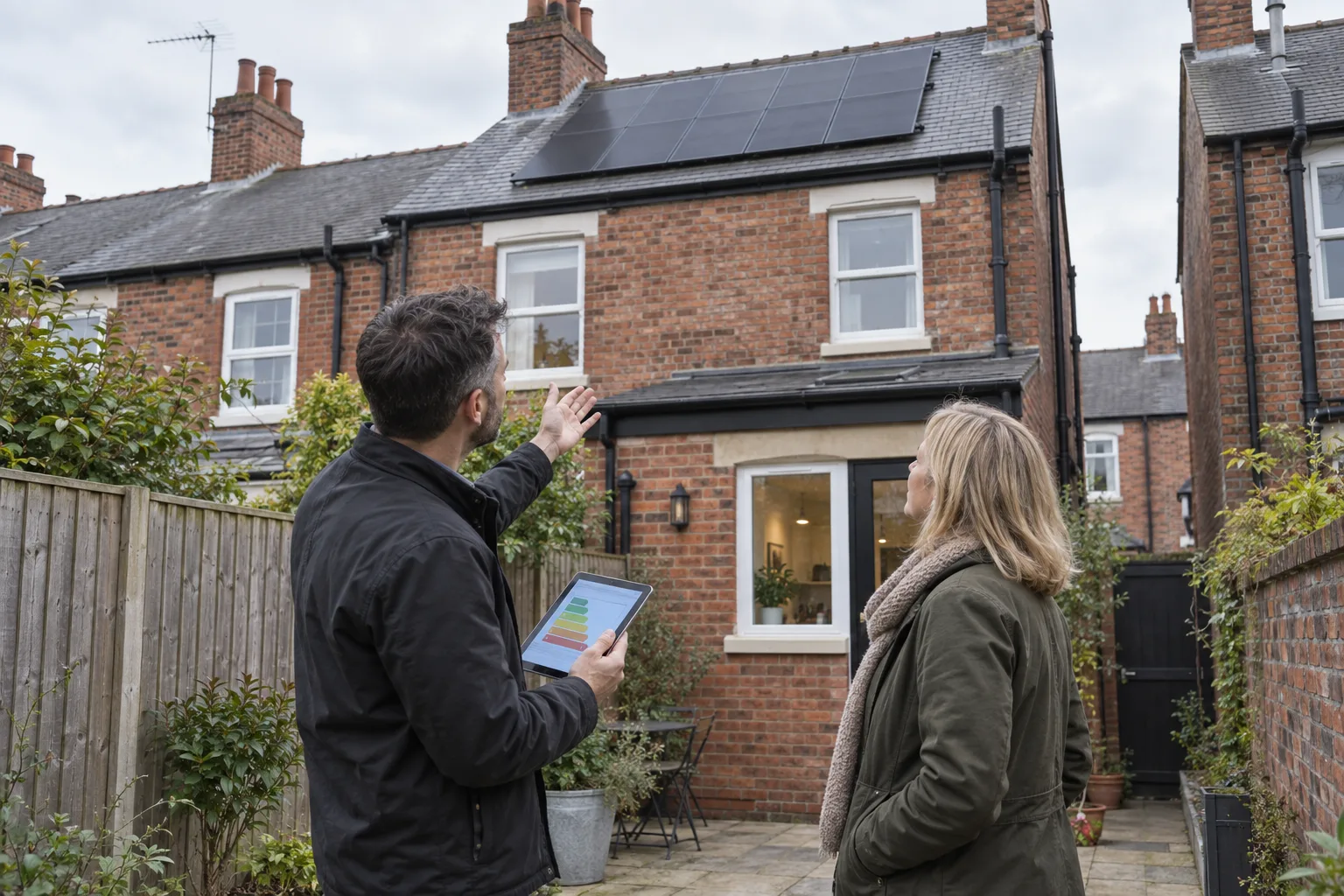
This is why the solar quote should not just ask how many panels fit on the roof. It should ask what heating system the home has, whether a heat pump is planned, whether there is an immersion diverter or smart hot water control, whether a battery is suitable, and whether the consumer unit and incoming supply can support the wider plan.
The grant routes to check first
There are three main public funding routes to understand before spending money.
- Boiler Upgrade Scheme. This is for England and Wales. GOV.UK says current grants include £7,500 towards an air source heat pump, £7,500 towards a ground source heat pump, £5,000 towards a biomass boiler, and £2,500 towards an air to air heat pump. GOV.UK also says you can get one grant per property and cannot get a grant for a hybrid heat pump system.
- Warm Homes Local Grant. This is England only. GOV.UK says the home must be privately owned and have an EPC rating of D, E, F or G. The household income must usually be £36,000 a year or less, although postcode and benefit routes can also apply. If eligible and local funding is available, the council arranges and pays for agreed improvements.
- Warm Homes Plan. The Warm Homes Plan is the wider government programme for warmer, cheaper to run homes. It sits behind several funding routes and policy changes, so homeowners should check whether local council funding, national grants or future finance routes are more suitable before signing a private quote.
The important point is sequencing. If a household qualifies for Warm Homes Local Grant, the council may decide the measure mix after a survey. Paying privately for solar or a heat pump before checking eligibility could reduce the chance of receiving fully funded work later.
Can solar panels be funded through the Warm Homes Local Grant
Yes, where the local council agrees solar panels as part of the home improvement package and the property and household meet the rules. GOV.UK lists solar panels among the measures that councils might suggest under the Warm Homes Local Grant. It also lists wall insulation, loft insulation, underfloor insulation, air source heat pumps and smart controls.
That does not mean every eligible home will receive solar panels. Councils have budgets, local delivery plans and technical rules. A survey will look at the property, EPC rating, current heating, roof suitability, safety and likely benefit. In some homes, insulation or heating upgrades will be prioritised before solar. In others, solar may be paired with heating or controls to reduce ongoing electricity costs.
Homeowners should treat the Warm Homes Local Grant as a whole home assessment route, not a shopping list. The best outcome is a package that makes the home warmer and cheaper to run, not just the measure that sounds most attractive.
Can solar panels reduce heat pump running costs
They can, but the answer depends on timing. A heat pump uses most electricity when the home needs heat. Solar panels generate most electricity when the sun is available. In the UK, those two patterns do not perfectly match.
Solar can still help in four practical ways.
- It can cover part of the heat pump demand on bright days.
- It can support hot water heating during daylight hours.
- It can reduce the cost of general household electricity, which matters more once heating is electrified.
- It can charge a battery where a battery is installed and correctly sized.
The mistake is to assume that a solar array will make a heat pump cost nothing to run. It will not. The stronger claim is that solar panels can reduce the amount of imported electricity a heat pump home needs over the year, especially where the controls and daily routine are set up well.
What size solar system works with a heat pump
There is no single correct size. Energy Saving Trust gives a typical domestic solar system size of around 3.5 kWp. Many heat pump homes may benefit from a larger system if the roof, budget and grid connection allow it, because annual electricity use is likely to be higher than in a gas heated home.
The sizing process should start with the home, not a sales target.
- Estimate current electricity use.
- Estimate future electricity use after the heat pump.
- Check roof direction, usable roof area and shading.
- Decide whether battery storage is part of the plan.
- Check the export route and smart meter position.
- Confirm grid connection requirements with the installer.
- Compare the quote against the expected generation profile.
For many homes, the best design is not the biggest possible solar array. It is the system that gives useful generation without creating unnecessary export, avoids expensive electrical upgrades where they are not needed, and still leaves space for maintenance and safety access.
Battery storage and heat pumps
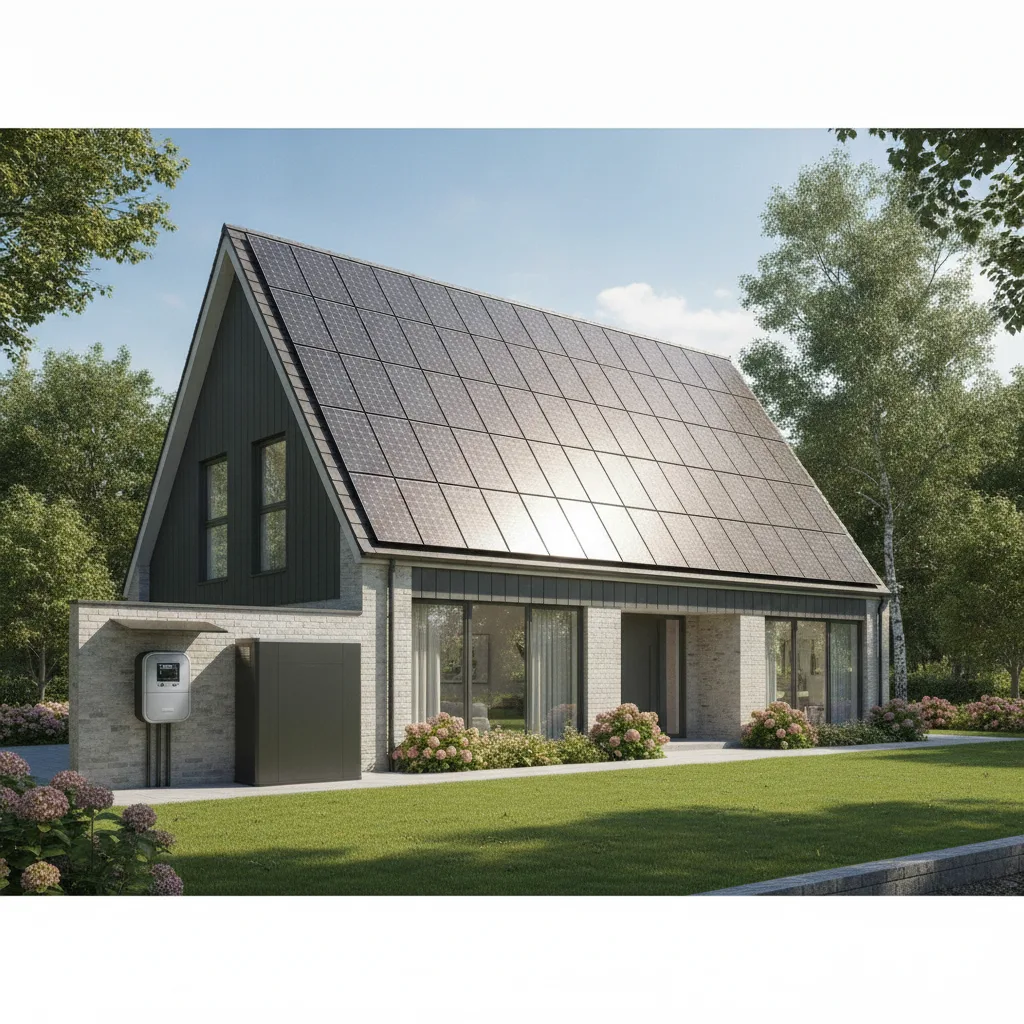
A battery can make solar panels more useful for a heat pump home because it stores daytime generation for evening demand. It can also help households use cheaper overnight electricity on a time of use tariff. But batteries add cost, need space, and have their own design rules.
Battery storage is most likely to make sense when a household has strong evening use, a larger solar array, a heat pump, or access to tariff rates that reward shifting demand. It may be less useful where daytime occupancy is high and most solar is already being used directly.
The battery should be sized around actual use, not just roof output. A battery that is too small may fill quickly and export surplus solar. A battery that is too large may not cycle enough to justify its cost. Homes with heat pumps need careful controls so the battery is not drained early in the evening if it would be better to use it across the full night.
Electrical checks before combining solar and a heat pump
Solar panels and heat pumps both involve electrical design. Before installing both, the property should be checked for supply capacity, consumer unit condition, earthing, meter location, cable routes and space for equipment.
The installer may need to consider whether the distribution network operator needs to be notified or asked for approval. Larger systems, batteries and heat pumps can affect the connection process. This is not a reason to avoid the work. It is a reason to plan early so the project does not stall after a deposit is paid.
MCS solar standards also matter. The current MCS solar PV standard sets requirements for design, installation, commissioning and documentation. For homeowners, the practical point is simple. Use competent installers, ask for written design assumptions, and make sure the paperwork is complete before the final payment.
VAT and private installs
HMRC guidance confirms that installations of qualifying energy saving materials in residential accommodation benefit from a temporary zero rate of VAT until 31 March 2027, after which they revert to the reduced rate of 5 percent. The relief covers technologies such as solar panels and heat pumps when the rules are met.
This can make a meaningful difference to private quotes. It also creates a timing question. Homeowners considering a private solar, battery or heat pump install should ask whether the quote has applied the VAT treatment correctly and whether any non qualifying extras have been separated clearly.
The zero rate is not the same as a grant. It reduces VAT on qualifying installation work. The Boiler Upgrade Scheme and Warm Homes Local Grant are separate funding routes with different eligibility rules.
Best order of works
The best order depends on the property, but a sensible plan often looks like this.
- Check the EPC and understand the current rating.
- Fix obvious heat loss issues such as loft insulation, cavity wall insulation or draughts.
- Commission a heat loss calculation before choosing a heat pump.
- Check radiator or underfloor heating suitability.
- Assess roof suitability for solar panels.
- Decide whether battery storage is needed.
- Check grant eligibility before private spending.
- Compare quotes on design quality, not just price.
Insulation often comes first because it reduces the heat demand. Lower heat demand can mean a smaller heat pump, lower flow temperatures and better comfort. Solar can then be sized against the final electrical demand rather than a guess.
What to ask installers
Ask direct questions before signing.
- What heat loss figure have you used for the property.
- What flow temperature is the heat pump design based on.
- Which radiators need changing and why.
- What annual solar generation estimate have you used.
- How much of that generation do you expect the home to use directly.
- What export assumptions are included.
- Does the design allow for battery storage now or later.
- What grid notification or approval is required.
- Which MCS standards apply to the work.
- What documents will I receive after installation.
Good installers will welcome these questions. Weak quotes often focus on product names and headline savings while avoiding the assumptions behind the numbers.
When solar and a heat pump may not be the right first move
There are homes where the first move should be different.
- Very poor insulation. Deal with heat loss before choosing the heating system.
- Severe roof shading. Solar output may be too limited.
- Limited roof space. The array may be too small to justify the cost.
- Old electrics. The property may need electrical work first.
- Poor radiator sizing. The heat pump may need emitter upgrades to run efficiently.
- Unclear grant eligibility. Check public funding before paying privately.
- Short ownership plans. If the homeowner expects to move soon, the payback case needs extra care.
This does not mean the technologies are unsuitable forever. It means the retrofit plan should be staged.
The landlord angle
Landlords should look at solar and heat pumps through the EPC and running cost lens. Solar panels can improve the electricity cost profile of a property, while heat pumps and insulation can support a move away from fossil fuel heating. But tenant disruption, consent, maintenance access and future compliance all need planning.
For privately rented homes in England, Warm Homes Local Grant may be relevant where the property and household meet the rules. GOV.UK says if the applicant has a landlord, the landlord may need to pay for some improvements. This makes early communication important. Landlords should not promise fully funded measures until the council or delivery partner has confirmed eligibility and contribution rules.
Solar panels can also create questions about who benefits from the generated electricity, who receives export income, and how the tenancy agreement treats equipment. These details should be settled before installation.
What counts as a good result
A good solar and heat pump project is not just one with shiny equipment. It is one where the home is more comfortable, the controls make sense, the paperwork is complete, the installation is maintainable, and the homeowner understands how to run the system.
The strongest results usually come when the same retrofit plan answers five questions.
- How much heat does the home need.
- How efficiently can that heat be delivered.
- How much electricity will the home use after the upgrade.
- How much solar generation can realistically be used on site.
- Which grant or tax relief route should be used first.
If those questions are answered before quotes are accepted, the project is far less likely to disappoint.
Final advice
Solar panels and heat pumps can work very well together in 2026, but only when they are designed as part of a whole home plan. Start with insulation, EPC rating, grant eligibility and heat loss. Then look at the roof, electrical capacity, battery options and controls.
For many homeowners, the best route is not to ask for a solar quote and a heat pump quote separately. It is to ask how the home should be upgraded over the next few years, what should be funded first, and which measures will make the biggest difference to comfort and bills.
That approach is slower at the start, but it avoids expensive mistakes. In a market where grants, tariffs and technology are changing quickly, joined up planning is now the practical choice.