A conservatory can affect a rental EPC if it is open to the home. Learn how separation, glazing and solid-roof conversions change the assessment.
A conservatory can affect an EPC rating, but the result turns on how it is connected to the rental property. Under the current assessment method, a genuinely separated conservatory is treated very differently from an open-plan or non-separated one. For a landlord with a D-rated property, checking that distinction before paying for upgrades can prevent the wrong part of the building from driving the plan.
The useful question is not whether conservatories are always good or bad for EPCs. It is whether this conservatory meets the current definition, whether an external-quality separation remains in place, and what the assessor must include in the dwelling model. Only a property-specific calculation can show whether the input is material to the route from D to C.
The short answer: separation changes the EPC treatment
The current RdSAP 10 specification records a conservatory as one of four states: none, separated without fixed heaters, separated with fixed heaters, or not separated. A separated conservatory is disregarded in the calculation whether or not it has fixed heaters. A non-separated conservatory is included in the assessed dwelling.
For current RdSAP purposes, the same specification says an external-quality door between the dwelling and conservatory provides thermal separation. If the conservatory is open to the rest of the home, it is not separated. The assessor records what is present and usable at the inspection; a doorway that has been permanently opened up is not the same as a proper external-quality barrier.
This is why two otherwise similar rentals can receive different treatment. The glass room may look alike from the garden, yet one is outside the assessed thermal envelope and the other forms part of it.
What counts as a conservatory in the current method
The BRE RdSAP conventions v12.2, applicable from 6 August 2026, define a conservatory as a building part where at least 50% of the external heat-loss walls are glazed and at least 75% of the roof is glazed. Those thresholds matter because “conservatory” is not simply the estate-agent label for any bright rear room.
If a solid roof has replaced the glazed roof, or a false ceiling means the roof no longer meets the definition, the conventions say the area must be recorded as an extension. Where visual or documentary evidence is available, the assessor can record insulation present. A roof conversion can therefore change both the classification and the evidence the assessor needs.
A highly glazed sun room that does not meet the conservatory thresholds is also handled differently: its windows and roof windows are measured under the normal rules. Tell the assessor about roof changes, retained doors and insulation documents rather than assuming the name used in a sales listing decides the EPC input.
Three common conservatory scenarios
1. Separated by an external-quality door
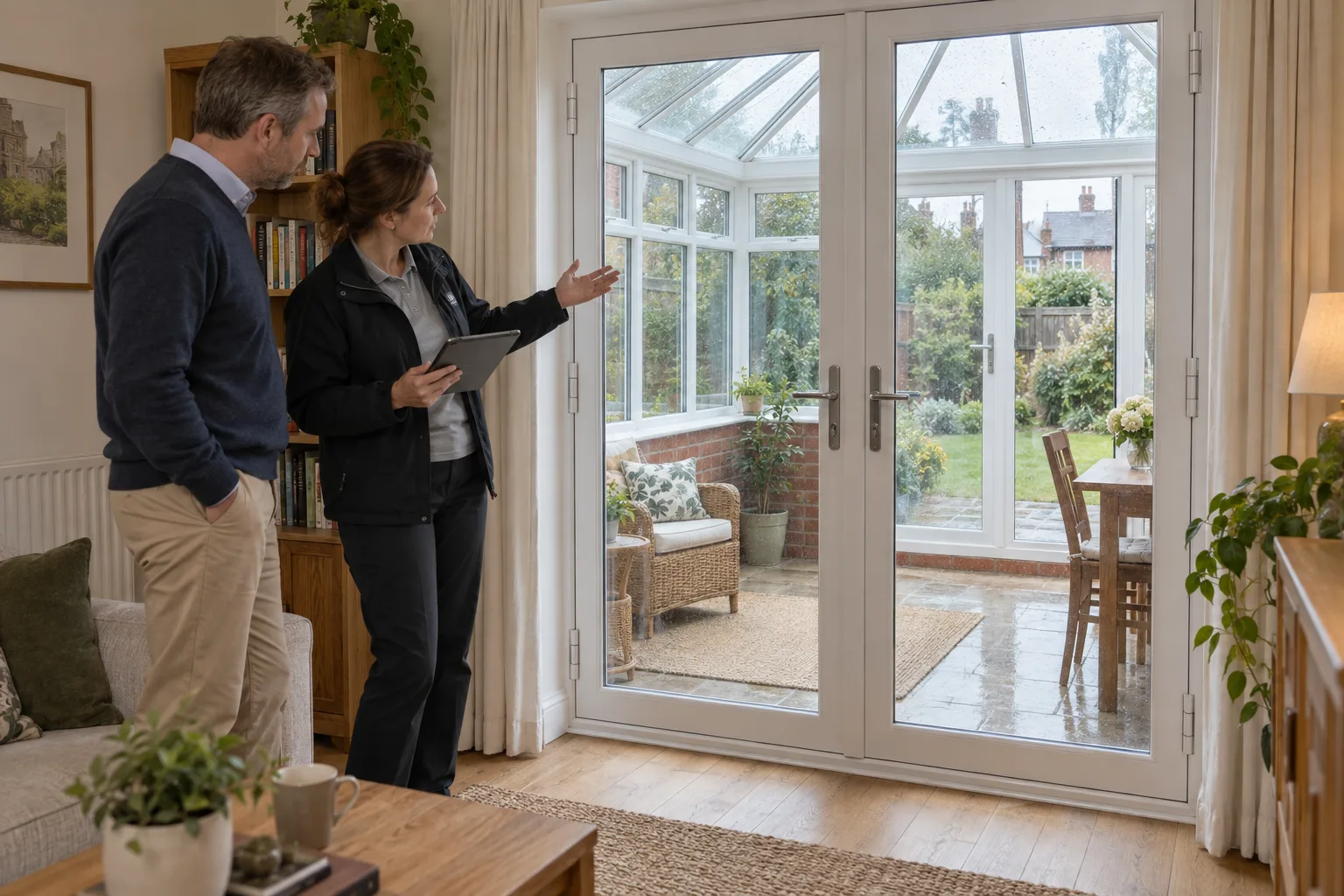
Where a suitable external-quality door remains between the home and conservatory, the current method treats the conservatory as separated. The conservatory itself is disregarded, with the boundary between it and the dwelling forming part of the heat-loss perimeter. Fixed heating inside the conservatory does not by itself remove that treatment, although the assessor still records the applicable separated category.
Do not assume that any lightweight internal door qualifies. The specification describes an external-quality door as one providing resistance to the external environment. Its condition, fit and the actual opening arrangement need to be visible at the inspection.
2. Open-plan or non-separated conservatory
If the conservatory is open to the dwelling, the current RdSAP specification adds its floor area and volume to the home. It models the conservatory walls and roof as fully glazed and uses the conservatory perimeter, height and glazing type. That can materially change the heat-loss and running-cost calculation, especially where a large glazed area has become part of the heated living space.
There is no universal deduction or fixed number of lost EPC points. Size, glazing, heating, fuel, the rest of the fabric and the starting score all interact. A small modern room may have a different effect from a large older single-glazed structure, and the final band depends on the whole dwelling model.
3. Former conservatory converted into an extension
A room with a replacement solid roof or false ceiling may no longer meet the conservatory definition. It is then assessed as an extension, using the relevant wall, roof, floor, glazing and heating inputs. Evidence of insulation can matter because the assessor must use the permitted construction data rather than an unsupported assumption about hidden work.
Keep the completion paperwork, specifications, invoices and dated installation evidence that identify the property and the finished work. A quotation or brochure can describe an intended roof without proving what was installed. The landlord EPC evidence guide explains how to prepare the wider property file.
Why the conservatory may change the EPC score
A domestic EPC uses standard occupancy assumptions to compare the building rather than the tenant’s personal habits. The government guide to domestic EPCs explains that the rating reflects the performance potential of the building fabric and services, including heating, insulation, ventilation and fuels. Saying that the tenant rarely uses the conservatory does not remove a non-separated space from that standardised calculation.
When the room is included, the model accounts for extra floor area and volume as well as the extensive glazing. When it is separated, the conservatory itself is disregarded and the door or wall at the dwelling boundary is considered instead. A solid-roof conversion introduces another set of construction inputs. These differences can move the score, but they do not guarantee a change of band.
The current certificate gives the starting point. Compare its total floor area and property description with the actual layout, then ask an accredited assessor how the conservatory was classified. If the score changed between certificates, use the guide to diagnosing a lower EPC rating to compare the other recorded inputs too.
A landlord checklist before the EPC visit
Confirm the physical separation
Check whether an external-quality door and frame are present, close properly and form the real boundary between the heated dwelling and the conservatory. Photograph the arrangement for your records, but leave the assessor to decide how it meets the current method.
Record roof and structural changes
Note whether the roof is mainly glazed, has been replaced with a solid system or is concealed by a false ceiling. Gather building-control records, completion information, installer specifications and invoices for finished work. These documents can help establish the construction of a converted room.
Keep glazing evidence
Retain invoices, certificates or manufacturer information for replacement windows and roof glazing. The current specification permits actual window performance values only with suitable documentary evidence; otherwise the relevant defaults apply. Evidence must relate to the product and property assessed.
Compare the current EPC
Download the current certificate and note the score within band D, the floor area and any recommendation connected with glazing, doors or the extension. A property at D68 has a different gap to C from one at D55. The guide to what EPC D means for landlords shows how to read that starting position.
Send the file before the appointment
Give the assessor a short index of the documents and explain what changed, when it changed and where the separation sits. Early review allows time to resolve missing evidence. It does not require the assessor to accept a preferred input, and it does not promise a particular score.
Do not alter the conservatory just to chase a guessed point gain
Installing doors, changing a roof or modifying heating solely because someone expects an EPC uplift can be an expensive mistake. The score effect must be modelled against the actual property, while safety, ventilation, moisture, planning and building-control requirements may need separate professional consideration. This guide is not design or legal advice.
A new physical arrangement also does not rewrite an EPC already on the register. An accredited assessor must inspect the finished property and lodge a new certificate before there is a new registered result. The guide to EPC timing after improvements explains when reassessment is commercially useful.
Start with the current numerical gap and the assessor’s treatment of the existing conservatory. The lowest-cost route might be clearer evidence, a proportionate change elsewhere or no conservatory work at all. The D-to-C evidence-first plan keeps those choices in the right order.
How this fits the landlord compliance plan
For covered private rentals in England and Wales, current domestic MEES guidance still sets a minimum of EPC E unless a valid exemption applies. The government has separately confirmed the policy direction for a higher standard from 1 October 2030, subject to Parliamentary approval and the planned implementing legislation. A conservatory assessment is one property input, not a legal opinion on compliance.
For a D-rated rental, the commercial value is in discovering whether the room is already being treated correctly before buying broad upgrades. Cucumber Eco can review the certificate, score, floor plan and available construction evidence as part of the initial property assessment.
Bring the current EPC and photographs or records showing the conservatory boundary and any roof conversion. Start your free EPC assessment to identify whether this issue is material to the credible route from D to C.
Frequently asked questions
These answers cover the most common conservatory questions before a landlord EPC assessment.
Does a heated conservatory count in an EPC?
Heating alone does not decide it. Under the current RdSAP specification, a genuinely separated conservatory is disregarded with or without fixed heaters, while a non-separated conservatory is included. The assessor must inspect the actual boundary and heating arrangement.
Does a solid conservatory roof affect the EPC treatment?
It can. If the roof no longer meets the current glazing threshold because it was replaced or concealed by a false ceiling, the room is recorded as an extension rather than a conservatory. Construction and insulation evidence may then affect the inputs used.
Will adding a door improve the EPC rating?
Not necessarily. An external-quality separation changes how the current method treats the space, but the effect on the final score is property-specific. Do not commission work from a guessed points figure; assess the design implications and model the whole dwelling first.
Do I need a new EPC after changing the conservatory?
The existing EPC remains the registered certificate until it expires or a newer one is lodged. If you need the completed change reflected in the rating, an accredited assessor must inspect the property and lodge a fresh EPC. Time that reassessment with the wider property plan.