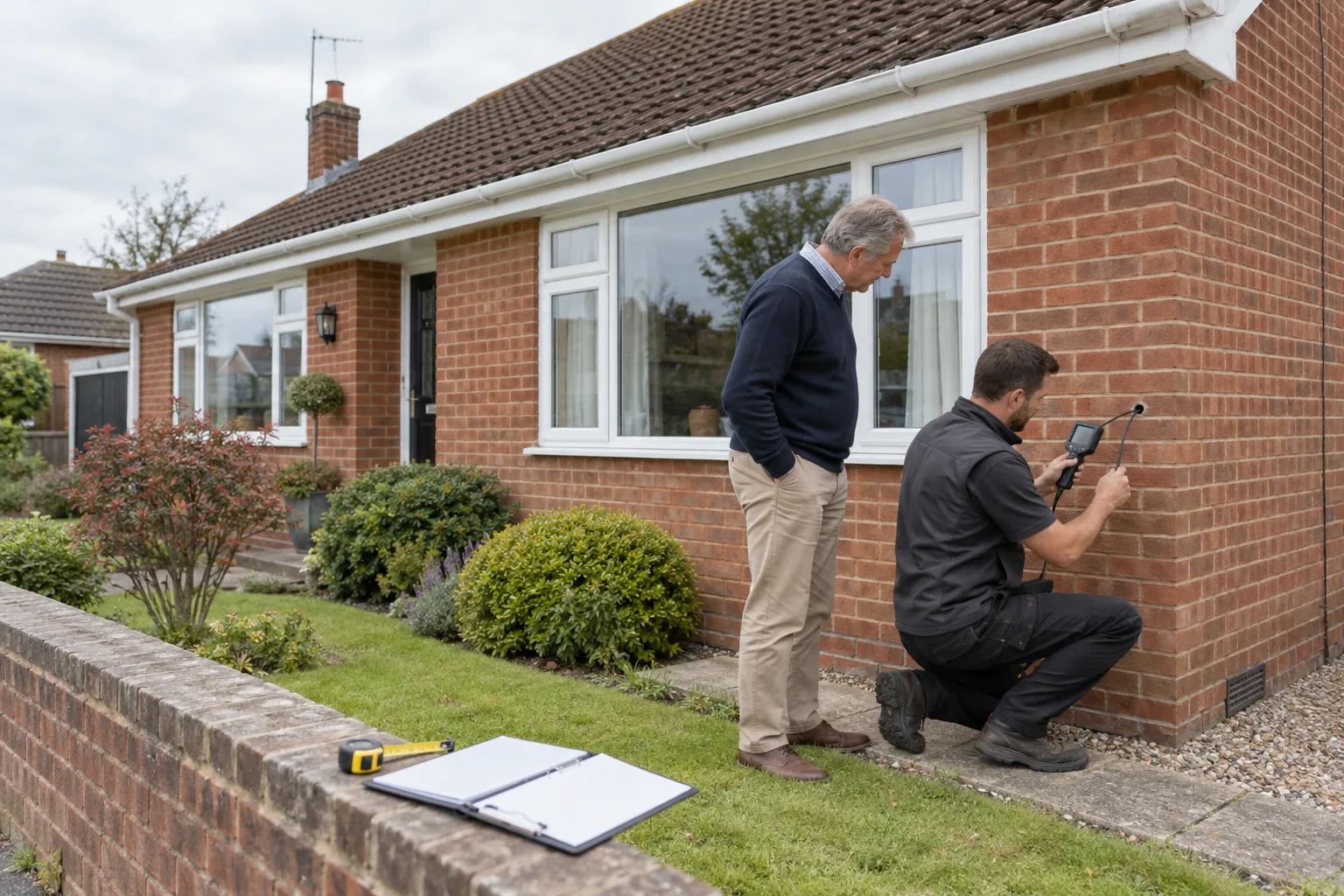

The current domestic MEES high-cost exemption needs three qualifying quotes and registration. Use this evidence checklist before relying on the £3,500 cap.
A domestic landlord cannot rely on the current MEES cost cap simply because one improvement quote is expensive. The high-cost exemption is a specific route for an in-scope F- or G-rated rental where even the cheapest recommended improvement would cost more than £3,500 including VAT. The landlord needs three qualifying quotes, a valid EPC and a completed registration before the exemption can be relied on.
That is today's EPC E regime in England and Wales. It is separate from the government's planned £10,000 cap for the higher private-rented standard in 2030. Keeping those two figures apart is the first protection against commissioning the wrong work or assembling the wrong evidence.
The short answer
The current domestic MEES landlord guidance says covered private rentals must presently reach EPC E unless a valid exemption applies. The cost cap is £3,500 including VAT. If no recommended improvement can be bought and installed within that amount, the landlord may be able to use the high-cost exemption. The wider MEES guide explains how that current duty sits beside the planned 2030 standard.
The government's exemptions evidence guidance requires three quotations from different qualified installers. Each quotation must show that purchasing and installing the cheapest recommended improvement would exceed £3,500 including VAT. The exemption normally lasts five years after registration.
If at least one recommended improvement can be installed within the cap, the high-cost route is normally not the right answer. The landlord may need to carry out relevant improvements up to the cap and then consider the all improvements made exemption if the property still remains below E.
First check whether the property is actually in scope
Do not start with the exemption form. Start with the dwelling, tenancy and certificate. Current domestic MEES applies to privately rented homes in England and Wales that are let on a relevant tenancy and are legally required to have an EPC. A landlord should confirm all three points before treating an F or G rating as a cost-cap case.
- Match the address and dwelling unit to a valid certificate on the official EPC register.
- Confirm that the letting is within the domestic MEES tenancy scope. Unusual tenancy or certificate questions may need independent legal advice.
- Check the current rating. A covered F- or G-rated rental needs action; a D-rated property already meets today's E floor and does not need this exemption.
- Read the recommendations and identify the cheapest relevant measure rather than selecting a preferred project from a sales quotation.
Being outside the regulations is not the same as holding an exemption. Equally, an exemption does not arise automatically from an old building, a low rating or a measure that the landlord does not want to install.
High-cost and all improvements made are different routes
The high-cost exemption applies when even the cheapest recommended improvement exceeds £3,500 including VAT. The all improvements made exemption covers a different position: all relevant improvements within the current rules have been completed, or none can be made, and the property remains below E.
This distinction changes the evidence pack. A high-cost case is built around three comparable installer quotations for the cheapest recommendation. An all improvements made case is built around the accepted recommendation route, completed work, dates, costs and the continuing sub-standard rating. Do not combine the labels or assume three expensive quotes excuse a lower-cost measure elsewhere on the EPC.
What the three quotations need to prove
The official test is about purchasing and installing the cheapest recommended improvement at the particular property. A useful quote should therefore allow the council or register reviewer to understand the property, measure, scope, VAT and total without guessing.
- Property-specific address and enough survey detail to show that the installer priced the right dwelling.
- The same cheapest recommended measure, or a clear explanation where installers describe the equivalent scope differently.
- Supply and installation costs together, including VAT and necessary enabling work within the quoted measure.
- Installer identity, quotation date and a reasonable validity period.
- Any exclusions or assumptions that could materially change the total, such as access, scaffolding, electrical work or making good.
- A total above £3,500 including VAT on each of the three quotations.
Three screenshots of generic online prices are not a substitute for address-specific quotes. Nor should a landlord ask three installers to price different projects and then compare only the totals. The evidence should answer one consistent question: can the cheapest relevant recommendation be supplied and installed for £3,500 or less?
A seven-step evidence checklist
- Download the valid EPC and save the certificate reference, rating, date and full recommendation list.
- Mark the cheapest recommendation that appears capable of being a relevant improvement under the current guidance.
- Give each installer the same property facts and requested scope. Arrange access where a site visit is needed.
- Check that each quote includes VAT, installation and the same essential enabling work. Ask for ambiguities to be corrected in writing.
- Keep correspondence showing dates, access attempts, questions and revised quotations. Do not manufacture a paper trail after the event.
- Record why the high-cost route applies instead of the all improvements made, consent, wall-insulation or another exemption route.
- Register the exemption with the required documents before relying on it, then retain the confirmation and expiry date in the property file.
Our EPC evidence guide for landlords explains how to organise property records for an assessment. That evidence may also reveal an accepted input or smaller measure worth checking before an F- or G-rated property is treated as an exemption case.
Common mistakes that weaken a cost-cap case
- Using the future £10,000 figure for a current EPC E compliance decision.
- Obtaining only one quotation, or three quotations from connected parts of the same installer business.
- Pricing a preferred major upgrade instead of the cheapest EPC recommendation.
- Omitting VAT, installation or foreseeable enabling work, making the quotes impossible to compare.
- Assuming an EPC recommendation is an automatic works order. The recommendations guide explains how the compliance test and property decision differ.
- Treating a submitted application as an active exemption. Current guidance says the exemption applies from registration.
- Forgetting that an exemption may end on transfer to a new owner and does not simply travel with the property.
How registration works
The official PRS energy standards exemption service asks for the landlord or agent details, property address, valid EPC and route-specific evidence. Since 5 May 2026, the service uses One Login. The register is self-certification, but the local authority may request more information and can investigate false or misleading entries.
For the current high-cost exemption, upload the three quotes and the written confirmation required by the guidance. Record the registration date and five-year expiry. If the property is sold or otherwise transferred, the exemption generally ceases to be effective for the new owner. If the exemption expires while the dwelling is still rented, the landlord must reassess the improvement position and either comply or register a further valid exemption.
This article is practical information, not legal advice. Where the tenancy, EPC duty, ownership, consent or exemption route is disputed, obtain advice appropriate to the property before letting it.
Do not confuse today's £3,500 cap with the planned 2030 cap
The government response on the higher private-rented standard confirms a planned single compliance date of 1 October 2030 and a £10,000 maximum required investment over ten years, with new and amended exemption routes. Those changes still depend on implementing legislation and detailed guidance.
Until the higher regime takes effect, the government says landlords remain subject to the current EPC E standard. The future cap should therefore be recorded in a portfolio plan, not substituted into a current high-cost application. Our £10,000 cost-cap guide owns that future-policy question; this checklist is about evidence for the current £3,500 high-cost route.
For a D-rated rental, plan the route to C instead
A D-rated property is above today's domestic MEES floor, so the current high-cost exemption is not the next step. The better commercial question is which accepted evidence and proportionate measures could close the gap to C before major work is authorised.
Start with the current score, assumptions, building facts and the landlord's timing. Testing or documentary evidence only changes the lodged record when an accredited assessor accepts the input and completes a new EPC. No isolated quote, exemption check or test can establish band C by itself.
Build the file before relying on the exemption
A defensible MEES cost-cap file is more than a total. It shows that the property is in scope, identifies the correct recommendation, compares three consistent quotes and records the exemption before the landlord relies on it. That sequence protects the compliance decision and can also reveal a lower-cost route that is worth completing instead.
Cucumber Eco can review the certificate, current rating and evidence gaps before you commit to an improvement or exemption strategy. Start your free EPC assessment.
Primary sources checked
- Domestic private-rented-property MEES landlord guidance , current EPC E duty, £3,500 cap, exemption routes and enforcement.
- PRS exemptions and evidence requirements , three-quote test, registration evidence, duration and transfer rules.
- PRS energy standards exemption service , current registration route and One Login requirements.
- 2019 amending regulations explanatory memorandum , statutory background to the current £3,500 spending cap and high-cost evidence.
- Government response on the 2030 private-rented standard , planned £10,000 cap and future exemption framework.
Frequently asked questions
Is the current MEES cost cap £3,500 or £10,000?
For today's domestic EPC E regime in England and Wales, the cap is £3,500 including VAT. The £10,000 cap belongs to the planned higher private-rented standard for 2030 and should not be used as the threshold for a current high-cost exemption.
Do landlords need three quotes for a high-cost exemption?
Yes. Current government guidance requires three quotations from different qualified installers, each showing that buying and installing the cheapest recommended improvement would cost more than £3,500 including VAT.
Can a landlord claim the exemption if one measure costs less than £3,500?
The high-cost exemption should not be used where a recommended improvement can be made for £3,500 or less. The landlord may need to complete relevant improvements and then consider the all improvements made route if the property remains below E.
Does a MEES exemption pass to a buyer?
Generally no. Government guidance says registered exemptions do not pass to a new owner or landlord on sale or transfer. The new owner must improve the property or register a valid exemption if one applies and they intend to continue letting it.