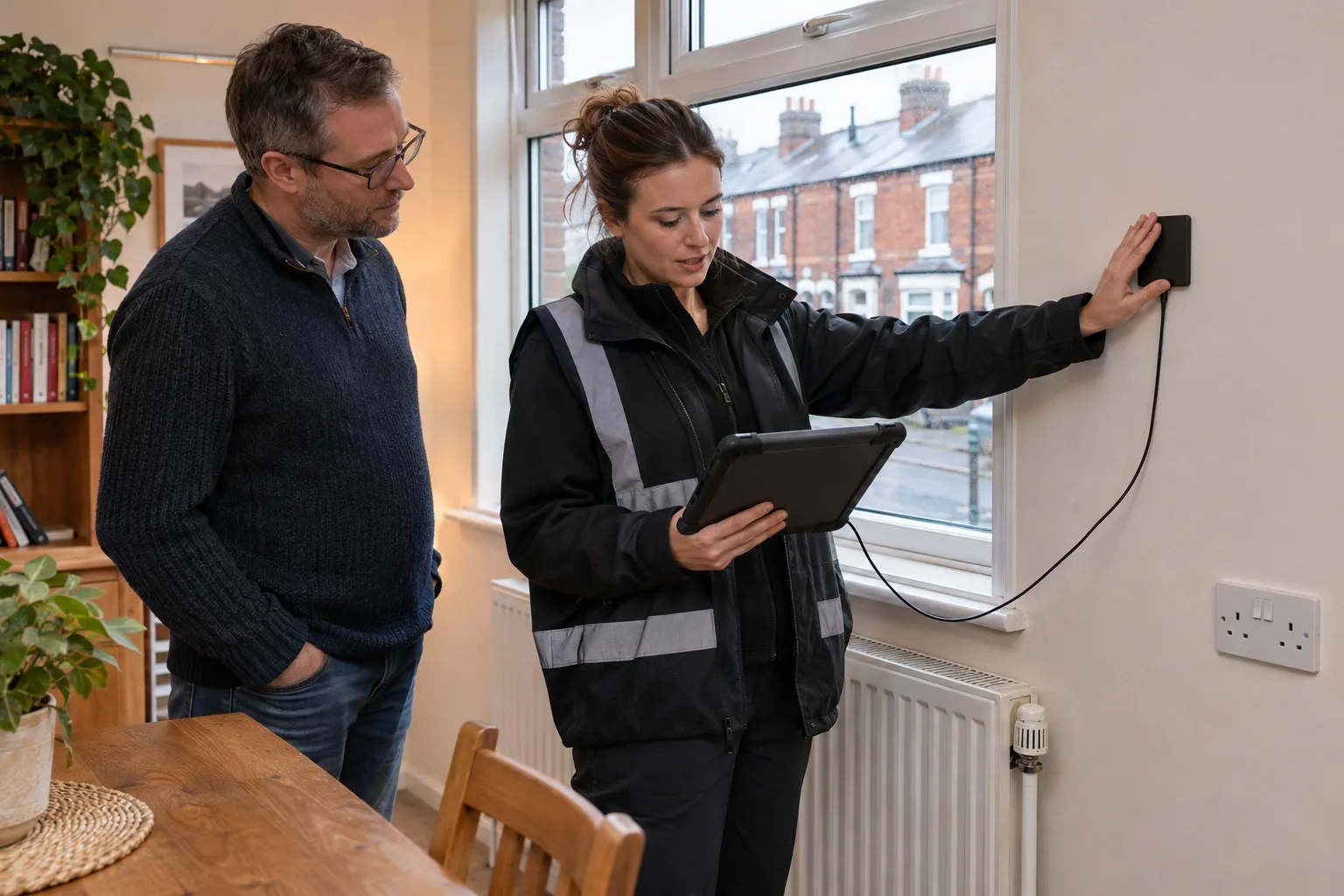
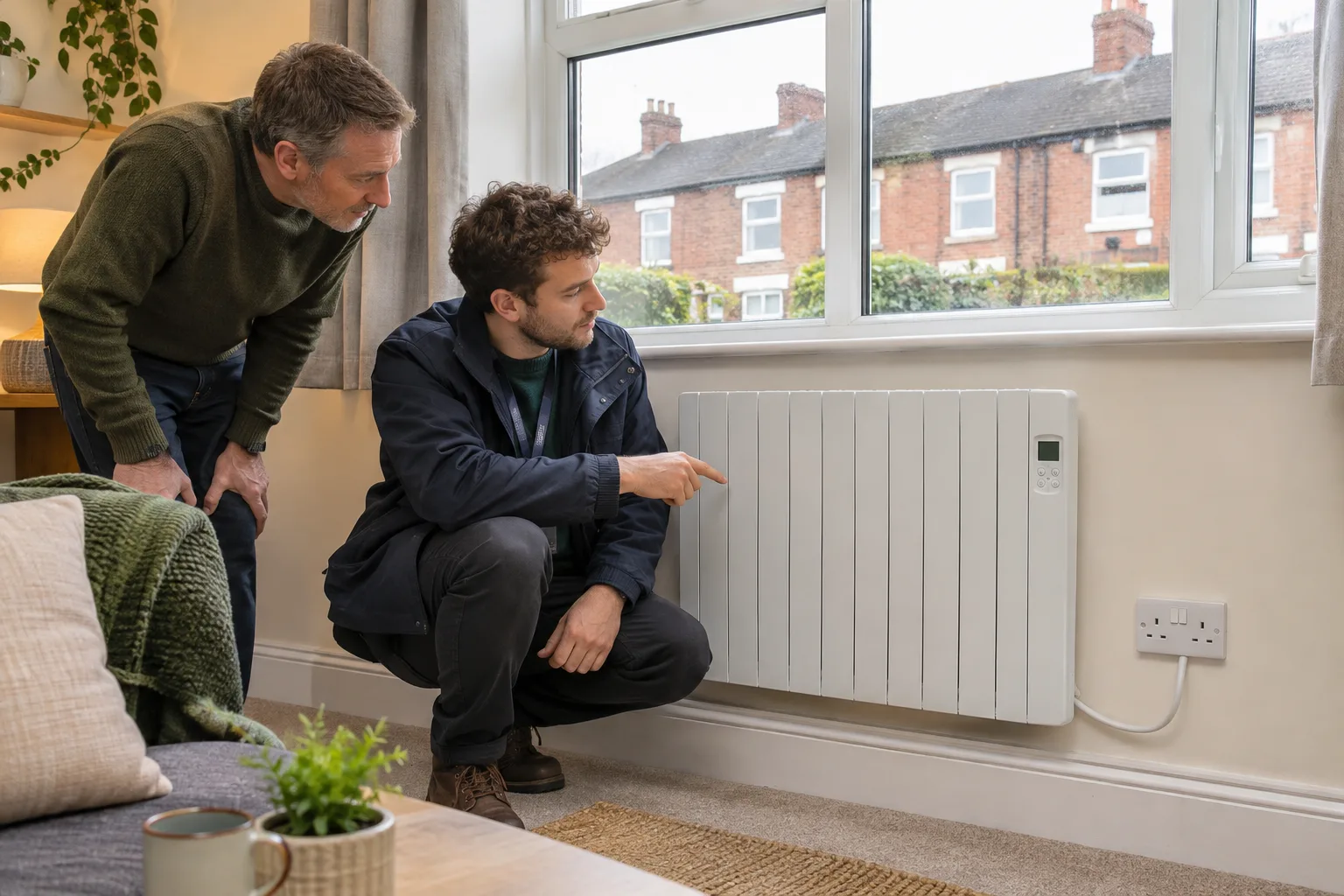
A newer electric radiator can still be recorded as direct electric heating. Learn what landlords should check before replacing heaters for an EPC result.
A new electric radiator does not automatically improve a rental property’s EPC rating. Under the current assessment method, most fixed panel radiators, infrared heaters and similar direct-acting electric units are recorded as direct electric heating. Better controls may improve comfort and can affect what the assessor records, but a newer product is not a dependable shortcut from D to C.
The commercial decision is whether the existing heater description is correct, whether direct electric remains suitable for the property and how that choice compares with high heat retention storage heating, a heat pump or improvements elsewhere in the dwelling. Check the present EPC and model the whole route before replacing working equipment.
If you want the heating decision reviewed against the property’s score, fabric and hot-water system, Start your free EPC assessment. The initial review is designed to find the lowest-cost credible route rather than promise points for one product.
The short answer: a newer radiator can still be the same EPC heating type
An EPC rates the dwelling, not the radiator as a standalone appliance. Replacing an old fixed electric panel heater with a smart-looking new electric radiator can leave the assessment using the same broad direct-electric input. A thermostat, programmer and room controls can still matter, but the effect depends on the complete heating arrangement and the rest of the home.
The government’s domestic EPC guide explains that a certificate estimates energy use and cost under standard assumptions. It is not based on the current tenant’s bills or on an installer’s efficiency claim for one heater.
Direct electric heating converts electricity into heat at the point of use, but that does not make it the best current EPC input. The headline Energy Efficiency Rating is strongly influenced by modelled running cost. Electricity price assumptions, space-heating demand, hot water, controls and fabric therefore need to be considered together.
How current EPCs classify electric radiators
Fixed panel radiators and wall heaters
A fixed direct-acting electric heater produces heat when electricity is used. It may be described as a panel heater, electric radiator or convector and may have electronic controls. A more responsive control can make the room easier to use, but the assessor must record the actual system and approved input rather than a marketing description.
Infrared panels
A UK Parliament answer on infrared heating and EPCs states that infrared heaters are currently treated as standard direct electric heaters in RdSAP. Unless an approved technology route changes the applicable input, fitting an infrared panel should not be sold as an assured EPC uplift.
Electric boilers
An electric boiler may feed wet radiators, so the emitters resemble a gas central-heating system. The assessment still records the actual electric heat generator, controls and distribution. Changing only the wall radiator or adding thermostatic valves does not turn the generator into a heat pump or storage system.
Portable plug-in heaters
Portable heaters are not equivalent to a complete fixed main-heating system. If fixed heating is missing from part of the dwelling, the assessment and the practical adequacy of the heating need property-specific review. Do not remove fixed heaters in the hope that portable units will improve the calculation.
Electric radiators, storage heaters and heat pumps are different decisions
Direct electric radiators use electricity when heat is needed
Direct electric units are simple to install and can suit some small or intermittently used spaces. Their current EPC treatment is shaped by the cost-based rating and the modelled heat demand. A low purchase price does not establish low modelled running cost or a route to C.
Storage heaters move demand to an off-peak period
High heat retention storage heaters charge a thermal core and release heat later. The current RdSAP 10 specification includes high heat retention storage heaters and suitable controls as a possible recommendation for some homes with electric room heating where its calculation produces the better result. That is a conditional assessment route, not proof that every electrically heated rental should use storage heaters.
The high heat retention storage-heater guide covers tariff, controls, property size and heat-pump alternatives. Keep that product and running-cost decision separate from the narrower question of whether a direct electric radiator changes an EPC.
Heat pumps move heat rather than relying only on resistance
A heat pump is modelled differently because it delivers more heat than the electricity it consumes under its assessed performance. Even so, the heat-pump EPC guide for landlords explains why the starting system, design, fabric, emitters and hot water determine the result. A heat pump is not an automatic band guarantee either.
Five checks before replacing electric radiators
1. Read the current certificate, not just the band
Use the official Find an energy certificate service and record the score, main-heating description, controls, hot-water system, floor area and recommendations. A D at 68 presents a different route from a D at 55.
2. Confirm the existing system and room coverage
List every fixed heater, its room, its control and whether any unit stores heat. Note the electricity meter and any off-peak circuit, but do not assume the tariff name alone determines the EPC input. Mixed systems and secondary heaters require the assessor to identify which system serves the greatest proportion of the dwelling.
3. Keep evidence for the exact installed equipment
Photograph the heater in room context and retain the installation invoice, model details, control instructions and electrical paperwork. Evidence helps the assessor identify what is present; it does not force a particular rating or allow a product claim to override the methodology.
4. Compare comfort, cost and EPC objectives
A heating choice must work for the tenant as well as the model. Consider heat loss, room use, controllability, tariff availability, electrical capacity, installation disruption and expected running pattern. An EPC-only purchase can be poor value if it leaves the home difficult or expensive to heat in practice.
5. Model the whole property before ordering
Ask what the proposed system changes in the assessment and whether a different evidence or fabric measure is more proportionate. The calculation should include hot water and controls as well as space heating. Obtain an installation design and the relevant electrical, planning or building-control advice where needed.
When direct electric heating may not be the main barrier
A small, well-insulated flat with limited external area can behave differently from a larger solid-wall house, even when both use panel heaters. The current score may be held back by an uninsulated roof, poor hot-water arrangement, missing heating controls, an incorrect floor area or another model input.
The all-electric rental EPC C guide owns the wider property decision across heating, tariff, hot water, fabric and renewables. Use it when the question is whether the entire electric home can reach C; use this guide when the decision is specifically whether to buy direct electric radiators.
This distinction prevents unnecessary replacement. A heater that is already recorded correctly may not be the cheapest place to act. Conversely, a property that relies on direct electric room heating may need a heating-system comparison rather than a succession of small measures.
How electric radiators fit a D-to-C plan
Start with the point gap and the reason for it. Separate corrections to existing evidence from physical improvements. Then compare the credible packages: retain direct electric and improve another material input, move to high heat retention storage heating where suitable, consider a properly designed heat pump, or combine proportionate fabric and control measures.
The D-to-C landlord plan sets out that sequence. It is usually safer to model the packages before committing capital than to buy a heater because a retailer says it is efficient or EPC-friendly.
Testing, product paperwork and controls can improve the evidence available to an assessor, but none changes a lodged certificate by itself. A qualified assessment must use the accepted inputs and lodge the resulting EPC.
Current MEES rules and the proposed Home Energy Model treatment
Current domestic private-rented MEES guidance says covered rentals in England and Wales generally cannot be let below EPC E unless a valid exemption applies. EPC C is not yet the current enforceable minimum for every rental.
The government’s response on the higher private-rented standard confirms the policy direction for a higher standard from 1 October 2030, subject to the implementing legislation. It also describes the intended transition for qualifying current-style EER C certificates lodged before 1 October 2029.
The Home Energy Model EPC methodology consultation proposes that direct electric heating without sufficient thermal storage would score D or below on the future heating-system metric, while qualifying electric heating with thermal storage would typically score C or above. It also proposes recognising smart thermal storage in the smart-readiness metric. These are proposed metric principles, not final product-level band assurances.
That future direction is another reason to avoid assuming that all electric heating is one category. It is not a reason to claim that a particular storage heater, radiator or control will satisfy the future standard before the final HEM:EPC method and band boundaries are published.
Frequently asked questions
These answers apply the current assessment method and separate it from the proposed future EPC metrics.
Do smart electric radiators improve an EPC rating?
Smart controls can affect how a system is recorded, but a direct electric radiator can remain the same broad heating type. Any score change depends on the approved control input and the whole dwelling, so model the product before purchase rather than relying on the word “smart”.
Are infrared heaters better for an EPC?
Current RdSAP treats infrared heaters as standard direct electric heating unless an approved technology route supplies a different recognised input. Comfort or manufacturer efficiency claims do not by themselves establish a better EPC result.
Are storage heaters better than electric radiators?
No. High heat retention storage heaters are assessed differently and may improve the model in a suitable property, but tariffs, fabric, controls, room coverage and household needs matter. Compare them with the alternatives for the actual home.
Can one electric radiator count as the main heating system?
The assessor records heating according to the approved conventions and the proportion of the dwelling served. One unit may be main, secondary or insufficient for the wider property depending on the layout and other fixed systems. Do not infer the classification from the product alone.
Will replacing panel heaters guarantee EPC C?
No. Heating is only one part of the assessment, and a newer panel heater may still use a direct-electric input. The final result depends on the whole property and must be calculated and lodged by an accredited assessor.
Choose the heating route before choosing the product
Do not start with a radiator catalogue. Start with the current EPC, the score gap, the correctly identified heating and hot-water systems, the building fabric and the tenant’s practical needs. Then compare packages that the assessment can support.
Start your free EPC assessment to review whether direct electric heating is genuinely blocking the rental’s route to C and which next step is proportionate.