
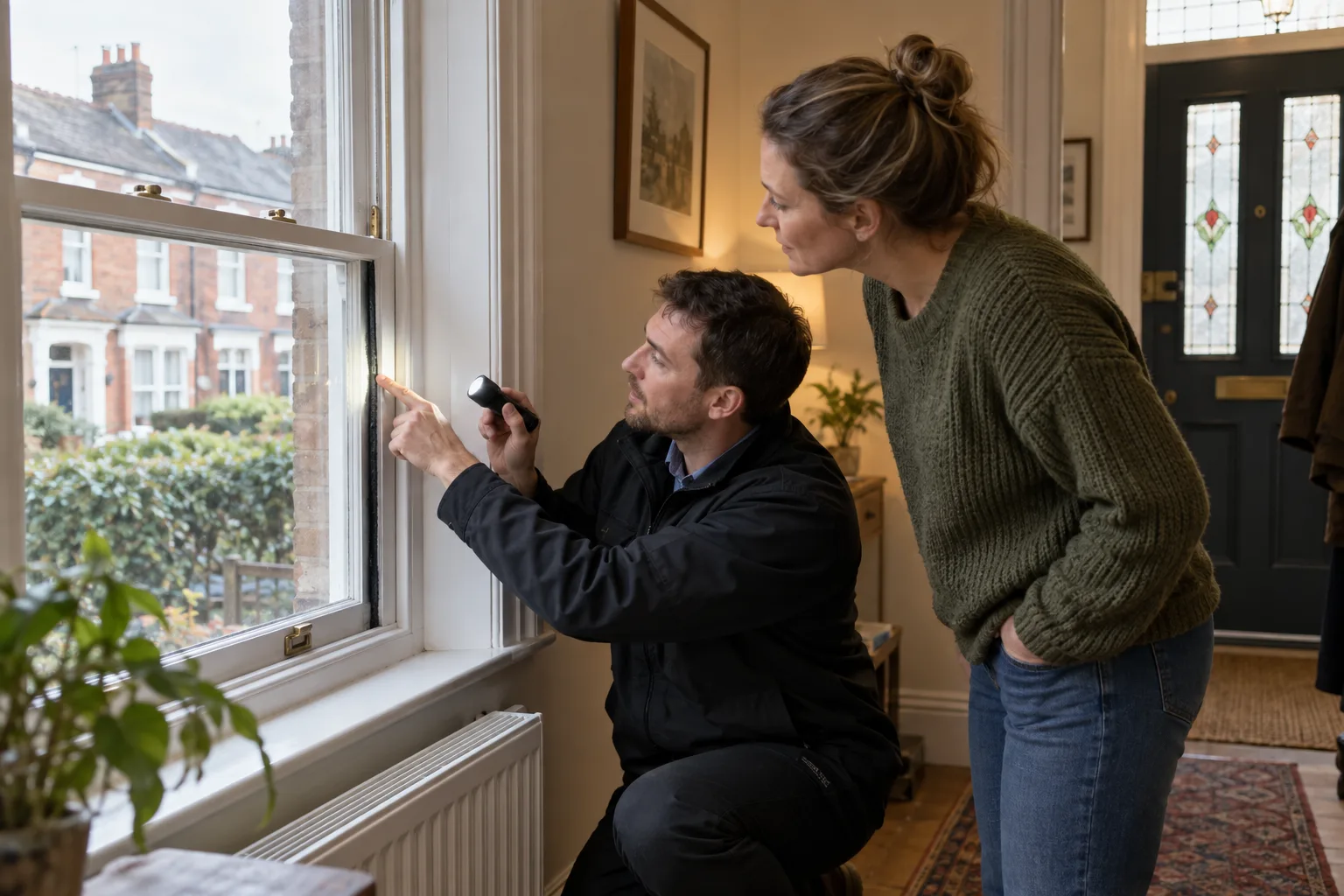
Draught proofing can affect an EPC, but there is no fixed points uplift. Learn what assessors record and when it may help a D-rated rental reach C.
Draught proofing can improve an EPC rating because current RdSAP records how many external doors and openable windows are draught-proofed. But there is no standard points figure. The effect depends on the property, the existing seals, the other EPC inputs and how close the score already is to the next band.
For a D-rated rental, that makes draught proofing a measure to assess rather than a certain route to C. It can be a sensible low-disruption improvement, especially where obvious window or door seals are missing, but a landlord should compare its modelled effect with the real score gap before commissioning work or a new certificate.
The short answer for landlords
Yes: draught proofing is an input in the current EPC methodology, and it can affect the calculated energy performance of a home. The RdSAP 10 specification requires an assessor to examine external doors and openable windows in each building part, then calculate the proportion that is draught-proofed.
That does not mean every strip of sealant adds a predictable number of points. EPC software models the whole dwelling. Heating, hot water, insulation, glazing, lighting, ventilation and renewable technologies can all affect the result, while the band boundaries depend on the final score. A one-point movement can matter for a property on 68, but the same change will not take a lower D to C.
Start by checking what the D rating means for your rental and how many points are needed to reach C. Then ask whether the current certificate already records the windows and doors as draught-proofed. Paying for work that the EPC model already recognises will not create a new benefit in that input.
What the assessor records
RdSAP does not award points because a property feels less draughty. It records specific features using defined conventions. For draught proofing, the relevant count is the number of draught-proofed openable windows and external doors divided by the total number of openable windows and external doors. Glazing in a non-separated conservatory is included.
The current RdSAP conventions v12.2 also explain what happens when the condition cannot be established. Triple, double and secondary glazing are treated as draught-proofed, while single-glazed windows and doors are treated as not draught-proofed unless contrary evidence is available. An assessor still follows the conventions and what can be established at the visit; a landlord cannot simply choose the more favourable entry.
The methodology separates this window-and-door percentage from wider airtightness. Sealing gaps around skirting boards or service penetrations may improve comfort and reduce uncontrolled air leakage in practice, but those individual repairs are not counted as extra draught-proofed windows or doors. They may instead influence a valid whole-dwelling pressure-test result if the test route is appropriate.
RdSAP 10 can recommend draught proofing where a dwelling has single-glazed windows or external doors that are not fully draught-proofed. The technical specification says this recommendation is normally made only when the modelled uplift is at least half a SAP point. That threshold is useful evidence that the measure can matter, but it is not a promise that all rentals will receive half a point or more after work.
How to read the current EPC before spending
Use the official EPC register to retrieve the current certificate and note four things: the present score, the next band threshold, whether draught proofing appears in the recommendation list, and the rating shown after each cumulative measure. A certificate showing C after draught proofing does not necessarily mean that draught proofing alone creates that result; later recommendation figures assume earlier measures have also been completed in the listed order.
This is the same reason landlords should not treat an EPC recommendation list as an automatic shopping list. Our guide to whether landlords must follow EPC recommendations explains the difference between useful modelled advice and the current legal position. For a D-rated property, the commercial objective is to find the lowest-cost credible combination that reaches the target, not to complete the whole list regardless of impact.
If draught proofing is absent from the list, do not assume the property has no draughts. The EPC may already treat the relevant windows and doors as sealed, or another input may make the modelled uplift too small for the recommendation threshold. There can still be a comfort or maintenance reason to repair poor seals; it just should not be sold as a certain EPC-band change.
Draught proofing versus an airtightness test
Draught proofing and airtightness testing are related but not interchangeable. Draught proofing is a physical improvement, and the EPC records the condition of external doors and openable windows. An airtightness test measures whole-dwelling air permeability. Under RdSAP 10, an accepted test result can replace the default infiltration calculation when the certificate and tester meet the methodology requirements.
A pressure test is therefore an evidence route, not an upgrade in itself. A good measured result may improve the model compared with the default, or it may not. The test does not alter the lodged EPC until a qualified assessor uses accepted evidence in a new assessment. See the separate landlord guide to airtightness testing and EPCs before comparing that route with straightforward repair work.
For a property with missing or visibly failed window and door seals, repairing those defects may be the proportionate first step. For a D-rated home whose doors and glazing are already recorded as draught-proofed but whose default infiltration input appears material, an evidence-led review may point elsewhere. The right choice comes from the existing EPC inputs and a model of the likely result, not from assuming that one route will suit all properties.
A practical landlord checklist
Before booking draught-proofing work specifically for an EPC, use this sequence:
- Retrieve the live certificate and record the score, not just the D band.
- Check whether draught proofing is recommended and remember that displayed later ratings are cumulative.
- Inspect external doors and each openable window for missing, damaged or ineffective seals, while keeping dated photographs and invoices for completed work.
- Do not block designed ventilation such as trickle vents, air bricks or extract systems. Draught proofing should reduce unintended leakage without creating a moisture or indoor-air problem.
- Compare the likely uplift with the points needed for C and with any evidence gaps elsewhere in the certificate.
- Only commission a new EPC when the work and evidence are ready to be assessed; the existing lodged certificate does not update automatically.
A good evidence file makes this review faster. Gather the current certificate, window or door specifications where available, invoices, photographs and records of other completed energy measures. The EPC evidence checklist for landlords covers what an assessor may be able to use and what still has to be established at the property.
Where draught proofing fits in a D-to-C plan
Draught proofing is most commercially attractive when it addresses a real defect, the methodology does not already recognise the feature and the property is close enough to C for a modest change to matter. It may also sit alongside low-cost lighting, heating-control or cylinder-insulation measures. The combination must be modelled for the actual rental rather than assembled from generic points claims.
Where the score gap is larger, start with an evidence-first D-to-C assessment plan. Existing insulation, construction details, heating controls and accepted measured evidence can be more material than a single minor measure. Conversely, a simple seal repair should not be overlooked merely because it is inexpensive if the model shows it helps close the final gap.
The government has confirmed a policy aim for higher private-rented energy standards from 1 October 2030 in England and Wales, with implementing regulations still to pass through Parliament. The government response on the future private-rented standard makes early assessment useful, but it does not turn a generic draught-proofing claim into a certain compliance result.
Today, the domestic MEES guidance still sets the current minimum at E for covered private rentals in England and Wales, subject to valid exemptions. This article is practical information, not legal advice; check the property and tenancy position before relying on compliance or exemption rules.
Choose the measure after the assessment
The useful question is not whether draught proofing can ever improve an EPC. It can. The useful question is whether the present certificate recognises the existing seals, whether the modelled uplift is material for this score, and whether another evidence or improvement route closes the D-to-C gap more efficiently.
Cucumber Eco reviews the address, current certificate, score gap and material inputs before recommending a route. Start your free EPC assessment to compare draught proofing with the other credible options for your rental property.
Frequently asked questions
These answers cover the main EPC questions landlords ask before repairing window and door seals or booking a reassessment.
Will draught proofing add EPC points?
It can, because RdSAP records the draught-proofed proportion of external doors and openable windows. There is no universal points uplift: the result depends on the existing entry and the rest of the property model. Ask for the expected effect on the actual score before treating it as a D-to-C measure.
What does an EPC assessor check for draught proofing?
The assessor examines external doors and openable windows in each building part and records whether each is draught-proofed. The software calculates the percentage. Current conventions also set assumptions for glazing or doors where the condition cannot be determined.
Is draught proofing the same as airtightness testing?
No. Draught proofing is a physical measure around relevant windows and doors. Airtightness testing measures whole-dwelling air permeability and can provide an alternative RdSAP input when the test evidence meets the rules. Testing alone does not change the lodged EPC.
Do I need a new EPC after draught proofing?
The existing certificate does not update when work is completed. A new assessment is needed if you want the lodged rating to reflect the current property. Plan the timing so all relevant work and accepted evidence are ready; see the guide to when landlords need a new EPC after improvements.