An immersion heater can affect an EPC when it supplies hot water. Learn which cylinder, tariff and control details matter before changing a D-rated rental.
Yes, an immersion heater can affect a domestic EPC rating when it is the recorded source of hot water. The result is not determined by the immersion element alone. The assessment also distinguishes the water-heating arrangement, single or dual immersion, electricity meter type, cylinder size, insulation and relevant controls.
That makes the immersion heater a useful check for a landlord with a D-rated rental, but not a reason to replace equipment on guesswork. A correctly recorded system may still be the right entry. An inaccurate cylinder or meter detail may need evidence and reassessment. Neither outcome ensures a move to C.
Start your free EPC assessment to compare the lodged certificate with the property before paying for a hot-water or heating change.
The short answer: the hot-water system is part of the EPC model
A domestic EPC is a standardised assessment of the building and its fixed services. The government guide to domestic EPCs explains that the calculation considers the fabric and systems, including heating and hot water, rather than simply copying the household’s actual bill.
For existing homes, the current Reduced Data Standard Assessment Procedure, or RdSAP, supplies the rules and assumptions. If an immersion heater provides the domestic hot water, the assessor records that arrangement with the cylinder and meter details the method requires. The software then combines those inputs with standardised occupancy, energy-use and fuel-price assumptions.
An immersion system is therefore capable of changing the model, but there is no universal point gain or loss. The effect depends on the whole dwelling and on what is being compared. A 67D all-electric flat, for example, presents a different decision from a gas-heated house where the immersion is associated with a cylinder.
What the assessor records
The current RdSAP 10 specification lists the water-heating source as a data item. Where an immersion is used, it also records whether it is single or dual. The cylinder dataset can include its size, insulation type and thickness or a measured standing loss, plus whether a cylinder thermostat is present where access allows.
The survey is not limited to the word “immersion”. Useful questions include:
- Does the immersion heater provide the main domestic hot water, or is another fixed system involved?
- Is the cylinder accessible, and can its size or label be established?
- Is it a single or dual immersion arrangement?
- Does the dwelling have a single-rate or dual-rate electricity meter?
- What cylinder insulation is visible or documented?
- Is there a qualifying cylinder thermostat mounted on the cylinder with an electrical connection?
These are property inputs, not lifestyle questions. How often the tenant presses a boost switch or how short their showers are may change real consumption, but it does not replace the assessor’s record of the installed system.
Single and dual immersion are not interchangeable
RdSAP distinguishes single and dual immersion arrangements. It also links some treatment to the electricity meter type. The current specification says that where water is heated by a dual immersion but the electricity supply has a single meter, the calculation uses a single immersion and an explanatory EPC addendum.
This is not the same as choosing a cheaper retail electricity deal. The EPC uses standardised fuel prices for comparability. The assessor is interested in the physical and metering arrangement the approved method recognises, not the tenant’s supplier name or promotional tariff.
Do not arrange a meter or cylinder change solely because one input sounds better. Ask for the current property to be modelled accurately, then compare the likely rating effect, installation cost, hot-water performance and tenant experience before deciding.
Cylinder insulation and controls can matter too
Heat lost from a stored hot-water cylinder forms part of the model. An older cylinder with a loose jacket is not recorded in the same way as a factory-insulated cylinder, and an inaccessible cylinder can trigger methodology defaults. The separate guide to hot-water cylinder jackets and EPC ratings explains that specific question without assuming a jacket will close every D-to-C gap.
The current RdSAP conventions v12.2 give evidence rules for enclosed cylinders, insulation and cylinder thermostats. For example, a cylinder thermostat is included only when it is mounted on the side of the cylinder and has an electrical connection. A control elsewhere that looks similar should not be described as a cylinder thermostat without meeting the convention.
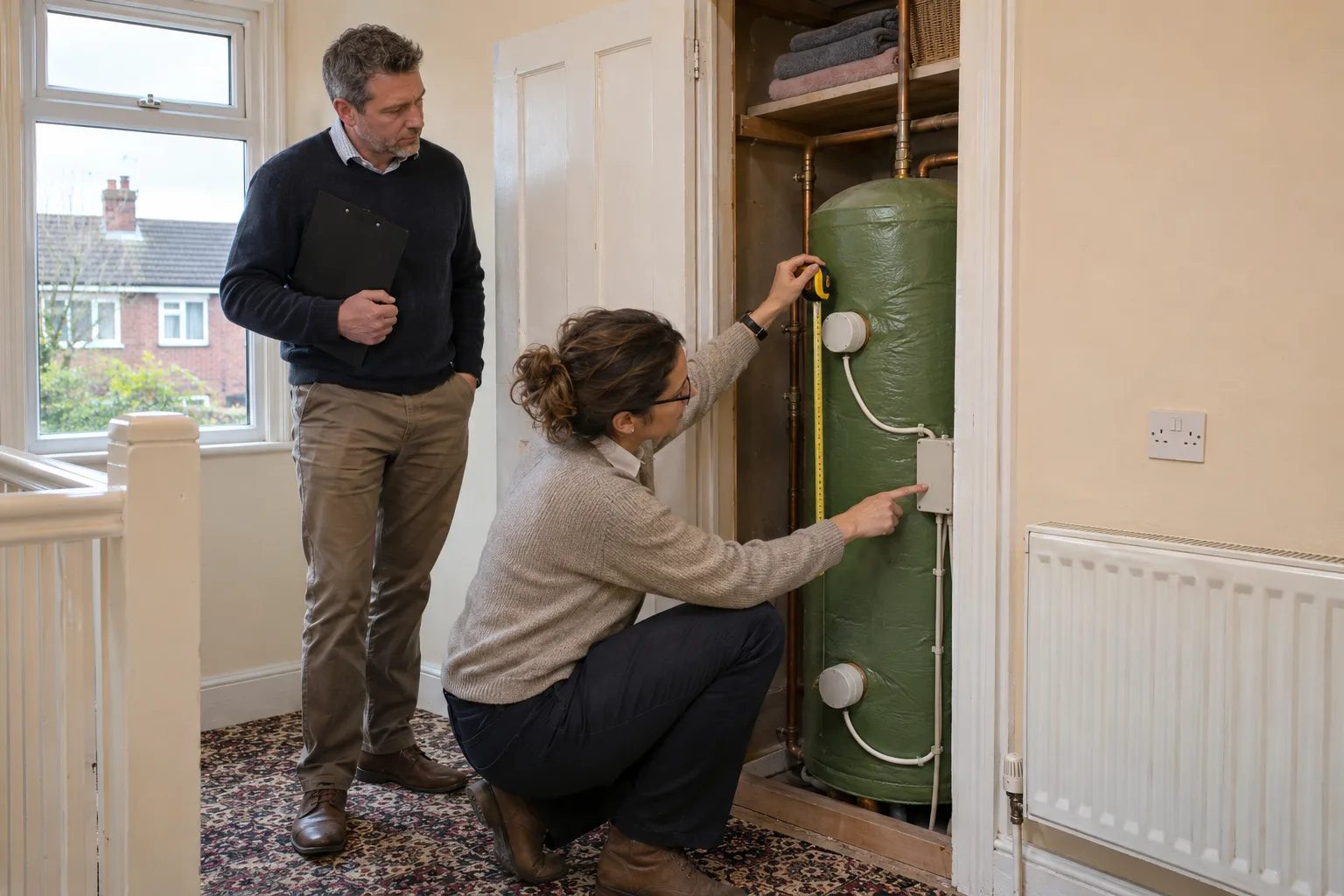
Photograph the cylinder label, the visible insulation, both immersion positions where applicable, the controls and the electricity meter before anything is boxed in or replaced. Keep installation records and manufacturer details. The assessor still decides what can be accepted, but organised evidence makes that decision easier and more reliable.
An unused or faulty immersion heater can still count
Do not assume that saying “we never use it” removes a fixed hot-water source from the assessment. RdSAP models standard use rather than one household’s habits. The current conventions also say that a fixed heating or hot-water source that is installed but not working or condemned is still taken into account when the assessor decides the applicable heating and direct-hot-water type.
That rule is a reason to describe the system accurately, not to disconnect or temporarily hide equipment before a survey. If the EPC appears to show the wrong hot-water source, give the assessor clear evidence of the actual permanent arrangement and ask for the methodology to be applied. A physical alteration should be safe, lawful and appropriate for the property, not an EPC-only workaround.
Immersion heater, electric heating and the EPC are different questions
An immersion heater normally heats domestic water; it does not by itself describe how the rooms are heated. A property may have an immersion cylinder alongside storage heaters, panel heaters, a boiler, a heat pump or another main space-heating system. The EPC records space heating and water heating separately, even though both feed the final calculation.
For an electric property, read can an all-electric rental reach EPC C? before treating the immersion as the only obstacle. The score can also depend on the fabric, heat-loss area, main heating, controls, meter, ventilation, lighting and renewables. The credible route is property-specific.
Likewise, actual energy bills are not a shortcut to the rating. The guide to whether energy bills affect an EPC explains why a tenant’s consumption and supplier tariff do not set the standardised score.
A landlord check before changing the system
- Download the latest certificate from the official energy-certificate register and note the score, hot-water description and recommendation list.
- Confirm the permanent water-heating arrangement on site. Identify the cylinder, immersion positions, meter type, insulation and controls without making assumptions from the EPC wording alone.
- Gather evidence. Photograph accessible labels and controls and retain installation, commissioning and electrical records where available.
- Check adjacent inputs. Review the main space heating, fabric, glazing, floor area and any material assumed or not-inspected entries.
- Model before spending. Compare an accurate evidence route, small measures and any genuine system change against the number of points required.
- Use an accredited assessor to apply accepted evidence and lodge the resulting EPC. A photograph, repair or equipment change does not alter the register by itself.
The landlord EPC evidence guide helps organise documents, while the evidence-first D-to-C plan shows how to compare the rating gap before commissioning major work.
Current rules and the 2030 landlord standard
Current domestic MEES landlord guidance says covered private rentals in England and Wales must currently meet EPC E unless a valid exemption applies. This guide is practical assessment information, not legal advice.
Separately, the government response on the higher private-rented standard confirms a 1 October 2030 compliance date and a transition for a current-style EER C lodged before 1 October 2029. Reformed EPCs are due to use new metrics. The exact effect of an individual immersion arrangement under the final Home Energy Model EPC method should not be presented as settled before the remaining implementation detail is final.
For a D-rated property today, the sound commercial step is still to understand the current certificate and the credible route. A correct immersion-heater entry may be only one part of that plan.
Landlord decision summary
- An immersion heater can affect the rating when it is part of the recorded hot-water system.
- Single or dual immersion, meter type, cylinder size, insulation and controls can all be relevant.
- Actual use and the tenant’s retail tariff do not directly set the EPC score.
- Do not remove, replace or conceal equipment simply to chase a band.
- Check the full D-to-C gap and model a change before spending.
- Only a lodged assessment changes the official certificate.
Start your free EPC assessment if you want the immersion, cylinder and wider property evidence checked against the current D-to-C options.
Primary sources checked
This guide was checked on 24 November 2026 against the live RdSAP 10 specification dated 7 June 2026, RdSAP conventions v12.2 applicable from 6 August 2026, the government domestic EPC guide, the official certificate register, current domestic MEES guidance and the government response on the higher private-rented standard.
Frequently asked questions
These answers cover the most common landlord decisions about immersion heaters and the current domestic EPC method.
Does an immersion heater lower an EPC rating?
It can affect the calculation, but the result is not universal. The outcome depends on the recorded hot-water arrangement, cylinder, electricity meter and the rest of the dwelling. Ask for the current property to be modelled before assuming it lowers the band.
Does a dual immersion heater improve an EPC?
RdSAP distinguishes single and dual immersion arrangements, but the recognised treatment also depends on the electricity meter and other inputs. A dual immersion does not ensure a higher rating and should not be installed solely on a generic point claim.
Does a cheaper electricity tariff improve the EPC rating?
A tenant moving to a cheaper supplier tariff does not directly change the standardised EPC score. The assessment can distinguish relevant single-rate and dual-rate metering arrangements, which is a different question from the retail deal shown on a bill.
Will a cylinder jacket help an immersion-heated property?
Cylinder insulation is part of the assessment, so an accurate insulation entry can matter. Whether a new jacket changes the band depends on the starting cylinder, the rest of the property and the score gap. It should not be promised as a universal route to C.
Can I ask the assessor to ignore an unused immersion heater?
Usage alone is not the test. The assessor must identify the permanent system and apply the current methodology and conventions. Provide evidence of the actual arrangement and ask for an accurate assessment rather than a preferred entry.