
Actual tenant bills do not set a domestic EPC rating. Learn what the model uses, when bills still help and which evidence landlords should check before spending.
Actual gas and electricity bills do not set a domestic EPC rating. The certificate models the property using standard occupancy, heating patterns, temperatures and fuel-price assumptions so that one home can be compared with another. A careful tenant, an empty month or an expensive tariff can change the bill without changing the building recorded on the EPC.
That distinction matters for a landlord with a D-rated rental. Low bills do not prove the certificate should be C, and high bills do not prove the assessment is wrong. The useful commercial question is whether the EPC accurately records the fabric, heating, hot water, glazing, controls and accepted evidence. Check those inputs before paying for major work.
Start your free EPC assessment to compare the lodged certificate with the property and identify the lowest-cost credible route from D to C.
The short answer: an EPC models the home, not the tenant
The government guide to domestic EPCs says the rating is based on the performance potential of the building and its services, including fabric, heating, insulation and ventilation. It uses standard occupancy assumptions because people use homes differently. The current tenant’s actual meter readings, working hours, preferred temperature and shower habits do not directly become the EPC score.
The government’s technical explanation of what EPCs measure describes today’s domestic Energy Efficiency Rating as a modelled cost metric. It is calculated from estimated regulated energy use per square metre, standardised heating patterns and temperatures, and fixed fuel-price assumptions. This supports comparison between dwellings, but it is not a prediction of one household’s exact bill.
EPC rating versus actual energy bill
The EPC is a standardised property assessment
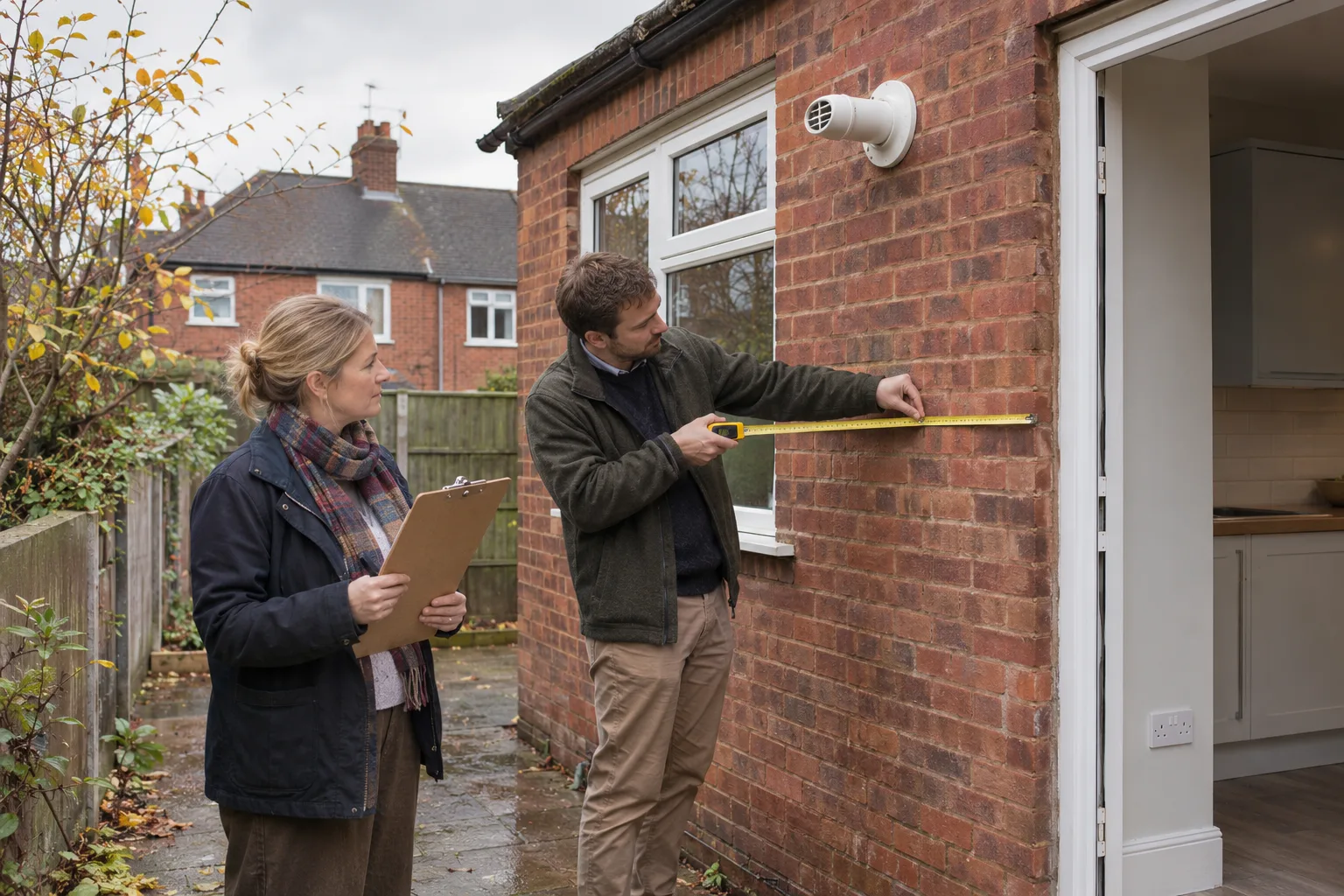
For an existing home, an accredited assessor normally uses Reduced Data Standard Assessment Procedure, or RdSAP. The survey records the dwelling type, age bands, dimensions, extensions, walls, roof, floors, glazing, ventilation, heating, hot water, controls and relevant renewable systems. Government-approved software combines those inputs with standard performance tables and assumptions to produce the rating.
The current government SAP and RdSAP methodology page identifies the approved methods. RdSAP deliberately uses a reduced dataset for existing dwellings, so some concealed features may be assigned a convention or age-based assumption when acceptable evidence is unavailable.
The bill records one household’s real consumption and tariff
A bill reflects the occupants, weather, tariff, billing period and how the property was used. A tenant may heat one room, keep the thermostat low, work away from home or use unusually little hot water. Another household in the same dwelling may heat for longer, use more hot water or pay a different unit price. Those differences can move the bill substantially while the physical EPC inputs stay the same.
Bills also include energy uses that the headline domestic EPC does not model in the same way. Plug-in appliances, cooking choices and home-working equipment can affect consumption, while the EPC focuses on regulated uses such as space heating, hot water, fixed lighting and ventilation. Comparing the two figures as if they measure exactly the same thing can lead to the wrong upgrade decision.
What does not change the EPC rating by itself?
- A tenant using less heating or accepting a cooler home.
- A property standing empty between tenancies.
- Switching energy supplier or moving to a cheaper tariff.
- Sending old bills to the assessor without evidence of a relevant property feature.
- Installing a smart meter without changing a recognised building system or control.
- Completing a test without an assessor accepting the result and lodging a certificate that uses it.
The separate guide to whether a smart meter improves an EPC rating explains the meter question in more detail. A device that improves billing accuracy or helps a tenant manage consumption does not automatically change the property model.
When are energy bills still useful?
Bills can still be valuable operational evidence. They can reveal an unexpected rise, support a conversation about heating performance or help compare the property before and after work. They may prompt checks for a faulty system, billing error, unusual usage, poor controls or a comfort problem. None of those uses turns the bill into a substitute EPC input.
A sensible landlord can use bills alongside, rather than instead of, the certificate:
- Compare like-for-like periods and note occupancy changes before drawing conclusions.
- Separate unit rates and standing charges from the number of kilowatt-hours used.
- Ask whether the home was kept adequately warm rather than assuming a low bill proves efficiency.
- Investigate a large unexplained change in consumption or system behaviour.
- Use the EPC and a property assessment to decide which fabric, heating or evidence questions need checking.
If the household reports high bills, discomfort, damp or excess cold, treat that as a property-management and welfare signal as well as a cost question. An EPC is useful, but it does not replace inspection of defects or professional advice appropriate to the issue.
Can low bills prove a D-rated EPC is wrong?
No. Low consumption can result from frugal use, under-heating, absence from the property or a mild billing period. It does not prove that the walls, roof, floor, glazing or heating were entered incorrectly. Start by downloading the certificate from the official energy-certificate register and checking the numerical score and property descriptions.
Look for a specific, material discrepancy. The boiler model may have been unidentified, an extension date may be wrong, insulation may have been recorded as assumed, or the floor area may need review. The landlord EPC evidence guide explains how to organise plans, certificates, photographs, invoices and equipment details so that an assessor can validate what belongs to the property.
An assumption is not automatically an error. Read what “assumed” means on an EPC before commissioning tests or challenging a certificate. Better property evidence may improve accuracy, but it does not guarantee a higher score or EPC C.
Can high bills prove the EPC rating is too generous?
Not on their own. High bills may be caused by occupancy, tariff, weather, faulty equipment, a control problem or a difference between modelled and real use. They can justify investigation, but a formal EPC accuracy question needs to identify the relevant property input or assessment concern.
If the certificate appears to describe the property incorrectly, use the landlord EPC correction guide. Contact the assessor first with the certificate entry and credible property-specific evidence. If the issue is not resolved, the assessor’s accreditation scheme has the independent complaint route. Ask for an accurate record, not a selected band.
A five-step check before spending on a D-rated rental
- Confirm the current lodged certificate, assessment date and score. A property may have more than one historic EPC, but the newest valid certificate is the starting point.
- Check the recorded fabric and services. Review walls, roof, floor, glazing, heating, hot water, controls, extensions and floor area.
- Identify material assumptions or missing detail. Gather evidence that an accredited assessor can validate; do not treat bills as proof of concealed construction.
- Model the rating gap. A property at 68 needs a different plan from one at 55, even though both are band D.
- Compare evidence, suitable measurements, small measures and larger upgrades before committing to disruptive work.
The evidence-first D-to-C plan shows how to sequence that decision. Testing can provide evidence where the approved method accepts it, but a test does not alter the register by itself. A qualified assessment must use accepted inputs and lodge the resulting EPC.
Why this matters before the 2030 landlord standard
Current domestic MEES guidance continues to set EPC E as the minimum for covered private rentals in England and Wales, unless a valid exemption applies. Separately, the government has confirmed a higher private-rented standard for 1 October 2030 and is progressing the legislation and implementation detail.
The government response on the higher standard says a current-style EER C lodged before 1 October 2029 can be recognised under the transition until that certificate expires or is replaced. That makes an accurate, evidence-led plan commercially valuable, but it does not make low tenant bills a compliance route. This guide is practical energy-assessment information, not legal advice.
Landlord checklist: bills, evidence and the EPC
- Use bills to understand real consumption, not to choose the EPC band.
- Check the certificate’s property inputs before assuming the score is wrong.
- Distinguish occupant behaviour from fabric, systems and accepted evidence.
- Do not promise a tenant that one product, document or test will secure C.
- Resolve material input questions before paying for major work.
- Ask an accredited assessor to use and lodge any accepted evidence.
Start your free EPC assessment if a D-rated rental needs a clear comparison of evidence, small measures and credible upgrade routes.
Primary sources checked
This guide was checked on 22 November 2026 against the live government domestic EPC guide, the government technical annex on current EPC metrics, the current SAP and RdSAP methodology page, the official certificate register, current domestic MEES landlord guidance and the government response on the higher private-rented standard. Rules and methods can change, so follow the live guidance when acting.
Frequently asked questions
Does a tenant’s energy use affect the EPC rating?
Not directly. A domestic EPC applies standard occupancy, heating and temperature assumptions so that dwellings can be compared. The tenant’s actual thermostat setting, working pattern and hot-water use affect bills, but they do not set the lodged EPC score.
Will an empty property get a better EPC rating?
No. Vacancy can reduce actual consumption, but the EPC still models the dwelling under standard assumptions. The assessment should record the property and its services accurately even when nobody is living there.
Should I give energy bills to the EPC assessor?
You can discuss anything relevant with the assessor, but bills are not a replacement for property evidence. Prioritise plans, installation certificates, equipment details and other records that validate the fabric or systems the approved methodology can use.
Why is the EPC estimate different from the tenant’s bill?
The EPC uses standard occupancy, standardised heating patterns and fixed price assumptions, while the bill reflects real weather, tariff, occupancy and behaviour. It may also include cooking, appliances and other consumption outside the headline EPC calculation.
Can lower bills move a rental from EPC D to C?
No. Lower actual bills do not change the lodged rating. Moving from D to C requires an assessment using accurate accepted inputs and, where necessary, suitable evidence or improvements. The result must then be lodged by an accredited assessor.