A 1980s house can reach EPC C, but its exact age, construction, insulation evidence, heating and current score determine the credible route.
A 1980s house can reach EPC C, but the decade alone cannot tell a landlord what work is needed. The credible route depends on the exact construction year, the age and build-up of each part of the property, the current numerical score, accepted insulation evidence, heating, hot water and controls.
That matters commercially. A house at 68 may need a very different decision from one at 56, even when both are red-brick semis from the same estate. Review the existing certificate and the property evidence before ordering cavity fill, a boiler replacement or another major measure.
Start your free EPC assessment to compare the score gap, recorded construction and available evidence before paying for work.
The short answer: 1980s houses do not share one EPC default
The current RdSAP 10 specification places 1983 to 1990 construction in age band G in England and Wales. The equivalent band is 1984 to 1991 in Scotland and 1986 to 1991 in Northern Ireland. In England and Wales, a house built from 1980 to 1982 instead falls in the earlier 1976 to 1982 band F.
A casual description such as “1980s house” can therefore cross a methodology boundary. A later extension, converted garage or roof room may also have its own age and construction inputs. Confirm approximate dates from reliable records rather than assigning the whole property to one broad decade.
Government guidance on domestic EPCs explains that the rating reflects the building fabric and services under standard occupancy assumptions. It is not a verdict based only on age, appearance or the tenant's actual bills.
Start with the score and the recorded property
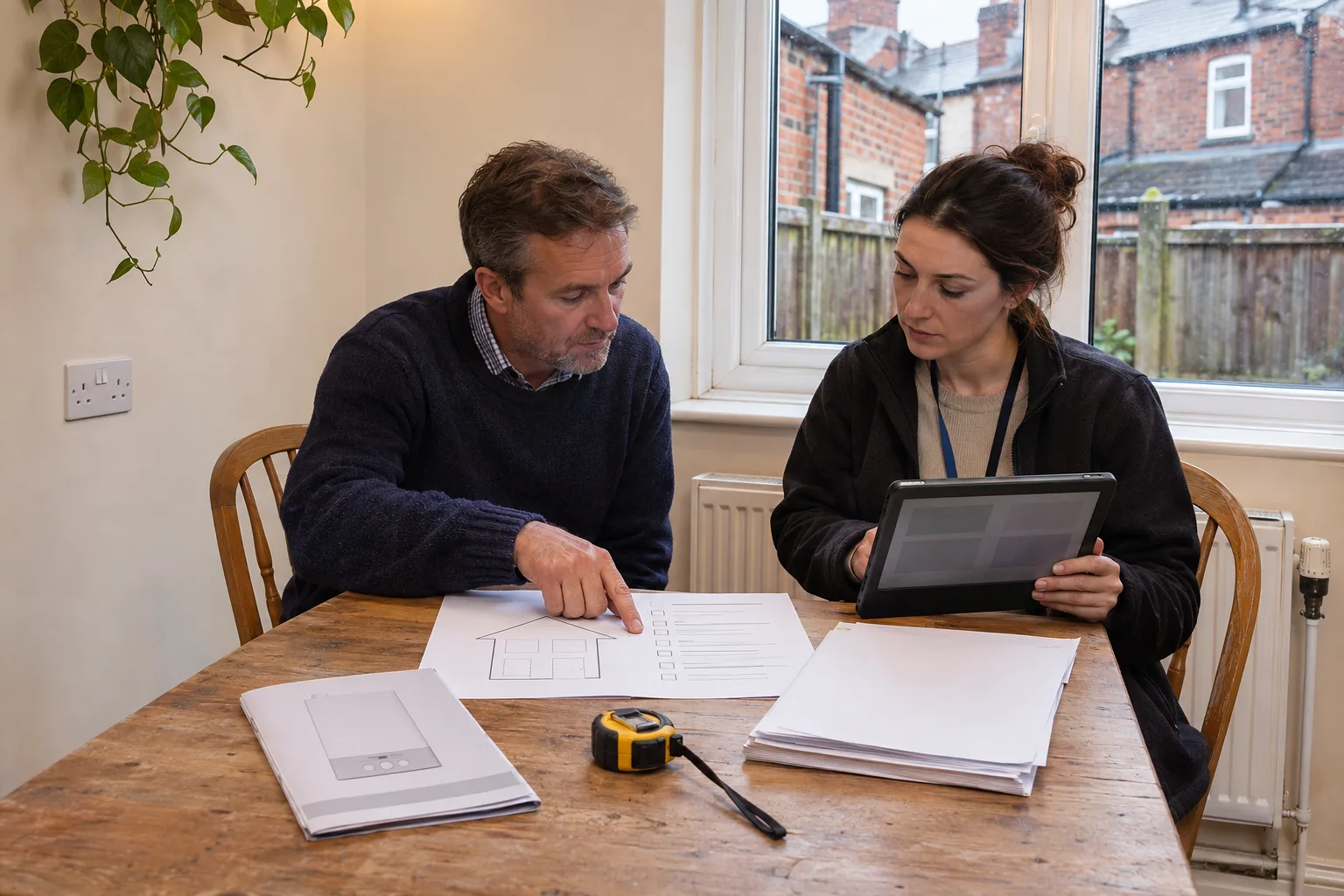
Download the current certificate through the government Find an energy certificate service. Record the numerical rating as well as the band, then check the stated floor area, property type, detached status, walls, roof, floor, glazing, heating, hot water, lighting and controls.
Compare those entries with the property and with work completed after the assessment. An entry marked assumed is a methodology input, not automatic proof of an assessor error. The guide to what “assumed” means on an EPC explains when evidence deserves closer review.
Do not price every recommendation at once. First identify which entries materially affect the score gap and whether the recommendation reflects missing evidence, an existing feature or a genuine improvement opportunity.
Five checks that usually decide the route
1. Confirm the exact build dates
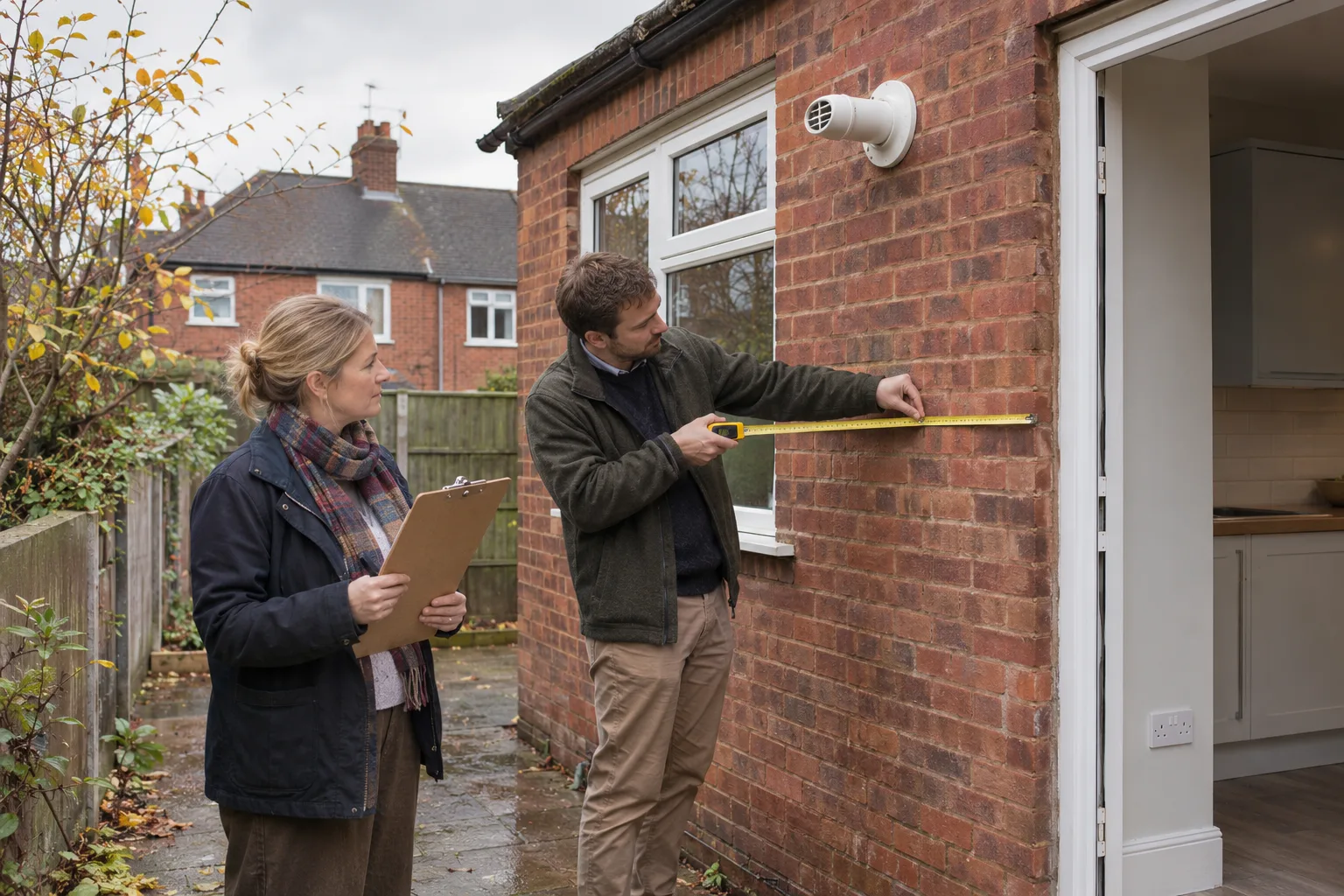
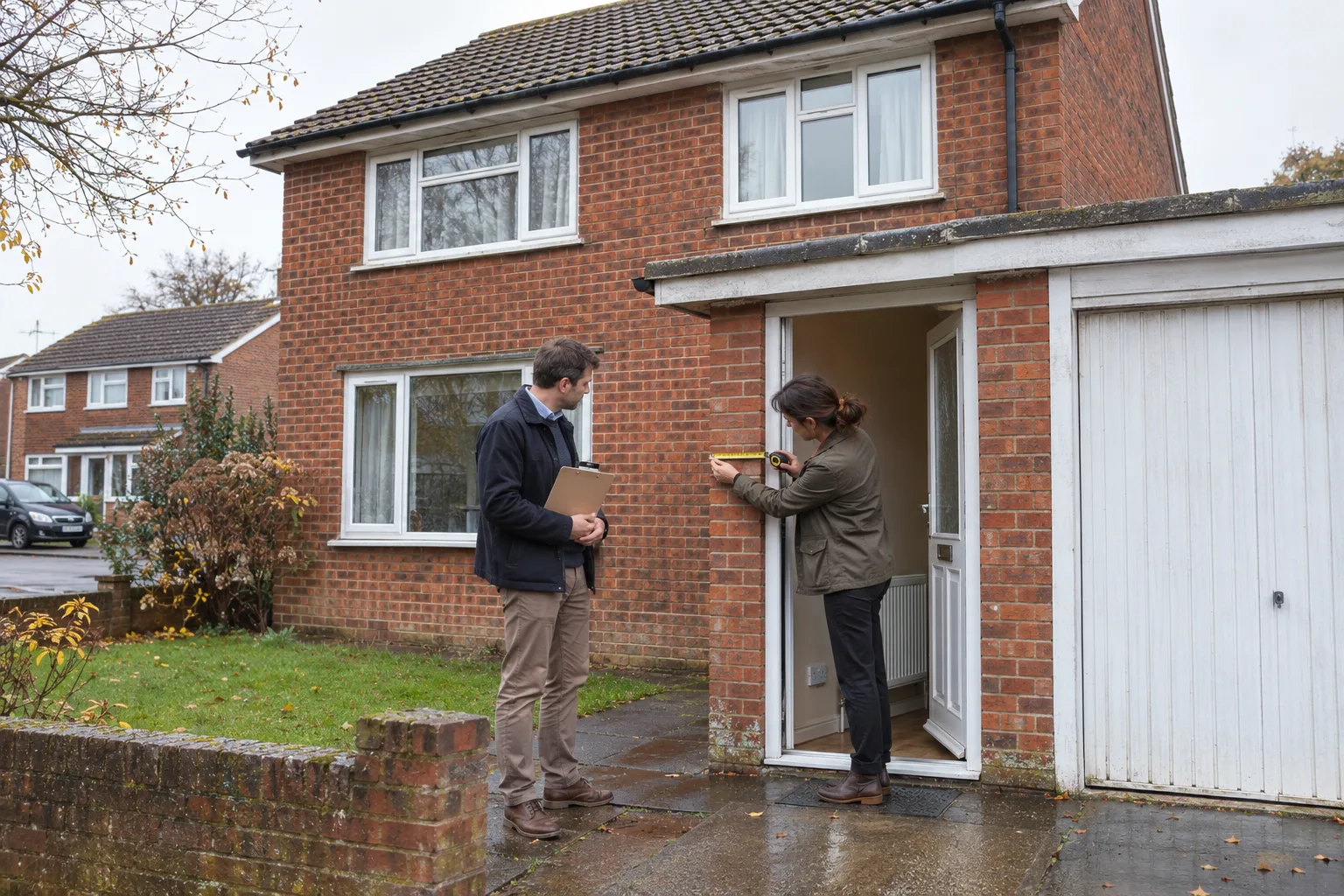
Use reliable planning, building-control, conveyancing or construction records where available. Separate the original house from extensions, garage conversions and roof alterations. An incorrect age band can affect the defaults applied to walls, roofs, floors and other elements, but changing a date needs evidence rather than a visual guess.
2. Identify the wall construction and insulation
Many 1980s houses are cavity construction, but the age does not prove the wall type, whether the cavity is filled or the condition and suitability of any insulation. Timber-frame and system-built properties also exist, and extensions can differ from the main dwelling. Establish the construction before choosing a treatment.
Gather installation certificates, warranties, invoices, specifications and clear photographs tied to the address. The cavity-wall insulation evidence guide covers the evidence question in detail. A suitable building survey may still be needed before insulation work, particularly where moisture, exposure or wall condition is uncertain.
3. Check the roof and floor separately
The RdSAP specification includes age-related defaults for roofs and floors, while measured or accepted property-specific information can change how certain elements are recorded. Check loft access, insulation depth and coverage, flat-roof sections, rooms in the roof, sloping ceilings and any later reroofing work. Record whether the ground floor is solid or suspended and whether credible insulation evidence exists.
If the certificate says no loft insulation while material is present, use the loft-insulation discrepancy checklist before paying to insulate the same area again. Accessibility, coverage and evidence can all affect the next assessment.
4. Verify glazing, doors and draught details
Original or replacement windows can differ across the house, and the assessment records glazing type and proportion rather than treating every uPVC frame as identical. Check extensions, patio doors and any remaining single glazing. The guide on double glazing and EPC C explains why replacement windows are not automatically the first or cheapest answer.
5. Record the heating system, hot water and controls
A 1980s house may retain an older boiler or storage heaters, or it may have had several replacements. The assessor needs the current system, fuel, model information where available, emitters and controls. Boiler age by itself is not the complete input, as the boiler-age EPC guide explains.
Check programmer, room thermostat, thermostatic radiator valves, cylinder insulation and hot-water controls. A proportionate controls change may matter on one property, while another needs a different route. Model the complete effect before replacing working equipment for EPC reasons alone.
What evidence can change the decision?
The current RdSAP 10 conventions set evidence rules for live assessments. Useful records can include building-control documents, dated specifications, installation certificates, warranty records, invoices with sufficient property detail, photographs taken before work was covered and product information tied to the installed element. The assessor decides whether evidence meets the applicable convention.
Where an element's thermal performance is genuinely uncertain and the property is suitable, a specialist route such as U-value testing may be considered. Testing does not alter the EPC register by itself. A qualified assessor must accept the relevant evidence, use it in the assessment and lodge the resulting certificate.
A practical D-to-C sequence for a 1980s rental
- Download the current EPC and note the score gap to 69, the recorded age bands and every material assumed, unknown or not-inspected entry.
- Separate the original dwelling from each extension or conversion, then match dates and construction records to those parts.
- Assemble address-specific evidence for walls, roof, floor, glazing, heating, hot water, controls and later improvements.
- Model accepted evidence and proportionate measures against the same baseline before requesting major-work quotes.
- Compare cost, disruption, building suitability and the likely score outcome, then commission only the accepted route.
- Arrange the appropriate assessment and lodgement so any changed rating appears on the official register.
The full D-to-C evidence-first plan explains this sequence without tying it to one property age.
Current EPC C and the 2030 standard are different decisions
The current domestic MEES guidance says covered private rentals in England and Wales must currently reach at least E unless a valid exemption applies. The government has separately confirmed a higher private-rented standard for 1 October 2030, with legislation and implementation detail still required.
The government's higher-standard response says a current-style EER C lodged before 1 October 2029 is intended to be recognised until that certificate expires or is replaced. That transition can make an evidence-led assessment commercially valuable, but it does not justify unsuitable work or guarantee that every 1980s property will reach C through the same package.
Read the guide on reaching EPC C before October 2029 for the timing decision. Final product-level effects under the reformed Home Energy Model should not be assumed from today's single EER score.
Find the lowest-cost credible route before upgrading
A 1980s rental may already contain useful fabric and services, or it may have weak evidence, mixed construction and an inefficient heating system. The right answer is property-specific. Begin with the score, verify material inputs and compare evidence with proportionate measures before commissioning larger work.
Start your free EPC assessment to review your current certificate, the 1980s construction details and the credible options together.
Frequently asked questions
Are 1980s houses usually cavity wall construction?
Many are, but a decade label is not enough to establish wall construction, cavity fill or suitability for insulation. Confirm the actual wall type and any relevant evidence for the property and its extensions.
Does a 1980s build date make EPC C likely?
Age can influence the defaults used in an assessment, but it does not determine the final band. Size, detached status, fabric, glazing, heating, hot water, controls, renewables and the accepted evidence all contribute to the score.
Should a landlord install cavity-wall insulation first?
Only after confirming the wall construction, existing insulation, condition, exposure and suitability, and after comparing the measure with the property's real score gap. A competent survey may be needed before installation.
Can evidence alone move a 1980s house from D to C?
It can affect the model where accepted evidence replaces a material default, but there is no universal result. Documents or tests do not change the register on their own. A qualified assessor must use accepted inputs and lodge the resulting EPC.
Will a new boiler take a 1980s house to EPC C?
No. The rating depends on the whole dwelling, and the heating system is recorded through more than its age. Model the proposed system and controls against the accepted baseline before replacing equipment for an EPC outcome.