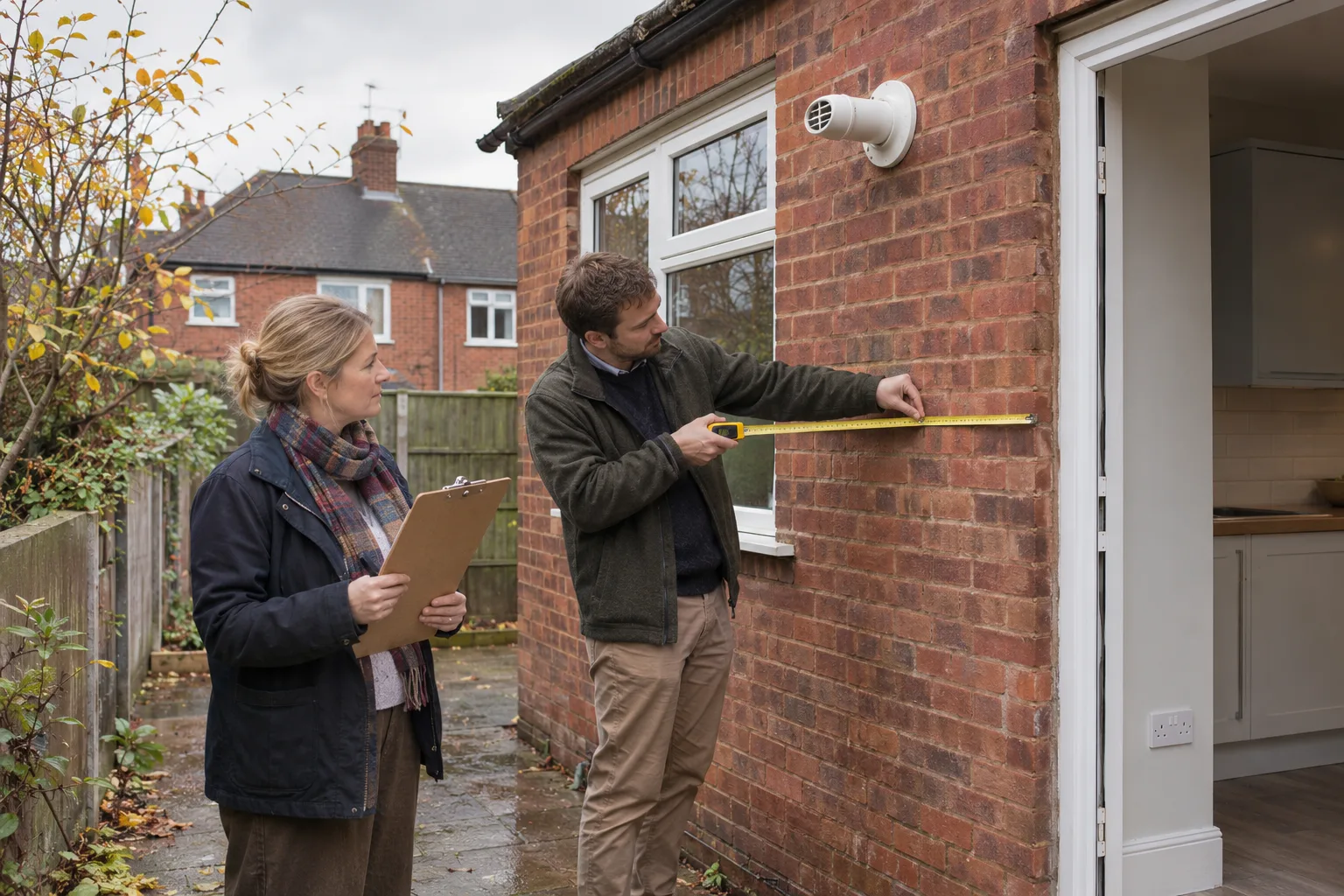

Think a rental property EPC is wrong? Separate input errors from valid assumptions, then choose a correction, complaint, reassessment or upgrade route.
A landlord can challenge an EPC rating when there is a credible concern about the certificate, its information or the assessment. Start with the assessor named on the certificate. If the issue is not resolved, use the independent complaints process of the assessor’s accreditation scheme. A successful complaint can lead to a new certificate, but disagreement with the band is not evidence by itself.
The commercial decision comes before the complaint. A low score can result from a genuine input error, a required assumption, work completed after the assessment or a valid change in methodology. Those four situations need different responses. Identifying the right one can save a landlord from paying for unnecessary improvements, a duplicate EPC or a complaint that cannot correct the underlying issue.
Start your free EPC assessment to compare the lodged certificate with the property evidence and identify whether the sensible route is correction, reassessment, testing or proportionate work.
The short answer: check the input before challenging the band
Download the current certificate from the official energy-certificate register. Record the report reference number, assessment date, numerical score and the descriptions of the property type, floor area, walls, roof, floor, glazing, heating, hot water and controls. Then compare those entries with what existed on the assessment date.
A challenge is strongest when it identifies a specific difference and supplies property-specific evidence. Examples could include the wrong boiler model, a material floor-area error, the wrong number or date of extensions, or insulation that was visible or supported by acceptable records at the time. A feeling that the score is too low, an online estimate or a different property’s EPC is not enough to establish an error.
Choose the correct route before writing a complaint
Route 1: a factual input may be wrong
Use the correction route where the certificate appears to describe the assessed property incorrectly. Compare the certificate with photographs, plans, installation records, model details and other documents that clearly belong to the address. The separate floor-area error checklist explains one common input question; the same discipline applies to heating, glazing, extensions and construction.
Contact the assessor first and state each disputed entry precisely. Ask them to review the assessment evidence and explain whether a correction is appropriate. Keep the tone factual: describe what the EPC says, what you believe existed on the assessment date and what evidence supports that position. Do not ask the assessor to select inputs simply because they would create a higher score.
Route 2: the assessor used a permitted assumption
An assumption is not automatically a mistake. The government guide to domestic EPC assessments says existing homes require a physical survey, but some features cannot be seen. If safe access is unavailable or insulation is concealed, the assessor may need to use an age-based assumption unless suitable supporting information can be validated.
In that situation, the useful next step may be an evidence-led reassessment rather than an allegation that the first assessor acted incorrectly. Read what “assumed” means on an EPC and gather acceptable documents before booking another certificate. Better evidence can improve accuracy, but it does not promise a higher band.
Route 3: the property changed after the assessment
A complaint cannot make a historic certificate describe later work. If the landlord added insulation, changed heating, fitted controls or completed another relevant measure after the inspection date, the existing EPC may still be an accurate record of the earlier assessment. The route is normally a new assessment with the completion evidence available, not a correction to facts that were true at the time.
Use the guide to whether landlords need a new EPC after improvements to separate legal validity from the commercial value of lodging a replacement. An installation, invoice or test does not update the register by itself.
Route 4: a later certificate used different valid inputs or rules
Two EPCs can differ without either assessor having made a simple error. The property may have changed, access may have improved, different valid evidence may have been available or the approved calculation method may have changed. The live government methodology page identifies RdSAP 10.0.1 as the current reduced-data method for existing homes and explains that RdSAP uses assumptions to reduce the information an assessor must collect.
Before challenging a lower score, use the EPC comparison checklist to compare dates, software method, floor area, construction, heating and evidence. A different result is a reason to investigate, not proof that the newer certificate is defective.
How to challenge an EPC rating step by step
- Download the live certificate and confirm that it belongs to the correct dwelling or flat. Note the report reference number, assessor, accreditation scheme and assessment date.
- List only specific disputed facts. Quote the certificate description and explain what you believe was present on the assessment date.
- Attach concise evidence that connects the feature to the property and completed work. Keep original files and avoid altered photographs or retrospective statements presented as installation records.
- Ask the assessor to review the concern through their complaints process and to explain the outcome in writing.
- If the issue remains unresolved, contact the accreditation scheme shown on the certificate and follow its independent complaint procedure.
- Keep the correction question separate from any new D-to-C plan. If the recorded facts are valid, compare evidence, suitable tests and property work instead of repeating the same complaint.
The current government service for getting a new energy certificate confirms the two-stage complaint route: complain to the assessor directly, then contact the accreditation scheme if you remain dissatisfied. Ofgem’s EPC dispute guidance gives the same order for concerns about validity, certificate information or survey quality.
What evidence makes the review useful?
A focused evidence pack is easier to assess than a folder of unrelated property records. Include a copy of the EPC, a short schedule of disputed inputs and documents that identify the address, feature and relevant date. Depending on the issue, useful material may include dated plans, Building Control records, installation certificates, warranties, itemised invoices, original photographs, commissioning records or equipment model details.
The landlord EPC evidence guide explains how to organise these records. Evidence remains subject to validation by the assessor or accreditation scheme. A quotation proves what was proposed, not necessarily what was installed. A close-up photograph may show a material without proving its location, coverage or date.
What happens if the complaint is upheld?
The detailed government EPC guide says the accreditation scheme must investigate a complaint and provide appropriate redress where necessary. If information is found to be incorrect, a new EPC must be issued and the register amended; the complaints procedure should be followed at no cost to the complainant. The existing lodged data is not edited like a document. The correction is reflected through the proper certificate and register process.
That outcome does not mean the band must rise. Correct information can increase, reduce or leave the score unchanged. The purpose is an accurate certificate, not a selected result. Only the accredited route can issue and lodge the replacement.
Do not confuse a complaint with an EPC C plan
A D-rated landlord may have both a correction question and an improvement decision. Deal with them in order. First decide whether the certificate contains a material error. Then model the credible route from the corrected or validated inputs. The evidence-first D-to-C plan compares documents, suitable measurements, small measures and larger work without assuming that a complaint or one product will secure C.
Current domestic MEES landlord guidance continues to set EPC E as the minimum for covered private rentals in England and Wales, subject to valid exemptions. If a property is F or G, do not assume that opening a complaint removes the need to address the current legal position. This article is practical energy-assessment guidance, not legal advice.
A landlord correction checklist
- Confirm the correct address, flat and certificate on the official register.
- Separate a factual error from an assumption, later work or methodology change.
- Use evidence that existed or described the property at the relevant assessment date.
- Contact the assessor before escalating to the accreditation scheme.
- Ask for accuracy, not a preferred band or number of points.
- Model the D-to-C route only after the material inputs have been checked.
Start your free EPC assessment if you need to turn a disputed D-rated certificate into a clear evidence, reassessment or improvement decision.
Primary sources checked
This guide was checked on 21 November 2026 against the live government domestic EPC guide, the government assessor and complaints service, the official certificate register route, the current SAP and RdSAP methodology page, Ofgem’s EPC dispute guidance and current domestic MEES landlord guidance. Complaint procedures and methodology can change, so use the details on the live certificate and scheme website when taking action.
Frequently asked questions
Can a landlord appeal an EPC rating?
A landlord can raise an accuracy or assessment complaint. Contact the assessor first, then the accreditation scheme named on the certificate if the matter is not resolved. Describe the disputed inputs and supply relevant evidence rather than challenging the band alone.
Does an EPC complaint cost money?
The detailed government guide says the complaint procedure through the assessor and accreditation scheme should be followed at no cost to the complainant. A separate new assessment that the landlord commissions is a different service and may have a fee.
Will a successful challenge increase the EPC rating?
Not necessarily. Correct information can raise, lower or leave the score unchanged. The correction process is intended to produce an accurate certificate, not a chosen band.
Can an assessor add work completed after the EPC visit?
Later improvements do not make the earlier assessment facts incorrect. A new assessment is normally needed for completed work to be evaluated and reflected in a newly lodged certificate.
Should a landlord complain about every assumed entry?
No. RdSAP is a reduced-data method and assumptions can be valid where a feature was concealed, access was unsafe or suitable evidence was unavailable. Investigate assumptions that are material and for which credible property-specific evidence exists.